
Should You Transfer a Rental Property Into an LLC? What California Owners Must Know About Loans, Insurance, Prop 19 and the $800 Franchise Tax (2026)

Moving a rental property into an LLC is easy to do and easy to get wrong. The deed takes minutes to prepare, but a California owner should first check five things: whether the lender's due-on-sale clause allows it, whether the title insurance policy and landlord insurance policy will still cover the LLC, whether the transfer will be excluded from property tax reassessment, what the LLC will cost every year, and whether the liability protection is worth the trouble for a single property.
This guide walks through the mechanics, the risks and the situations in which an LLC is not worth it. It is general information current as of October 28, 2026, not legal or tax advice, so run your own facts past a California real estate attorney and a CPA before you sign anything.
Why owners consider an LLC for a rental
The main reason is liability. If a tenant or guest is injured at the property, a claim against an LLC that owns the rental is aimed at the LLC and its assets, not automatically at your home, savings and other property. Some owners also like separating rental finances from personal ones, or planning ownership for partners and family.
This is the same idea discussed in our overview of landlord asset protection: an LLC is one layer, not a fortress. Insurance, good leases, prompt repairs and careful management do most of the practical work.
How the transfer actually works
- Form the LLC. File Articles of Organization (Form LLC-1) with the California Secretary of State. The filing fee is $70. A Statement of Information (Form LLC-12) is due within 90 days and then every two years, at $20 per filing.
- Draft an operating agreement. Even for a one-owner LLC, a written agreement shows the LLC is run as a separate entity and sets rules for multiple owners.
- Get an EIN and open a business bank account. Rent, deposits and expenses should move through the LLC account, not your personal one.
- Clear the lender and the insurers first. Do this before the deed, not after (details below).
- Sign and record a deed. A grant deed moves title from you to the LLC. Recording happens with the county recorder, along with a Preliminary Change of Ownership Report. Some counties and cities charge a documentary transfer tax, and a transfer that does not change proportional ownership can usually claim an exemption on the form.
- File the ownership statement. Even with a reassessment exclusion, the LLC must file Form BOE-100-B with the State Board of Equalization within 90 days of the change, or face a penalty.
- Update leases, deposits, vendors and your management agreement to reflect the LLC as owner and landlord.

The five risks to check before you sign the deed
1. The due-on-sale clause
Most mortgages include a due-on-sale clause, which lets the lender demand full payment if you transfer the property without its consent. Federal law, 12 U.S.C. 1701j-3, allows lenders to enforce these clauses and lists transfers they cannot challenge on smaller residential properties. The list covers items such as certain transfers to a spouse or children and transfers into a living trust where the borrower remains a beneficiary. A transfer of a rental to an LLC is not on it.
In practice, lenders often do not call a loan just because the owner changed the name on the deed, especially if payments stay current. But the right exists, and a lender that notices the transfer could use it. Options are to ask the lender for written consent, to refinance into a loan made to the LLC (usually on different terms), or to leave the property in your name and use insurance and other tools instead.
2. Title insurance
An owner's title insurance policy protects the person named on it. When you deed the property to a different entity, coverage may not follow automatically, and in some cases the policy can end. Ask your title company before the transfer whether an endorsement or a new policy is needed so that the LLC remains protected against title defects.

3. Landlord insurance
Your landlord policy must name the LLC as the insured owner, and it must match the way title is held. A claim can be delayed or denied if the policy lists you personally while the LLC owns the property. We explain this in more detail in our article on why the named insured must match title. Ask your agent to move the policy, add the LLC as the named insured, and confirm liability limits. Our guide to landlord insurance in California covers the coverages that matter.
Update the landlord policy and confirm title coverage on or before the date the deed is recorded. A gap of even a few weeks can leave a rental uninsured at the moment the LLC takes ownership.
4. Property tax reassessment and Prop 19
California reassesses property to current market value when ownership changes. A transfer between an individual and an LLC can be excluded from reassessment when it only changes the form of title and each owner's proportional interest stays the same. That exclusion comes from Revenue and Taxation Code Section 62(a)(2), and the State Board of Equalization guidance on legal entity ownership explains how it works. If the LLC has several members, each must hold the same share of the property afterward that they held before. Non-proportional transfers can trigger reassessment.
Two cautions apply. First, an LLC does not freeze your assessed value forever. A later change in control or ownership of the LLC can be treated as a change in ownership of the property. Second, Proposition 19 narrowed the old parent-child exclusion so that it generally applies only to a family home the child uses as a primary residence. Passing a rental, or interests in an LLC that holds it, to children can therefore bring reassessment that earlier rules may have avoided. If generational planning is a goal, speak with an estate attorney before relying on an LLC.
5. The cost of keeping the LLC
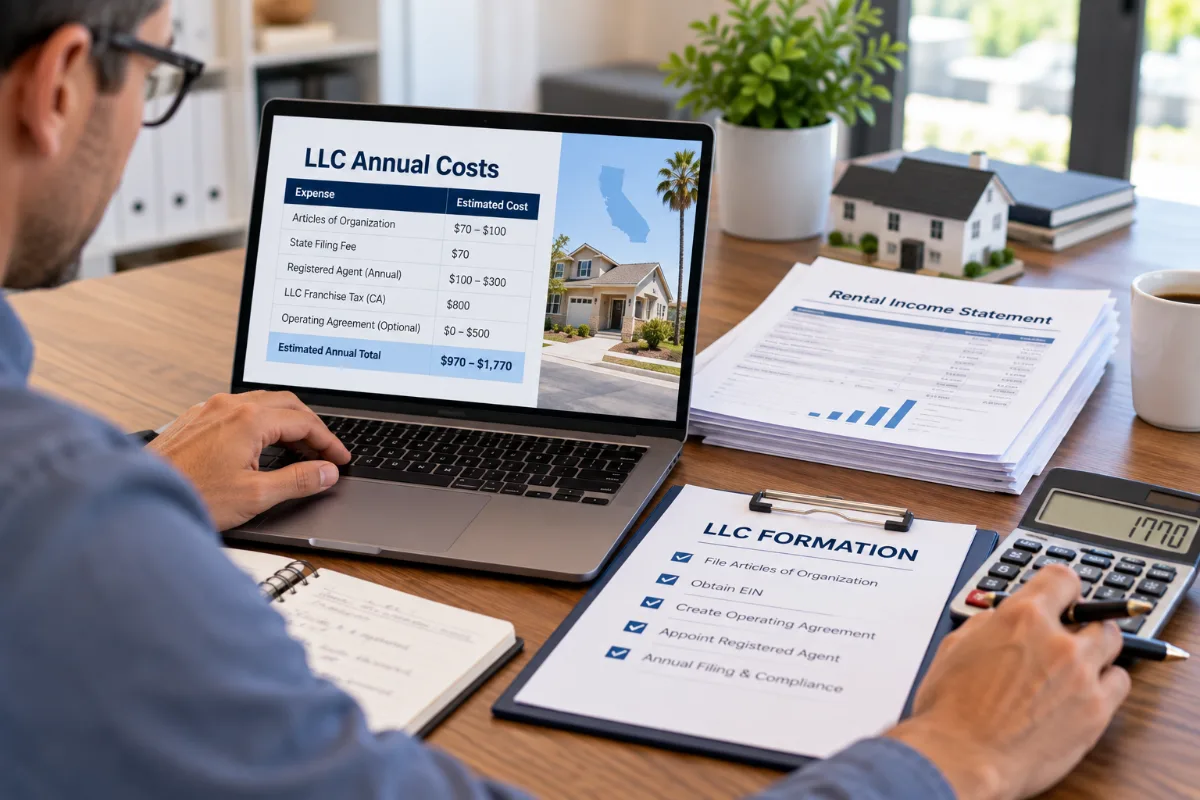
According to the California Franchise Tax Board LLC page, every LLC doing business in or organized in California owes an $800 annual tax, whether or not it earns income. It is due by the 15th day of the fourth month of the tax year. If total California income reaches $250,000, an additional fee applies, starting at $900 and rising to $2,500 at $500,000, $6,000 at $1 million and $11,790 at $5 million.
| Annual LLC Cost | Amount |
|---|---|
| Annual tax (Franchise Tax Board) | $800 minimum |
| LLC fee on total California income of $250,000 to $499,999 | $900 |
| LLC fee on $500,000 to $999,999 | $2,500 |
| LLC fee on $1,000,000 to $4,999,999 | $6,000 |
| LLC fee on $5,000,000 or more | $11,790 |
| Statement of Information (Secretary of State), every two years | $20 |
The old first-year exemption from the $800 tax applied only to LLCs formed in 2021 through 2023 and has ended, so an LLC formed in 2026 owes the full amount. Recent budget legislation (SB 122) is reported to cut the first-year tax for new LLCs to $400 for entities organized in 2027 through 2029. The Franchise Tax Board's LLC page had not been updated to reflect this when we checked, so confirm with the Franchise Tax Board or your CPA before timing a formation around it. An out-of-state LLC does not avoid these costs: an LLC holding California rental property generally has to register and pay California's taxes too.
Also remember that a single-member LLC is usually ignored for federal income tax, so rental income and the rental property tax deductions you already use still flow to your personal return, while California requires the LLC to file its own Form 568.
When an LLC is probably not worth it
An LLC is not automatically the right call. It may be overkill when:
- You own one property with substantial equity and strong insurance, and the $800 yearly cost buys little extra protection.
- Your lender is unlikely to consent and refinancing into the LLC would cost more than it saves.
- You would still personally guarantee the loan, which leaves your personal assets exposed on that debt anyway.
- You would not keep a separate bank account, separate books and clear signatures as the LLC, which can weaken the protection.
- Your main concern is a lawsuit after an injury, where adequate liability coverage and an umbrella policy may do more per dollar.
It may make more sense when you own multiple rentals, have partners, carry large equity, or want separate entities for separate properties.
Practical steps after the transfer
- Tell tenants in writing who the new owner is, where to send rent and who handles repairs. The new owner is responsible for security deposits, and state law requires the lease or a notice to identify the owner and manager.
- Assign or re-sign leases in the LLC's name as leases renew.
- Update your management agreement so the LLC is the client and the owner of record.
- Separate the money. Deposit rent into the LLC account and pay expenses from it.
- Calendar the deadlines: the annual tax, the Statement of Information and any BOE filing.
- Keep documents together: the recorded deed, operating agreement, insurance declarations and title policy.
Where a property manager fits
An LLC changes how the property is owned. It does not change how it should be managed. A professional manager keeps leases, deposits, repairs and records in good order, which is exactly the documentation that backs up liability protection. Management One works with individual owners and LLCs across the Inland Empire and Orange County, and our team handles owner statements and records in a way that is easy to hand to a CPA or attorney.
If you are weighing an LLC, a new purchase or a bigger portfolio, start with a free rental analysis for your property and see how Management One's portfolio management service can keep leases, deposits and owner reporting in order while you work out the structure with your advisers.
Frequently Asked Questions
Can I transfer my rental property into an LLC in California?
Yes. You form the LLC with the Secretary of State, then record a deed moving title from your name to the LLC. The transfer itself is simple. The consequences for your loan, title insurance, property insurance and taxes are what need planning before you sign the deed.
Will transferring a rental to an LLC trigger a property tax reassessment?
Generally not, if the transfer only changes how title is held and each owner's proportional share stays the same. That is an exclusion under Revenue and Taxation Code Section 62(a)(2). You still have to file the required statement with the State Board of Equalization within 90 days. A later change in who owns the LLC can trigger reassessment.
Can my lender call my mortgage if I deed the property to an LLC?
It can. Federal law lets lenders enforce due-on-sale clauses, and the list of protected transfers in 12 U.S.C. 1701j-3(d) does not include transfers to an LLC. Many lenders never act, but the right exists. Ask for written consent before transferring, or speak with your lender about a loan made to the LLC.
How much does a California LLC cost each year?
Every LLC doing business in California owes an $800 annual tax to the Franchise Tax Board, even with no income. An additional LLC fee applies when total California income is $250,000 or more, starting at $900. The Secretary of State also charges a filing fee when you form the LLC and a Statement of Information fee every two years.
Does an LLC make my rental property safe from lawsuits?
No. An LLC can separate the rental from your other assets, but it does not protect you from your own negligence, from debts you personally guarantee, or from poor record keeping. Adequate landlord liability insurance, and often an umbrella policy, remain the first line of defense.
Do I need to tell my tenants if I move the property into an LLC?
Yes, in practice. Tenants should receive written notice of the new owner, where to send rent and who to contact for repairs, and the security deposit must be accounted for by the new owner. Your leases and any management agreement should be assigned or updated to name the LLC.



Related Posts