The Rental Property Maintenance Checklist Every Inland Empire Landlord Needs (2026)
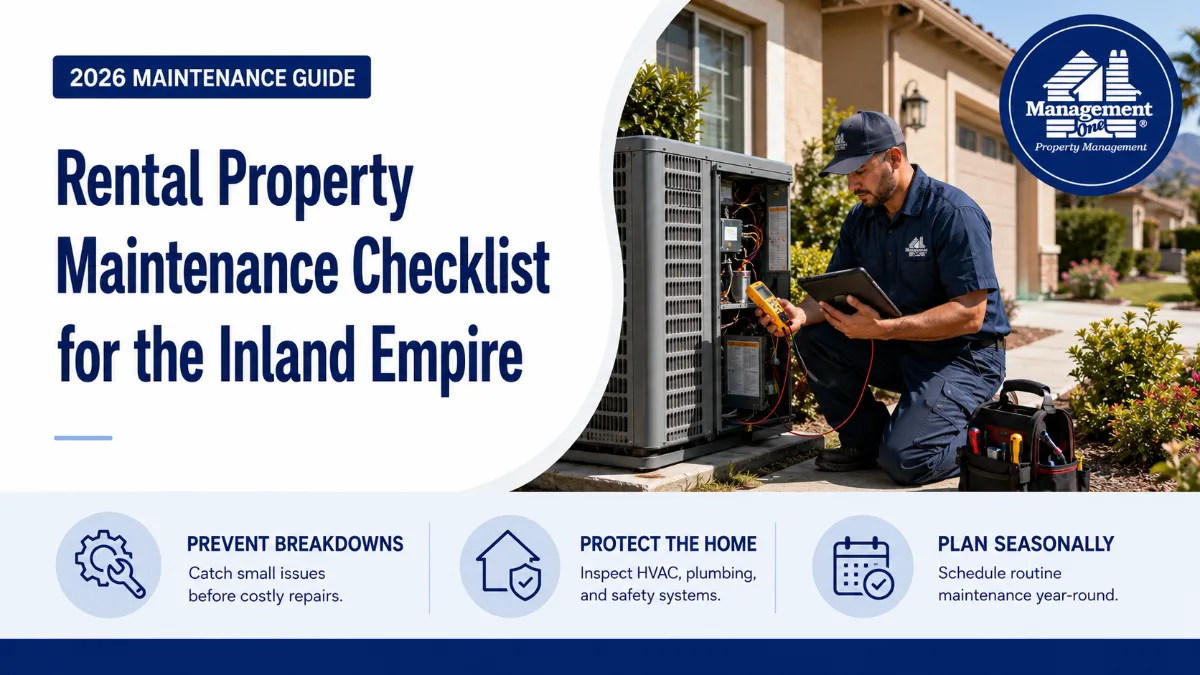
The most profitable rental properties are not the ones with the highest rent - they are the ones with the fewest surprises. Deferred maintenance is how a healthy investment quietly turns into a money pit: a skipped $150 HVAC service becomes a $6,000 system failure in the August heat. A good rental property maintenance checklist turns upkeep from reactive firefighting into a predictable, budgetable routine. Here is the landlord maintenance checklist we use to protect Inland Empire rentals year-round.
Why preventive maintenance protects your investment
Preventive maintenance rental property strategy rests on one idea: catch small problems before they become expensive ones. It does three things for owners. It saves money, because scheduled service is a fraction of emergency-repair cost. It retains tenants, because renters stay longer in a home that is cared for. And it protects the asset, keeping the roof, systems, and structure sound so the property holds its value. In the Inland Empire's climate - triple-digit summers and short, wet winters - the HVAC system and weatherproofing carry the heaviest load, so they anchor the plan.
The seasonal home maintenance checklist
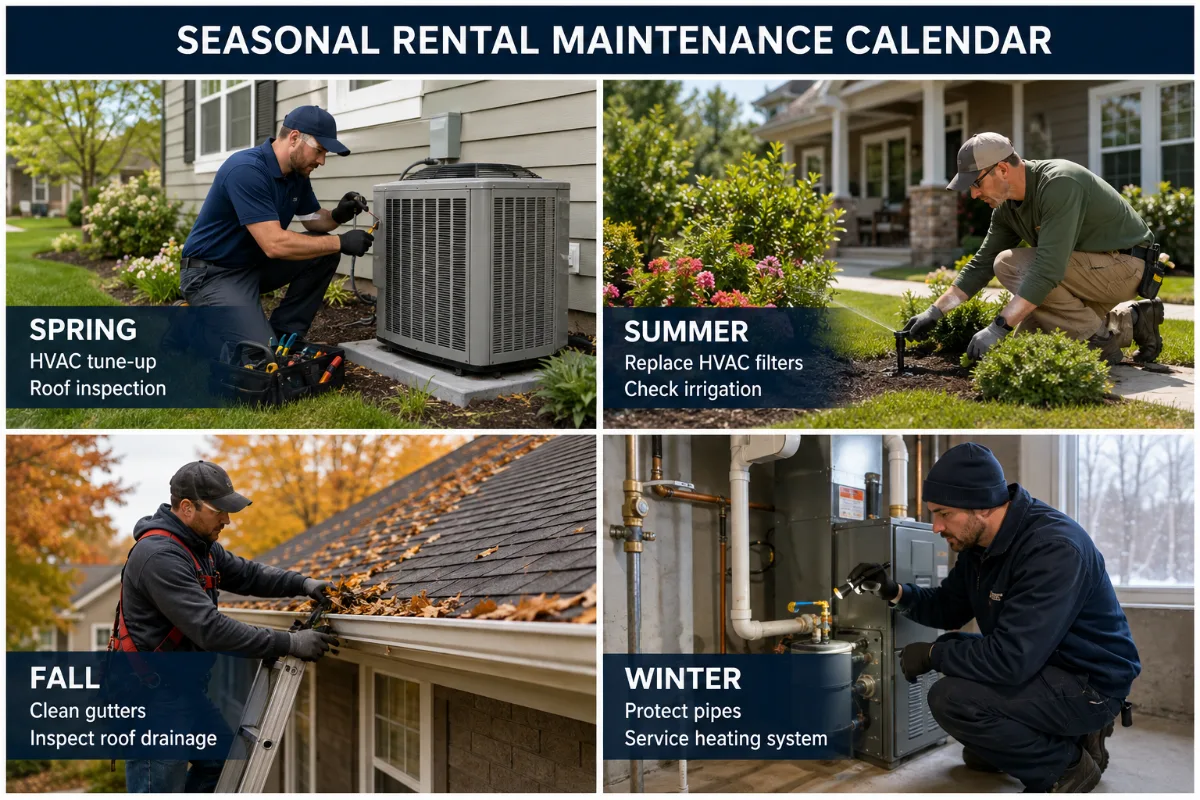
Tie routine upkeep to the calendar so nothing slips. This seasonal home maintenance checklist is built for Inland Empire conditions:
Spring- Service the HVAC system and replace filters before cooling season.
- Inspect the roof and flashing for winter-storm damage.
- Check irrigation timers and sprinkler heads for the dry months ahead.
- Test smoke and carbon monoxide detectors.
- Confirm the AC is cooling efficiently during the hottest stretch.
- Clear defensible space and trim dry brush (critical during wildfire season).
- Check for pests, which peak in the heat.
- Clean gutters and downspouts before the rains.
- Weatherproof doors and windows and check the water heater.
- Service the heating system.
- Inspect for leaks and roof drainage after storms.
- Check exterior caulking and seal gaps against moisture.
Move-in and move-out inspections
Every tenancy should begin and end with a documented walkthrough. A thorough rental property inspection checklist at move-in - with dated photos of every room, appliance, wall, and floor - is your baseline. At move-out, you compare against it to fairly separate normal wear and tear from tenant damage, which is exactly what California security-deposit rules require. Cover in each inspection:
- Walls, floors, ceilings, and paint condition
- Appliances, plumbing fixtures, and water pressure
- HVAC operation and filter condition
- Doors, windows, locks, and screens
- Smoke and carbon monoxide detectors
- Exterior, landscaping, and any garage or fencing
Give proper written notice - generally 24 hours in California - before entering an occupied unit for any routine inspection.
High-return preventive tasks owners skip
A few small habits deliver outsized savings:
- Annual HVAC service. The single most important task in this climate. An ENERGY STAR certified system that is maintained runs cheaper and lasts years longer.
- Filter changes every 60 to 90 days. Cheap, and they protect the whole system.
- Water heater flush. Removes sediment and extends life.
- Caulking and weatherstripping. Stops moisture intrusion and cuts energy bills.
- Pest and termite checks. Early detection prevents structural damage.
When to DIY and when to call a pro
Simple tasks - filter swaps, testing detectors, minor caulking - are fine to handle yourself or assign to a handy tenant. But licensed work (electrical, major plumbing, roofing, HVAC repair) should always go to qualified pros, both for safety and to keep warranties and insurance intact. Trying to save on a licensed repair is how a small issue becomes a code violation.
Let a local team run the checklist for you
Staying on top of seasonal service, inspections, and vendor coordination is a real job - especially for owners managing from a distance. Our property maintenance services and local Riverside property management and Corona property management teams run this checklist on schedule with vetted, licensed vendors, so nothing gets deferred and small issues never become big ones.
Frequently Asked Questions
How often should I inspect a rental property?
Plan on a move-in inspection, a move-out inspection, and at least one or two routine inspections per year - often seasonally. In California, always give proper written notice (usually 24 hours) before entering an occupied unit.
Who is responsible for maintenance - the landlord or the tenant?
California landlords must keep the property habitable: working plumbing, heating, electrical, and a weatherproof structure. Tenants are typically responsible for cleanliness and minor upkeep. Spell out the split clearly in the lease.
Why does preventive maintenance save money?
Small, scheduled tasks - like an annual HVAC service or clearing gutters - cost far less than the emergency repairs they prevent. A neglected AC system in the Inland Empire heat can fail at the worst time and cost thousands to replace.
What maintenance matters most in the Inland Empire climate?
HVAC and cooling top the list given the extreme summer heat, followed by irrigation and landscaping, pest control, and seasonal weatherproofing before winter rains.



Related Posts