El Niño 2026: How Southern California Landlords Can Protect Rental Properties

Now is not the time to sit on the sidelines with El Niño coming; the RISK is HIGH!
The Reality of Water Intrusion:
At Management One, we experienced 68 different water intrusions over a recent 2-to-3-year period of torrential rain.
- Average Cost: $35,000
- Average Remedy Time: Up to 1.5 months
- Average Resident Displacement: 2-3 months (with zero rental income)
You also face the risk of residents claiming mold and related health situations. You cannot buy insurance for mold itself, which is why we must be proactive and aggressive about water. Yes, you can insure repairs and even lost rent, but not mold claims.
2026 El Niño Property Preparation Alert
California is heading into another El Niño season, bringing the potential for periods of significant rainfall this winter.
The time to prepare your property is before the first major storm—not after a leak or drainage problem has already occurred.
After more than 40 years of managing residential rental properties in Southern California, we have seen how a relatively minor maintenance issue can become a much larger, more expensive repair once several inches of rain arrive. A small roof vulnerability, clogged drain, deteriorated seal, or overgrown tree may not appear urgent today. During sustained heavy rain, it can become urgent very quickly.
What Past El Niño Seasons Show
Historical El Niño seasons have often favored near-normal or wet winter months in California. While historical patterns do not guarantee future outcomes, they strongly reinforce why preventive preparation matters.
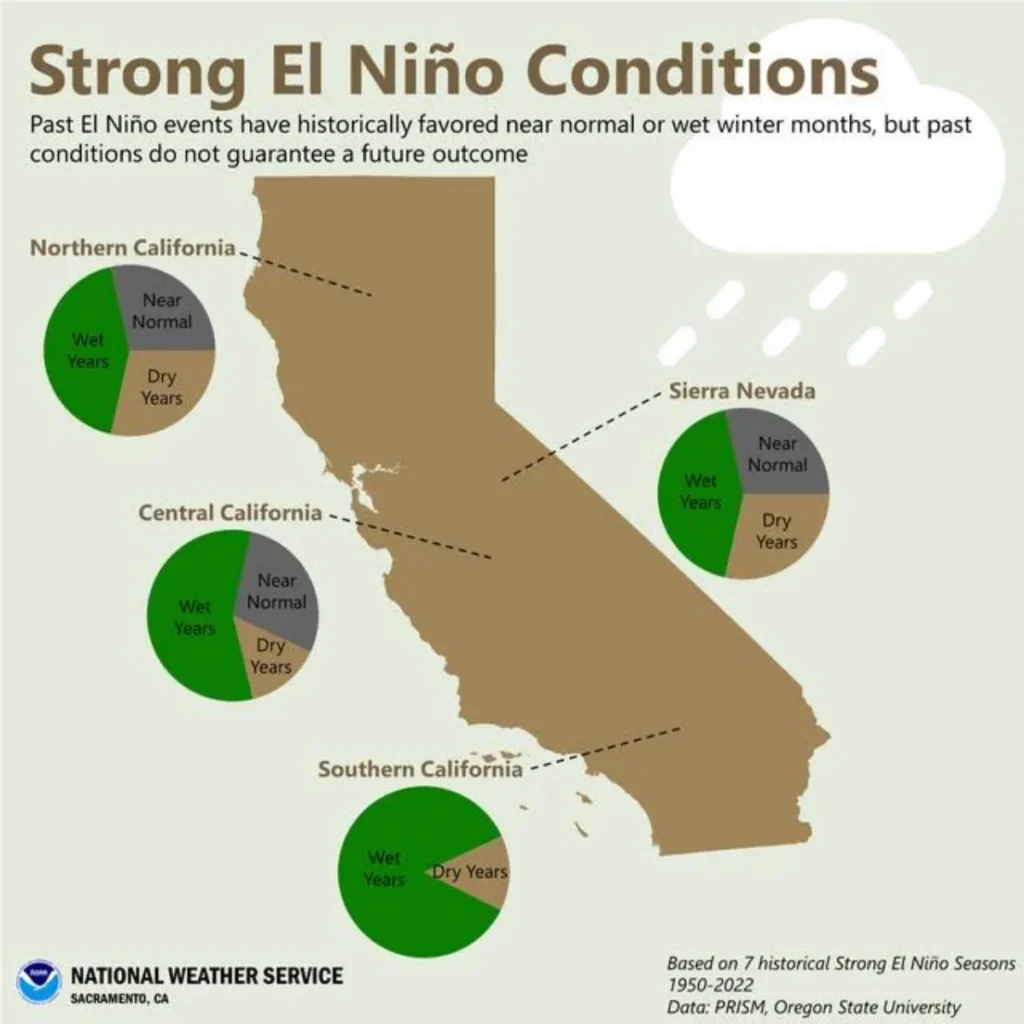
Historical strong El Niño conditions in California. Source: National Weather Service Sacramento
Areas We Recommend Addressing Now
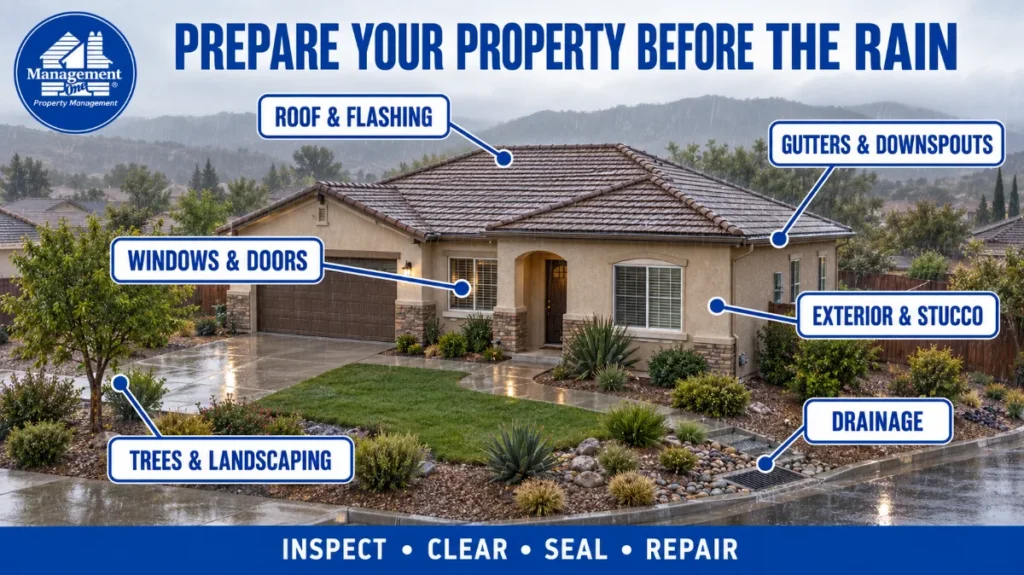
- Roof: Check for damaged or missing tiles or shingles, deteriorated flashing, and other potential leak areas. Inspect air vents and fireplace flashing, and re-tar or seal as needed.
- Gutters and Downspouts: Clear leaves and debris to confirm that rainwater is being properly directed away from the structure.
- Property Drainage: Make sure drains and drainage channels are clear and functioning. Water pooling against the home drastically increases the risk of water intrusion and foundation damage.
- Trees and Landscaping: Trim potentially dangerous limbs and remove landscaping debris that could block drains during heavy wind and rain.
- Doors, Windows, and Exterior Openings: Inspect weather seals, caulking, and other areas where wind-driven rain could enter.
- Exterior and Stucco: Look for cracks, deterioration, and openings that could allow moisture intrusion.
- Known Problem Areas: If your property has experienced roof leaks, drainage problems, or water intrusion in the past, now is the time to address those exact areas.
The Real Cost of Water Intrusion Can Be Significant
One of the biggest concerns with water intrusion is that the financial impact extends far beyond repairing the original leak.
Once water gets inside a property, it can destroy drywall, insulation, flooring, baseboards, cabinetry, electrical components, and personal property. Depending on the moisture’s extent and duration, professional water extraction, drying, and remediation become necessary.
If the property becomes temporarily uninhabitable, the secondary crisis is resident displacement and a total loss of rental income. Depending on the repairs, lease terms, and applicable laws, an owner may face a prolonged period where rent cannot be collected while the property is being restored.
Is Your Property Adequately Insured to Rebuild Today?
The amount you originally paid for the property, its current market value, and what it would cost to rebuild the structure today are likely three significantly different numbers. Construction labor and material costs have shifted substantially over the last few years.
Your Action Plan for This Week:
- Contact Your Insurance Agent: Verify you have adequate rebuilding coverage. It is your responsibility to ensure sufficient coverage, not theirs.
- Verify “Loss of Rents” Coverage: This is rarely an expensive addition, and often costs nothing extra. This cannot be optional. Make sure you get an updated declaration page in writing confirming this coverage.
- Protect Personal Property: Take action today. Once the rains arrive, roofers will be fully booked and it could take weeks to get a professional out to your property.
Note: Management One is not an insurance broker and cannot determine the appropriate coverage for an individual owner. We strongly recommend reviewing these items directly with your licensed insurance professional.
Why Are We Recommending Action Now?
As of October 2025, we began issuing roof inspections on all annuals for any rental property roof that had not been inspected within the last 5 years. 95% of those roofs had something wrong with them. We found dried-out and cracked tar around air vents and fireplace flashing—allowing water into the attics. Even if it wasn’t coming through the ceiling yet, this hidden moisture causes dry rot and invites termites.
The average “Roof Tuneup” costs approximately $950.00. While we couldn’t have predicted another torrential rainy season a year ago, we refused to let our landlords endure the same fate others faced two years ago during Southern California’s heavy rains, where some properties took on catastrophic water damage.
Take Action Today
If you previously declined our suggested repairs for financial reasons, we strongly recommend you reconsider. Call your property inspector ASAP, or call 951-735-2000 and ask for the maintenance department TODAY.
What starts as a relatively inexpensive preventive repair can quickly devolve into water mitigation, interior reconstruction, resident displacement, and lost rental income. Preventing a problem is always far less disruptive than responding to an active disaster.
Our Recommendation: Prepare Now

Professional roof inspection during wet conditions.
If your property has not had a professional roof inspection within the last five years, it needs one now—before the heavy-rain season hits.
Identify and address drainage, exterior sealing, and other vulnerable areas immediately. Management One will continue monitoring weather conditions and working alongside our property owners to help protect their investments throughout the winter.
A little preparation today could help prevent a devastating problem tomorrow.
Frequently Asked Questions About El Niño Property Preparation
How should Southern California rental properties prepare for El Niño?
Property owners should inspect the roof and flashing, clean gutters and downspouts, clear drainage channels, trim hazardous tree limbs, seal exterior openings, and repair any known leak areas well before the rainy season begins.
Does El Niño mean Southern California will definitely receive heavy rain?
El Niño does not guarantee heavy rainfall. However, historical El Niño seasons have frequently brought significantly wetter conditions to Southern California, making preventive property maintenance a crucial safeguard.
When should a rental or personal property roof be inspected?
Schedule a professional roof inspection immediately before the heavy-rain season. We have already completed this on 95% of the properties we manage. If your property hasn’t had a roof inspection in the last five years—or has a history of previous leaks—get it inspected as soon as possible.
How can property owners prevent water damage during heavy rain?
You can drastically reduce water-damage risks by repairing roof vulnerabilities, clearing gutters and drains, directing downspouts away from the structure, sealing windows and doors, and correcting grading where water collects near the foundation.
Why are gutters and property drainage so important during El Niño?
Gutters, downspouts, and drainage channels are designed to move rainwater away from the property’s foundation. When they clog with debris or suffer damage, water pools near the structure, increasing the risk of leaks, moisture intrusion, and severe foundational damage.
What insurance coverage should rental property owners review?
Owners should speak to a licensed insurance professional about dwelling and replacement-cost limits, specific water-related exclusions, deductibles, and loss-of-rents / rental-income coverage.



Related Posts