Smoke & CO Detector Rules: Fall Safety For California Landlords
If you own a rental in Riverside, Corona, or Orange County, the smoke detector requirements California places on you are straightforward: install State Fire Marshal approved smoke alarms in every sleeping room, outside each sleeping area, and on every story of the home, keep them operable at the start of each tenancy, and test and maintain them for the life of the lease. Carbon monoxide alarms are required separately in any home with a gas appliance, a fireplace, or an attached garage. September is the month to verify both, because heater season and the first winter storms arrive together.
Every statute cited here was verified against the California Legislative Information site in September 2026. California housing law changes every January 1, so re-verify next year.
Smoke detector requirements in California: what owners actually owe
The governing statute is Health and Safety Code Section 13113.7. It requires smoke alarms approved and listed by the State Fire Marshal, installed per the manufacturer's instructions, in each dwelling intended for human occupancy: one- and two-unit dwellings, condominiums, apartment complexes, and stock cooperatives. Manufactured homes and mobilehomes fall under different rules.
Where the alarms have to be
Placement follows current residential building standards. In practice, an alarm goes:
- Inside each sleeping room
- Outside each separate sleeping area, in the immediate vicinity of the bedrooms
- On every additional story of the home, including basements and habitable attics
- At least three feet horizontally from the door of a bathroom containing a tub or shower
A three-bedroom single-story Corona rental therefore needs at least four alarms, not the one hallway unit many older homes still have. Section 13113.7 also required owners of rented units to add alarms by January 1, 2016 to match current building standards.
The 10-year sealed battery rule
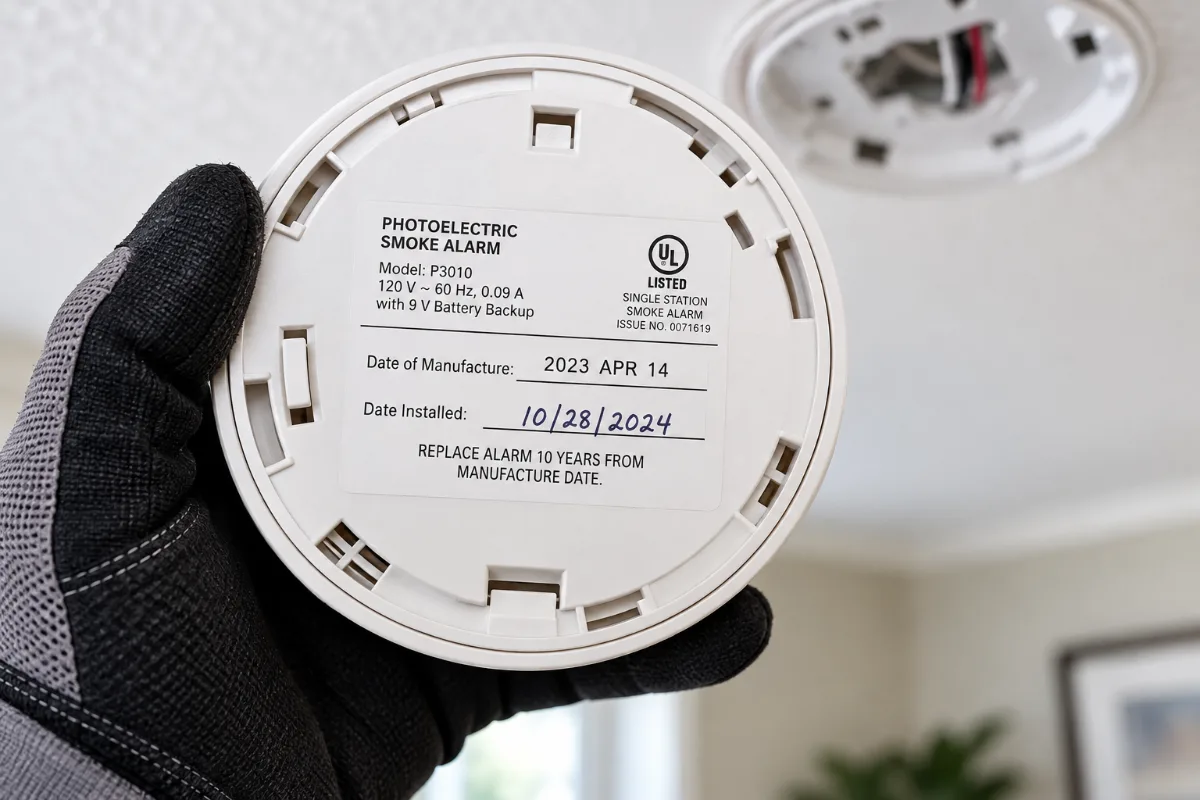
This is the rule owners most often get wrong. Since July 1, 2014, Health and Safety Code Section 13114 has barred the State Fire Marshal from listing a battery-only smoke alarm unless it contains a nonreplaceable, nonremovable battery that powers the alarm for at least 10 years. If you are still buying nine-volt units and swapping batteries every fall, you are buying a device that cannot legally be sold here. Since January 1, 2015, listed alarms must also show a manufacture date, leave room for the installation date, and include a hush feature.
An alarm that passes a test-button check can still be past its service life. Pull one down, read the date stamped on the back, and replace anything near its rated end of life. A silent, expired alarm is the failure mode that shows up in claims.
Landlord versus tenant duties
The statute splits the duty deliberately.
The owner must test and maintain the alarms, ensure they are operable when a new tenancy is created, and correct any reported deficiency. Since January 1, 2014, this applies to owners of rented single-family homes, not just apartment owners. The tenant must notify the manager or owner when they become aware of an inoperable alarm inside their unit.
The protection built into that split: an owner is not in violation for a deficient alarm they never received notice of. That defense only exists if you can prove what you were told, which is the argument for written maintenance requests and dated test logs.
To enter for testing or repair, give reasonable written notice (24 hours is presumed reasonable) and enter during normal business hours, except in an emergency. A violation is an infraction carrying a maximum $200 fine per offense.
Carbon monoxide detector law in California
Health and Safety Code Section 17926, enacted through the Carbon Monoxide Poisoning Prevention Act of 2010, requires an owner to install a State Fire Marshal approved carbon monoxide device in each existing dwelling unit that has a fossil fuel burning heater or appliance, a fireplace, or an attached garage. In Inland Empire terms, a gas furnace, water heater, range, dryer, fireplace, or attached garage puts you in scope, which covers most single-family rentals here. The deadlines passed years ago: July 1, 2011 for existing single-family dwellings, January 1, 2013 for other existing units.
Number and placement must follow the building standards for new construction or the manufacturer's instructions: outside each separate sleeping area near the bedrooms, on every occupiable level including basements, and inside any bedroom containing a fuel-burning appliance.
Section 17926.1 adds the rental-specific duty: the device must be operable when the tenant takes possession, the tenant must notify you of a deficient device, and you must correct any reported problem. A violation is an infraction with a $200 maximum fine, but the statute requires a 30-day notice to correct.
A combined smoke and CO device is legal in California only if it meets the standards for both functions and clearly distinguishes a smoke warning from a CO warning. One device can satisfy both statutes in a hallway, cutting your unit count and testing time.
Is a landlord required to provide heat in California?
Yes, and unlike cooling this one is unambiguous. Civil Code Section 1941 requires a lessor to put a building intended for human occupation into a condition fit for that occupation. Civil Code Section 1941.1 then deems a dwelling untenantable if it substantially lacks heating facilities maintained in good working order, and Health and Safety Code Section 17920.3 treats a lack of adequate heating as a condition making a building substandard.
The temperature standard comes from Title 25, Section 34 of the California Code of Regulations: every dwelling unit offered for rent must have heating facilities capable of maintaining at least 70 degrees Fahrenheit measured three feet above the floor in all habitable rooms. Where the heating is not under the tenant's control, the owner must provide that 70 degrees around the clock. Unvented fuel-burning heaters are not permitted. We could not verify a Riverside or Corona ordinance setting a higher minimum, so treat the state rule as your floor.
This is the mirror image of the cooling question. If you have read our guide to the air conditioning maintenance law in California, you know there is no statewide duty to install AC. Heat is different. A technician who finds a cracked heat exchanger in September gives you eight weeks of lead time instead of a December emergency and a displaced tenant.
Landlord responsibility for heating in practice means an annual furnace service, a filter change, a verified thermostat, and clear combustion venting. It is also when your CO alarms matter most, because a furnace idle since March is the likeliest source of carbon monoxide in an Inland Empire home.
Storm and drainage prep before the first rains
No California statute requires you to clean gutters on a schedule. The law requires the outcome. Civil Code Section 1941.1 lists effective waterproofing and weather protection of roof and exterior walls as an affirmative habitability characteristic, and a clogged downspout pushing water against a foundation is how that standard gets breached.
Inland Empire storms arrive fast and hard. Sensible rain gutter maintenance before the first system:
- Clear gutters and downspouts of leaf litter and roof grit
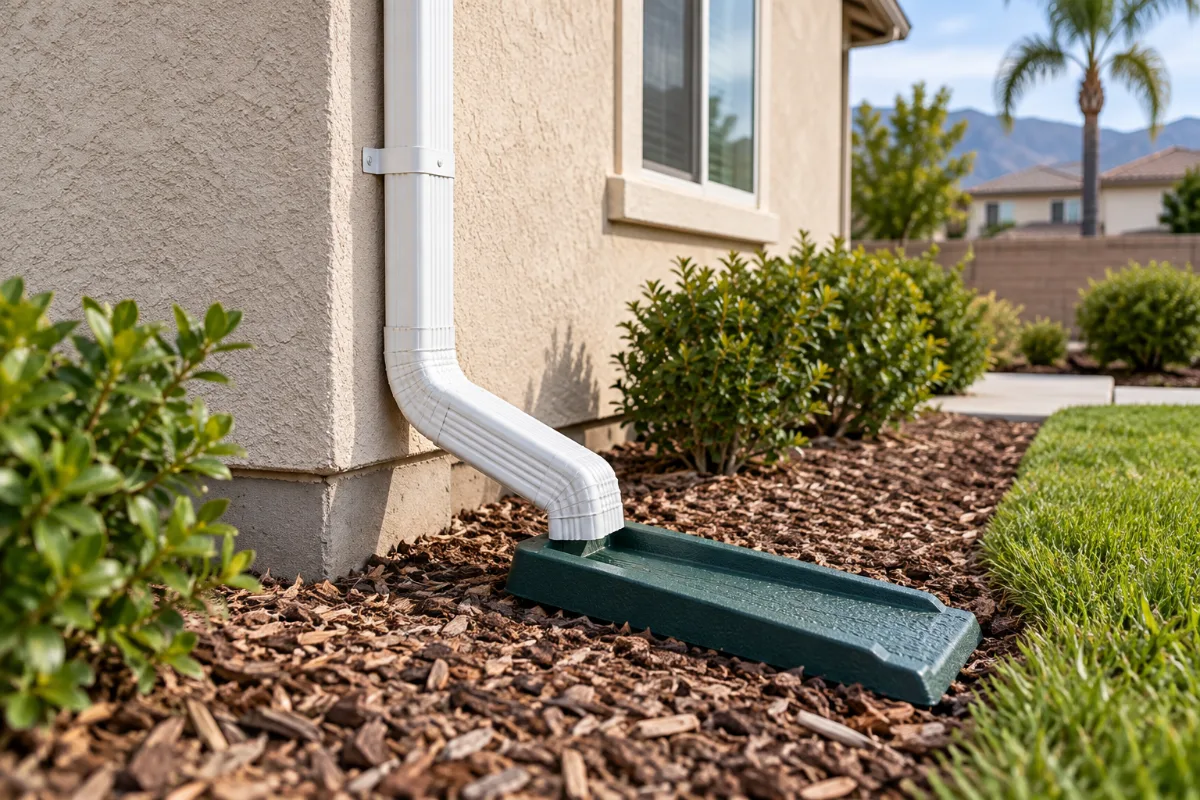
- Confirm downspouts discharge four to six feet from the foundation
- Check roof flashing, valleys, and any wildfire-season patch work
- Clear yard drains, area drains, and swales of debris
- Trim limbs overhanging the roof or a service drop
- Reseal exterior door thresholds and check window weatherstripping
Our broader rental property maintenance checklist covers the year-round items. The list above is the seasonal subset that must happen before October.
The printable Fall Safety Check
Hand this to your vendor. Photograph each item and date it.
| # | Item | Standard to meet |
|---|---|---|
| 1 | Count smoke alarms against room layout | Sleeping rooms, outside sleeping areas, each story |
| 2 | Verify alarms are State Fire Marshal listed | Approved, listed devices only |
| 3 | Read the manufacture date on every alarm | Replace near end of service life |
| 4 | Confirm battery-only units are sealed 10-year | No nine-volt units |
| 5 | Test every alarm and log the result | Dated written log |
| 6 | Verify CO alarms if gas appliance, fireplace, or attached garage | Operable at possession |
| 7 | Confirm CO alarm placement | Near bedrooms, every occupiable level |
| 8 | Professional furnace service | Heat exchanger, venting, ignition, filter |
| 9 | Verify heat reaches 70°F in habitable rooms | Title 25 heating standard |
| 10 | Confirm no unvented fuel-burning heaters | Prohibited by regulation |
| 11 | Clear gutters, downspouts, and yard drains | Water discharged away from foundation |
| 12 | Inspect roof, flashing, door and window seals | Effective waterproofing |
| 13 | Trim overhanging limbs | Clear of roof and service lines |
| 14 | Send tenants a written seasonal safety notice | Documents the reporting duty |
Item 14 is the one owners skip and the one that pays off: a notice reminding tenants to report inoperable alarms creates the paper trail behind the statutory notice defense.
What changed for 2026
The smoke alarm and carbon monoxide statutes were not amended for 2026. The habitability statute was. AB 628 (Stats. 2025, Ch. 342) amended Civil Code Section 1941.1 effective January 1, 2026 to add two habitability characteristics: a stove capable of safely generating heat for cooking, and a refrigerator capable of safely storing food, both maintained in good working order. An appliance under a manufacturer or public-entity recall does not qualify and must be repaired or replaced within 30 days of notice.
Two limits matter. These requirements apply only to a lease entered into, amended, or extended on or after January 1, 2026, so they reach your portfolio at the next lease cycle rather than all at once. And they exempt permanent supportive housing, single-room occupancy units, residential hotel units, and units with shared kitchens. If you are renewing Inland Empire leases this fall, that renewal is an appliance-compliance event as well as a rent conversation.
Early October is the natural deadline for the rest. Fire Prevention Week runs October 4 through 10 in 2026, themed on safe charging and lithium-ion battery fires, a useful hook for the tenant notice you send with your alarm test. Get the alarms verified, the heater serviced, and the gutters cleared before that week ends and you are ahead of both the season and the statute.
Management One handles seasonal compliance the way it should be: documented, dated, and done before it becomes an emergency. We coordinate alarm verification, heater service, and drainage prep across Riverside property management and Orange County property management portfolios, and our professional inspections create the written record that protects you if a claim is filed. Reach out and we will get your fall check on the calendar.
This article is general information for California rental property owners, not legal advice. Statutes and local ordinances change and situations differ, so consult a qualified California attorney about your property. Current as of September 2026.
Frequently Asked Questions
What are the smoke detector requirements in California for rental properties?
Under Health and Safety Code Section 13113.7, an owner must install smoke alarms approved and listed by the State Fire Marshal, following the manufacturer's instructions, in every dwelling intended for human occupancy. Current building standards place alarms in each sleeping room, outside each separate sleeping area near the bedrooms, and on every additional story including basements and habitable attics. Since January 1, 2014, the owner of a rented single-family home is responsible for testing and maintaining those alarms.
Do California landlords have to use 10-year sealed battery smoke alarms?
Health and Safety Code Section 13114 says that since July 1, 2014, a battery-only smoke alarm cannot be approved and listed by the State Fire Marshal unless it contains a nonreplaceable, nonremovable battery that powers the alarm for at least 10 years. Hardwired alarms and fire alarm systems are handled separately. Since January 1, 2015, listed alarms must also show a manufacture date, provide a spot to write the installation date, and include a hush feature.
Who is responsible for testing smoke alarms, the landlord or the tenant?
The duty is split. The owner must make sure alarms are operable at the start of a new tenancy and must correct any reported deficiency. The tenant is responsible for telling the owner or manager when an alarm inside the unit stops working. An owner is not in violation for a deficient alarm they were never notified about, which is exactly why documented notices and a written test log matter.
Which California rentals need a carbon monoxide detector?
Health and Safety Code Section 17926 requires a State Fire Marshal approved carbon monoxide device in each existing dwelling unit that has a fossil fuel burning heater or appliance, a fireplace, or an attached garage. That covers most Inland Empire homes with gas furnaces, gas water heaters, gas ranges or an attached garage. Section 17926.1 requires the device to be operable when the tenant takes possession.
Is a landlord required to provide heat in California?
Yes. Civil Code Section 1941.1 lists heating facilities maintained in good working order as an affirmative habitability standard, and Title 25, Section 34 of the California Code of Regulations requires heating facilities capable of maintaining at least 70 degrees Fahrenheit measured three feet above the floor in every habitable room. Where the heat is not under the tenant's control, the owner must supply that 70 degrees around the clock. Air conditioning is treated very differently.
How much can a landlord be fined for a missing smoke or CO alarm?
A violation of the smoke alarm statute is an infraction with a maximum fine of $200 per offense. The carbon monoxide statute carries the same $200 maximum, but the owner must first receive a 30-day notice to correct before a fine can be assessed. The bigger exposure is usually not the fine, it is the habitability claim or liability that follows an incident.
Is this article legal advice?
No. This is general information written in plain English to help rental property owners understand their fall safety obligations. It is not legal advice, city ordinances and individual circumstances vary, and you should confirm specifics with a qualified California attorney before acting.


Related Posts