Wildfire Season & Your Inland Empire Rental: A 2026 Owner’s Guide to Emergency Prep
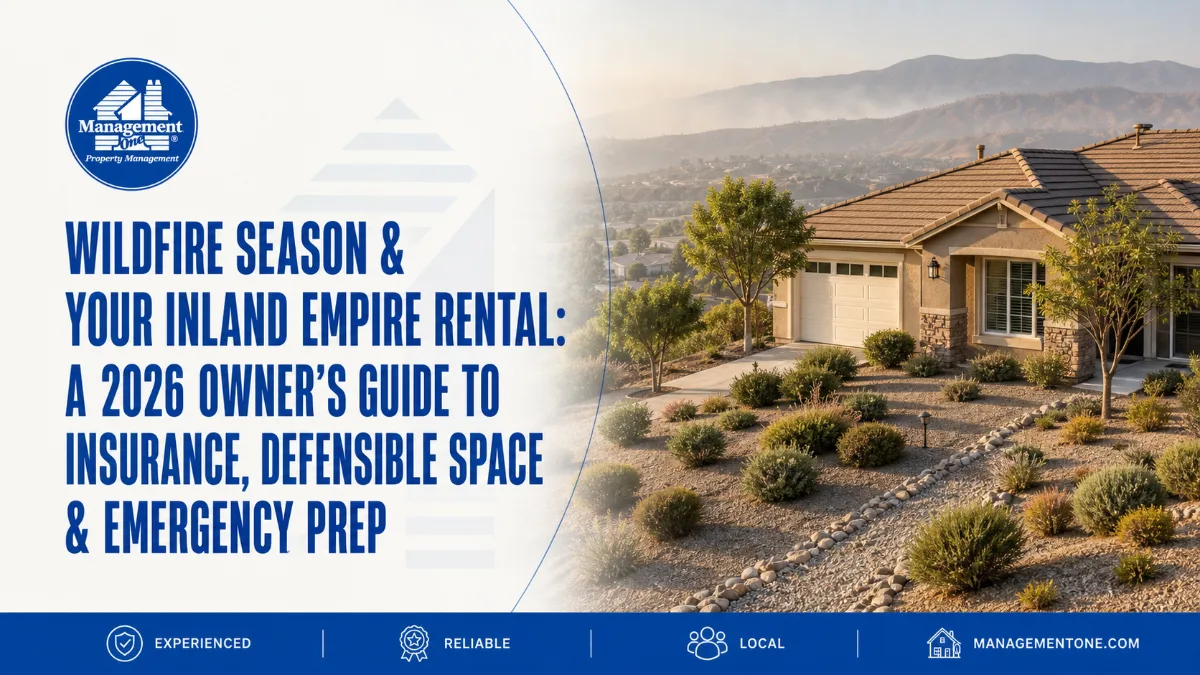
August is the peak of wildfire season across the Inland Empire. Hot Santa Ana conditions, dry brush in the foothills around Riverside, Corona, and the Cleveland National Forest, and years of drought stress combine to make late summer the riskiest stretch of the year for rental owners. If you own a single-family rental or small portfolio here, three things protect your investment: the right insurance, code-compliant defensible space, and a simple emergency plan your tenants can actually follow.
1. Why Inland Empire owners face a tougher insurance market
Wildfire risk has reshaped the California property insurance market. Several national carriers have paused new policies or non-renewed homes in high-hazard areas, and rates in foothill communities have climbed sharply. For rental owners, that means the wildfire insurance California landlords once took for granted now requires active management every renewal cycle.
Start by confirming your dwelling coverage limit matches today’s rebuild cost – not the purchase price or the assessed value. Construction and labor costs in Southern California have risen fast, and an underinsured rebuild is the single most common gap we see. Then check three things: your wildfire deductible (some policies now carry a separate, higher percentage deductible), any smoke or ash sublimits, and whether loss-of-rent coverage is included so a displaced tenancy does not also wipe out your cash flow.
Do not wait for a non-renewal letter. Ask your agent each spring whether your carrier still writes in your ZIP code, and price a backup option early. Owners who shop ahead of peak season have far more choices than those scrambling in August.
2. Landlord wildfire insurance California options when carriers pull back
If your standard carrier declines or non-renews the property, you are not out of options. The most common path is a landlord wildfire insurance California solution built in two parts: a California FAIR Plan dwelling policy that covers the fire peril, paired with a separate “difference in conditions” or liability policy that restores the coverage the FAIR Plan leaves out. The FAIR Plan is a legitimate, state-established safety net – the California Department of Insurance publishes guidance on how it works and how to file a complaint if you are treated unfairly. Keep documentation of every declination; it can help you qualify for the FAIR Plan and support future appeals.
3. Defensible space requirements California enforces
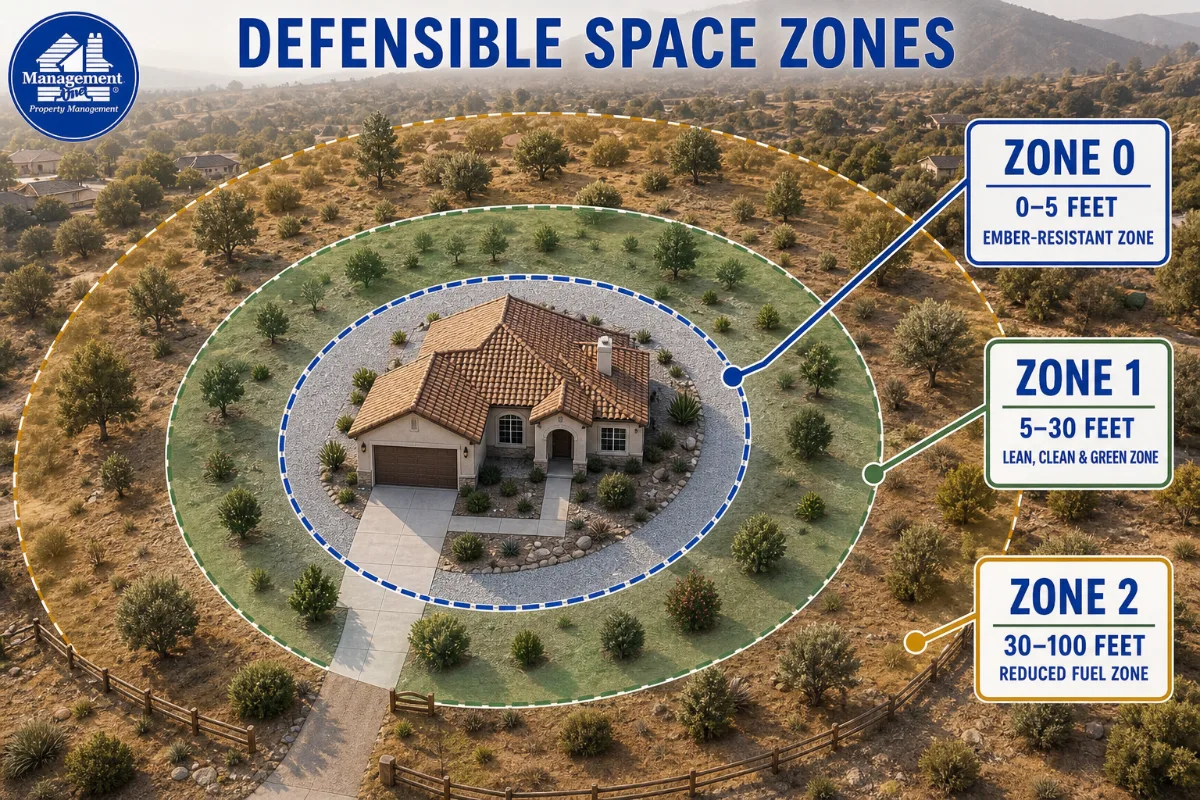
Insurance is only half the equation. Many carriers now inspect properties and require brush clearance as a condition of coverage, and the state mandates it outright. Under the defensible space requirements California sets in Public Resources Code 4291, owners in high fire hazard zones must maintain up to 100 feet of managed space around structures, organized into zones:
- Zone 0 (0 to 5 feet): the ember-resistant zone right against the house – keep it clear of bark mulch, dead plants, and anything flammable stacked against walls.
- Zone 1 (5 to 30 feet): remove dead vegetation, trim tree limbs away from the roof, and space out shrubs so fire cannot ladder from the ground into the canopy.
- Zone 2 (30 to 100 feet): mow grass low, remove dead branches, and create separation between trees and brush.
CAL FIRE offers free defensible space inspections in many State Responsibility Areas, and local fire agencies in Riverside County enforce clearance each summer. Because the legal duty falls on the owner, most investors handle this directly or fold it into professional management rather than leaving it to a tenant’s weekend yard work.
4. How to protect a rental property from wildfire beyond the yard
Learning how to protect a rental property from wildfire means hardening the structure itself, not just clearing brush. Embers – not walls of flame – ignite most homes, so the highest-return upgrades close off the paths embers use:
- Install 1/8-inch metal mesh over attic, eave, and foundation vents.
- Replace wood or vinyl gutters and keep them clear of leaves and needles.
- Upgrade to Class A fire-rated roofing when the roof is due for replacement.
- Use tempered or dual-pane glass, which resists cracking under radiant heat.
- Keep the 0-to-5-foot zone hardscaped with gravel or concrete instead of wood chips.
Phase these in as budget and turnover allow – a re-roof or window replacement is the natural moment to choose fire-rated materials.
5. Build a tenant emergency and wildfire preparedness plan
Good wildfire preparedness protects people first and property second. Give every tenant a one-page plan at move-in and again each July: local evacuation routes, how to sign up for Riverside County and San Bernardino County emergency alerts, where to find real-time CAL FIRE incident maps, and your contact number for reporting damage. Confirm smoke detectors work, share a simple go-bag checklist, and make sure gates and driveways stay clear enough for a fire engine to reach the property.
Your emergency plan should tell tenants to evacuate early on official orders – never to stay and defend the property. Lives are not replaceable; a well-insured, hardened rental is.
6. Where local management makes the difference
Insurance renewals, defensible space inspections, and seasonal emergency prep are exactly the kind of ongoing work that slips through the cracks for an owner managing from a distance. Our teams handling Riverside property management, Corona property management, and Orange County property management coordinate brush clearance, document property condition for carriers, and keep tenants prepared before the Santa Anas arrive.
Management One helps Inland Empire owners stay insured, compliant, and wildfire-ready all year. Contact us for a free property review before the next red flag warning.
7. Frequently Asked Questions
Does a standard landlord policy cover wildfire damage in California?
Most standard landlord (dwelling fire) policies include fire and wildfire as a covered peril, but many carriers have tightened terms in high-risk Inland Empire ZIP codes. Confirm your dwelling coverage limit reflects current rebuild costs and check for any wildfire sublimits or higher deductibles before fire season.
What is the California FAIR Plan and do I need it?
The California FAIR Plan is the state’s insurer of last resort for property owners who cannot find wildfire coverage on the standard market. If a carrier declines or non-renews your rental, a FAIR Plan policy paired with a separate liability wrapper can keep the property insured.
How much defensible space does California law require?
State law (Public Resources Code 4291) requires up to 100 feet of defensible space around structures in State Responsibility Areas and Very High Fire Hazard Severity Zones, managed in zones from the immediate ember-resistant area out to 100 feet.
Whose job is defensible space clearance on a rental – the owner or tenant?
Legal responsibility for defensible space rests with the property owner. You can assign routine yard upkeep to a tenant in the lease, but the owner remains accountable to the fire agency, so most owners handle or professionally manage brush clearance directly.



Related Posts