Orange County (949) 721-6608 – Riverside County (951) 735-2000

Management One

Orange County (949) 721-6608
Riverside County (951) 735-2000

Management One

Management One CEO Ron Sudman Featured In Forbes On Rental Fraud Prevention

Management One CEO Ron Sudman was recently featured in the Forbes Business Council, sharing insights on an issue that is becoming increasingly important for landlords and real estate investors: rental fraud prevention.

In the article titled Fraud In Rental Properties: What’s Lurking Under The Surface,” Sudman explains how fraudulent rental applications, identity manipulation, and falsified financial documents are becoming more sophisticated as rental processes move online.

For property owners, rental fraud prevention is no longer optional. It has become a critical part of protecting rental income, maintaining property value, and ensuring stable long-term investments.

Read the full Forbes article here:
https://www.forbes.com/councils/forbesbusinesscouncil/2026/02/19/fraud-in-rental-properties-whats-lurking-under-the-surface/

Rental fraud prevention landlord reviewing tenant application documents

Why Rental Fraud Prevention Is More Important Than Ever

The rental housing industry has changed dramatically over the past decade. Online applications, digital leasing systems, and automated screening tools have made renting faster and more convenient.

However, these same technologies have also made it easier for fraudsters to manipulate information.

Today’s fraudulent rental applications may include:

  • Altered pay stubs

  • Fake employment verification

  • Manipulated bank statements

  • Synthetic identities

  • Stolen personal information

These documents can appear legitimate, making it difficult for individual landlords to detect problems without strong verification systems.

This is why rental fraud prevention has become an essential part of professional property management.

Rental fraud prevention landlord reviewing tenant application documents

The Financial Risks Rental Fraud Creates for Landlords

Rental fraud can create serious financial consequences for property owners.

If a fraudulent tenant secures a lease, landlords may face a series of costly challenges including:

  • Missed rent payments

  • Lengthy eviction proceedings

  • Property damage

  • Legal expenses

  • Vacancy losses during turnover

For real estate investors who rely on consistent rental income, these issues can quickly impact the overall performance of their investment.

Implementing strong rental fraud prevention strategies helps reduce these risks before they become expensive problems.

Rental fraud financial losses landlord reviewing unpaid rent paperwork

How Professional Property Management Improves Rental Fraud Prevention

One of the most effective ways to reduce fraud risk is through a structured tenant screening process.

Professional property management companies typically use multiple layers of verification, including:

  • Direct employer verification

  • Rental history confirmation

  • Financial documentation analysis

  • Identity verification through multiple data sources

These systems help identify inconsistencies that might otherwise go unnoticed.

At Management One, our screening systems are designed to protect both property owners and residents while maintaining fair housing compliance and consistent leasing standards.

Secure your Orange County rental income with industry-leading fraud prevention. Explore our Orange County management solutions.
https://www.managementone.com/property-management-orange-county

Professional property management tenant screening process

Technology Is Changing Fraud Detection

Modern property management systems are increasingly using advanced verification tools to identify suspicious patterns within rental applications.

These systems analyze multiple data points simultaneously and flag potential discrepancies before a lease is approved.

Combined with experienced property management professionals reviewing each application, these tools create a much stronger defense against fraudulent activity.

As rental fraud tactics evolve, screening systems must evolve as well.

Protecting Your Rental Property Investment

While no screening process can eliminate every risk, landlords can take several important steps to strengthen rental fraud prevention.

Best practices include:

  • Verifying employment directly with employers

  • Reviewing full financial statements when necessary

  • Checking rental history with previous landlords

  • Confirming identity through multiple verification sources

  • Using experienced property management systems

These steps help ensure that applicants are thoroughly vetted before being approved.

Landlords who take a proactive approach to rental fraud prevention are better positioned to maintain stable rental income and long-term investment success.

Protecting rental property investments through professional management

Continuing The Conversation On Rental Housing Risks

Ron Sudman’s Forbes Business Council article highlights an important issue affecting today’s rental housing market.

As fraud tactics continue evolving, landlords and investors must stay informed and adopt stronger verification processes to protect their properties.

Management One remains committed to educating property owners and providing professional systems that help reduce risk while maintaining efficient leasing operations.

Protect your portfolio with the same systems featured in Forbes. Partner with Management One today. Visit: https://www.managementone.com/property-management

Frequently Asked Questions About Rental Fraud Prevention

What is rental fraud?

Rental fraud occurs when an applicant intentionally provides false information in order to obtain a lease. This can include falsified income documents, identity theft, or fake rental history.

Why is rental fraud increasing?

Rental fraud is increasing as more rental processes move online. Digital tools allow fraudulent documents to appear more convincing, making verification more important than ever.

How can landlords prevent rental fraud?

Landlords can reduce fraud risk by verifying employment, reviewing financial documentation carefully, checking rental history with previous landlords, and using professional screening services.

Can property management companies help prevent rental fraud?

Yes. Professional property management companies use advanced screening tools, layered verification processes, and experienced review to detect inconsistencies and reduce fraud risk.

What happens if a fraudulent tenant is approved?

If a fraudulent tenant is approved, landlords may face unpaid rent, eviction proceedings, property damage, and vacancy losses. Preventative screening is the most effective way to avoid these situations.

By |2026-04-07T08:04:25-07:00March 4, 2026|Industry News, Landlord Education|Comments Off on Management One CEO Ron Sudman Featured In Forbes On Rental Fraud Prevention

Management One CEO Ron Sudman Featured in Forbes on Landlord Asset Protection

We’re proud to announce that Ron Sudman, CEO of Management One, has been featured in Forbes as a contributor to the Forbes Business Council. His latest article, “Sole Proprietors, LLCs And Umbrella Insurance: A Landlord’s Guide To Asset Protection,” provides critical insights for rental property owners navigating today’s increasingly complex legal landscape.

With more than 40 years of experience guiding landlords, Ron shares real-world lessons learned from decades of managing rental properties across Southern California. His Forbes article focuses on one of the most important but often overlooked aspects of property ownership: protecting your personal assets from liability exposure.

Why This Matters for Orange County and Riverside Landlords

Whether you own a single rental home or a growing portfolio, property owners in Orange County and Riverside County face significant risk if their properties are not properly structured and insured. As Ron explains in the article, one lawsuit can jeopardize decades of wealth-building, especially for landlords operating as sole proprietors without adequate liability protection.

Drawing on firsthand experience from Orange County property management and Riverside property management, Ron outlines:

  • The key differences between sole proprietorships and LLCs
  • The hidden risks of unlimited personal liability
  • How umbrella insurance policies can provide an added layer of protection
  • Why legal and insurance decisions should align with long-term investment goals

These insights are especially relevant in high-cost, high-liability markets like Orange County and rapidly growing areas throughout Riverside County.

Real-World Expertise, Not Theory

What sets this Forbes article apart is its foundation in real cases. Ron has seen landlords face lawsuits over issues as simple as trip-and-fall incidents sometimes occurring on city sidewalks outside the property putting personal homes, savings, and retirement at risk. These scenarios reinforce why proper asset protection planning is essential for every rental property owner.

Transparent Pricing That Supports Smarter Decisions

Protecting your assets also means understanding your costs. As part of our commitment to transparency, Management One recently updated our property management pricing page so owners can make informed decisions without surprises.

View our updated Property Management Fees and pricing structure
https://www.managementone.com/property-management-fees

Clear pricing, combined with professional management, helps landlords focus on long-term stability, not short-term headaches.

A Continued Commitment to Educating Landlords

Ron Sudman’s Forbes feature reflects Management One’s long-standing commitment to landlord education, transparency, and risk mitigation. From legal structuring guidance to day-to-day operations, our team has helped thousands of owners make smarter decisions through professional property management in Orange County and property management Riverside.

We encourage all property owners to read Ron’s full Forbes article and evaluate whether their current ownership structure and insurance coverage truly protect their future.

Read the full article on Forbes:
Sole Proprietors, LLCs And Umbrella Insurance: A Landlord’s Guide To Asset Protection

By |2025-12-29T15:28:43-08:00December 29, 2025|Industry News|Comments Off on Management One CEO Ron Sudman Featured in Forbes on Landlord Asset Protection

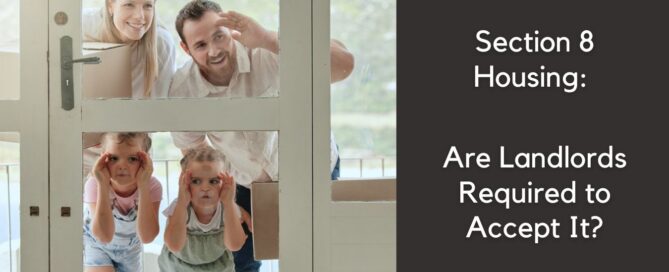
Section 8 Housing: Are Landlords Required to Accept It?

Do you remember the classic Clint Eastwood film The Good, The Bad, and The Ugly? For many landlords, working with the Section 8 Housing Voucher Program can feel similar—there are clear benefits, but also challenges that require additional effort and consideration.

As of December 2022, over 7.5 million individuals across the U.S. lived in households supported by housing vouchers. In Riverside County alone, more than 10,000 residents benefit from this federally funded rental assistance.

Established under the Housing and Community Development Act of 1974, the Section 8 program was created to ensure that low-income families could access safe, decent, and affordable housing in the private rental market—outside of traditional public housing.

For decades, many private landlords declined participation due to administrative burdens and perceived complications. However, in recent years, California’s legal landscape has shifted significantly.

Legal Obligations for Landlords

Effective January 1, 2020, California enacted Senate Bill 329 and Senate Bill 222, which prohibit landlords from rejecting applicants solely based on their use of a housing voucher. This includes Section 8, VASH (Veterans Affairs Supportive Housing), and other forms of rental assistance.

Housing vouchers are now legally recognized as a protected source of income under the California Fair Employment and Housing Act (FEHA). As a result, landlords may not advertise or indicate in any way that they do not accept vouchers. Doing so is considered discriminatory under Fair Housing laws and may result in fines, legal action, and reputational damage.

These laws are actively enforced through complaint investigations and “mystery shopping” practices conducted by Fair Housing agencies.

What Landlords Must Know About Voucher Applicants

When screening residents with housing vouchers, landlords must follow specific guidelines:

  • Income Qualification: Income multipliers (e.g., 3x rent) must be based only on the applicant’s portion of the rent—not the full amount. For example, if rent is $1,500 and the tenant’s responsibility is $300, the income qualification must be based on the $300.
  • Credit Screening: Landlords may not disqualify voucher holders based on credit scores alone. However, screening for rental history, prior evictions, and background checks remains permissible.
  • Additional Requirements: Participating in the program entails administrative steps such as a housing authority inspection, habitability certification, and lease approval—all of which may extend the leasing timeline.

How the Voucher Qualification Process Works

Applicants seeking Section 8 assistance must:

  • Join a waitlist, often months or years long due to high demand
  • Select a housing region and meet income limits set by local agencies
  • Verify legal U.S. residency for at least one household member
  • Undergo background checks, with exclusions for certain offenses
From “No Section 8” to Inclusive Advertising

In the past, landlords frequently used phrases like “No Section 8” in their listings due to procedural delays. Today, such statements are prohibited under California law.

This includes language used in online listings (Craigslist, Zillow, personal websites), printed ads, and communications from leasing staff. All employees and agents must be trained to respond appropriately to voucher inquiries. Stating “we do not accept vouchers” is now grounds for a Fair Housing violation.

Dispelling Section 8 Myths

Some landlords worry about increased risks with voucher tenants. However, Section 8 residents are bound by the same lease terms as all other tenants. Violations—such as non-payment, damage, or illegal activity—can still result in eviction and legal action.

Additionally, tenants risk losing their voucher if they breach lease terms, which provides additional incentive for program compliance. The accountability built into the program often results in long-term tenancies and reliable rental income.

Additional Protected Classes

In addition to housing voucher recipients, military personnel and veterans are also covered by California’s source-of-income protection laws. These groups may not be discriminated against based on how they pay rent.

What It’s Really Like to Lease to a Section 8 Tenant

The qualification process for Section 8 renters is extensive. At Management One, we work closely with the Riverside and San Bernardino County Housing Authorities, each of which has a unique approval process.

Riverside County Requirements

To lease to a Section 8 tenant in Riverside County, both the management company and the resident must complete a 17-page packet. Alongside this packet, landlords must submit:

  • IRS documentation confirming the EIN
  • A voided check
  • The signed management agreement
  • A completed W-9 for Management One
  • A signed owner statement verifying homeownership

Once submitted to the caseworker, the packet is forwarded to the RFTA (Request for Tenancy Approval) department. This team reviews the applicant’s income, rent amount, and utility costs using a sliding affordability scale. The analysis includes whether appliances are gas or electric and adjusts for utility provider rates.

If the proposed rent exceeds what is deemed affordable for the applicant, the RFTA department will submit a counteroffer—sometimes only $50 lower, other times up to $500 or more. If the reduced amount is acceptable to the landlord, the process continues. If not, the application is denied, though landlords must ensure the same rental terms would also disqualify a non-voucher tenant to avoid discriminatory practices.

After approval, our team performs a limited credit review (looking for prior evictions or rental debt), verifies rental references, and confirms the tenant earns 3x their portion of the rent. The applicant must then submit their portion as a holding deposit.

Meanwhile, the property must undergo a HUD inspection before move-in. One of the most common reasons for failed inspections is non-compliant GFCI outlets near water sources, which we proactively address during property rehabs. If a property fails, landlords have 10 days to correct issues before re-inspection.

It’s important to note: No tenant may move in until the home passes inspection, regardless of what was listed in the lease agreement.

San Bernardino County Requirements

San Bernardino County follows a similar process, with a few additional documentation requirements. In addition to the packet:

  • A copy of the deed must be submitted
  • A W-9 is required for each owner listed on the deed
  • If the property is in a trust, the full trust documents and W-9s must be provided
  • The management agreement and a W-9 for Management One are also required

Unlike Riverside County, San Bernardino often asks landlords to pre-qualify the applicant before the housing packet is submitted.

Once approved, HUD schedules an inspection, and landlords must resolve any cited issues before the tenant may take occupancy. First payments typically take 4–6 weeks after move-in. Thereafter, HUD payments are deposited like clockwork on the 1st of the month.

Ongoing Management and Communication with HUD

After a Section 8 tenant moves in, ongoing communication with HUD is required. The agency is often understaffed, and changes—such as updates to a tenant’s income—may take 4–6 weeks to process. Payment adjustments and recertification notices are issued regularly, sometimes up to six times per year, plus one annual recertification.

Although the program has its complexities, we’ve found that understanding the process and working within both HUD’s and Management One’s frameworks enables us to better serve our residents and protect our property owners’ interests.

By |2025-04-28T11:11:46-07:00April 28, 2025|Industry News, Landlord Education, Property Ownership, Resident Education|Comments Off on Section 8 Housing: Are Landlords Required to Accept It?

New California Landlord Laws: What You Need to Know

As of January 1, 2025, several new laws affecting landlords in California have come into effect, aiming to enhance tenant protections and promote transparency in rental practices. Key changes include:

  1. Tenant Screening Procedures (AB 2493):

  • Application Fees: Landlords can charge a potential tenant an application screening fee only if they accept applications in the order received and approve the first applicant meeting the established screening criteria. We have always done this at Management One so this does not affect us.
  • Disclosure of Criteria: Landlords must provide their screening criteria in writing alongside the application.
  1. Security Deposit Documentation (AB 2801):

  • Photographic Evidence: Landlords collecting a security deposit are required to take photographs of the rental unit:
  • Immediately before, or at the start of the tenancy.
  • Within a reasonable time after the unit is returned, prior to any repairs or cleaning for which deductions from the security deposit will be made.
  • After completing any repairs or cleaning.

         Provision to Tenants: These photographs must be provided to the departing tenant.

  • Implementation Dates:
  • For tenancies ending on or after April 1, 2025, landlords must take photographs after possession is returned.
  • For tenancies beginning on or after July 1, 2025, landlords must take photographs at the start of the tenancy.
  1. Positive Rent Payment Reporting (AB 2747):

  • Offer to Tenants: Landlords of residential rental properties are required to offer tenants the option of having their positive rental payment information reported to at least one nationwide consumer reporting agency.

         Frequency of Offer:

  • For leases entered into on or after April 1, 2025, the offer must be made at the time of the lease agreement and at least once annually thereafter.
  • For existing leases as of January 1, 2025, the offer must be made no later than April 1, 2025, and at least once annually thereafter.
  1. Rental Payment Methods (SB 611):

  • Fee-Free Options: Landlords must offer at least one fee-free method for rent payment, ensuring residents are not charged additional fees for valid check payments, even if electronic methods are preferred. Should you have any properties that aren’t managed by Management One, take note of this as it will affect you.
  • Military Personnel Considerations: Landlords are now required to provide explanations when requesting larger security deposits from military personnel.
  • Prohibition of Posting Fees for Notices: Landlords are now prohibited from charging tenants any fees for the preparation, delivery, or posting of termination notices, such as a 3-Day Notice to Pay Rent or Quit. This change eliminates additional financial burdens on tenants facing potential eviction and encourages equitable treatment in the landlord-tenant relationship. It is important to note that this adjustment presents significant operational costs for landlords and property management companies, including labor, transportation, and fuel expenses related to notice delivery.

Management One is in the process of updating its practices with our landlords to ensure full compliance with the new regulations.

Resident Screening Procedures (AB 2493)

For the last 40 years, Management One has accepted applications on a first come-first serve basis. We believe this is the fairest way to rent properties and remain above board with Fair Housing.

Security Deposit Documentation (AB 2801):

We currently take photos for all resident security deposit charges and provide them to the departing residents. Effective April 1st, 2025, we will start taking additional before and after photos to be in compliance with the new law. This takes a lot of  additional labor time to comply with this law as well.

Positive Rent Payment Reporting (AB 2747):

We currently use an online payment platform that offers residents the option to have their rental payment history reported to their credit.

Rental Payment Methods (SB 611):

Fee-Free Options: We currently allow residents to pay by cashiers check or money order along with paying online.

Military Personal Security Deposit– the law already only allows for Management companies and landlords to collect a security deposit equal to one-months rent, so we don’t have to worry about this.

Termination notice fees: We currently charge the resident a $100 posting fee for 3-day notice to pay or quit. Effective April 1st, Management One will charge the landlords $75 posting fee and Management One will take a $25 loss.

We are committed to working closely with our legal counsel to ensure that Management One and our clients remain fully compliant with new laws and Fair Housing regulations.

As legislation evolves, we will continue to provide timely updates to keep you well-informed and prepared.

By |2025-01-08T16:32:40-08:00January 8, 2025|Industry News, Landlord Education, Property Ownership, Resident Education|Comments Off on New California Landlord Laws: What You Need to Know

Top 5 Neighborhoods In Wildomar, CA

Wildomar is a city in Riverside County, California, United States. It was incorporated on July 1, 2008. The city is in a fast-growing area.

Living in Wildomar offers residents a sparse suburban feel, and most residents own their homes. In Wildomar, there are a lot of parks. Many families live in Wildomar, and residents tend to have moderate political views. The public schools in Wildomar are above average. Quite an enjoyable city to live in. If a person is looking for a city with superb homes, good people, pretty good schools, Wildomar is great.

With all the different neighborhoods Wildomar offers, it can be tough to decide where to live. I’ve selected five great neighborhoods based on my tenure in property management.

Let’s tour the city, shall we?

1. Briarwood

Features beautiful single-family and multi-generational new homes for sale in Wildomar. Residents will enjoy access to Briarwood’s community park that has so much to offer. Two basketball half-courts appeal to kids and adults alike.

The community park includes a gorgeous picnic area that is great for grabbing a bite to eat and enjoying the warm California sun. Kids will be happy to have a tot lot with play structure, and parents will be happy it’s so close to home.

The community park also includes a shade structure with BBQ units and two picnic tables. The park is the perfect place to unwind and enjoy time with family and friends with plenty of open grassy areas. Just a short walk from the new homes of Briarwood, residents will enjoy a variety of nearby shops, grocery outlets, restaurants, pharmacies, and more. Being near with all the essentials and entertainment is one of the many perks of living.

The average rental rate for a 3-bedroom home in Briarwood is $3,060 a month. The average purchase price for a 3-bedroom home is $600,000.

2. Heritage Crossings

Heritage Crossing is a growing community in the rolling hills of the Wildomar. The natural scenic region in Southwest Riverside County is a popular destination for families seeking the comfort of a small-town atmosphere with plenty of nearby shopping, cultural activities, and entertainment.

The City of Wildomar has three parks on just over 15 acres of parklands with playgrounds, sports fields, and picnic areas, and one includes a dog park. There are also 90 miles of regional multi-use trails awaiting discovery.

This Southern Riverside County area is a recreational enthusiast’s dream. The area is home to numerous championship golf courses, several lakes, sky diving facilities, and more. Camp, fish, and hike at the nearby Santa Rosa Plateau or go exploring the wilderness of the Cleveland National Forest.

The average rental rate for a 3-bedroom home in Heritage Crossings is $3,100 a month. The average purchase price for a 3-bedroom home is $398,000.

3. The Ranches

The Ranches is a community for anyone who wants room to roam with its spacious half-acre lots. The expansive backyards allow residents to keep their recreational vehicles or even horses.

Featuring stylish Spanish exteriors, the homes have been designed with an open living concept perfect for nights with the family or entertaining guests. With single-story and two-story designs, there is a home for every family.

The average rental rate for a 2-bedroom home in The Ranches is $2,939 a month. The average purchase price for a 2-bedroom home is $699,000.

4. The Orchard Collection

The Orchard Collection at Wildomar Springs offers pleasant seclusion from the hustle and bustle of big city SoCal. A convenient location within 90 minutes of three major international airports.

Nestled in a valley flanked by a majestic mountain range to the west and lush rolling hills to the east, Wildomar Springs offers a sublime selection of homes. These homes feature up to six bedrooms, standard solar power, and several innovative floor plans in Spanish, Ranch, and Cottage-style architecture.

Officially incorporated as a city on July 1, 2008, and located just 30 minutes from Temecula Wine Country, Wildomar Springs combines the best of modern urban living with an authentic rural sensibility that makes it one of Riverside County’s most desirable communities.

The average rental rate for a 5-bedroom home in The Orchard is $3,266 a month. The average purchase price for a 3-bedroom home is $500,990.

5. The Farm

This unique and friendly community has so much to offer for families. A great choice of family living is one you will not regret.

This neighborhood maintains 38 acres of citrus groves and features 600 acres of common area. The amenities don’t stop there. Residents also enjoy an amphitheater, three pools, two spas, a catch-and-release fishing pond, courts, and fields for sports, two R.V. storage areas, a picnic area, playgrounds, and hiking trails. Activities like farmer’s markets, coffee klatch, and crochet bring the community together.

The average rental rate for a 3-bedroom home in The Farm is $2,954 a month. The average purchase price for a 3-bedroom home is $ 448,000.

If you want to rent a home or purchase in one of these fantastic communities, Management One and our affiliates can help. We have a dedicated leasing team that loves to help families find their next home.

Tyler Sudman of Management One Property Managment

By |2024-11-29T10:00:38-08:00November 29, 2024|Industry News, Property Ownership|Comments Off on Top 5 Neighborhoods In Wildomar, CA

Mastering 1031 Exchanges: How to Defer Taxes and Build Real Estate Wealth

Are you thinking of selling your investment property and cashing out? Before you do, consider the impact on your profits. According to the Riverside County Assessor’s Office, the average home price in Riverside County for 2023 was $615,000. If you sell an investment property at that value and make a profit of $300,000, failing to reinvest through a 1031 exchange could lead to a tax hit of around 33.3% (20% federal capital gains tax plus 13.3% California state tax). That’s a staggering $99,990 in taxes—funds that could instead be used as a down payment on a new investment or even to help family members begin their real estate journey.

So what are 1031 exchanges, and why is knowing what they are before you sell your investment property essential to protecting your wealth?  In this article, we’ll break down the basics of 1031 exchanges, explain what they are, and why they’re a crucial strategy for anyone considering selling an investment property.

What is a 1031 Exchange

A 1031 exchange, named after Section 1031 of the U.S. Internal Revenue Code, is a tax-deferral strategy used by real estate investors to defer paying capital gains taxes on investment property sales. By reinvesting the proceeds into another “like-kind” property, investors can continue building wealth while deferring tax obligations.

This tax-deferral tool especially benefits those looking to upgrade properties, diversify portfolios, or adjust investment strategies without incurring an immediate tax burden. However, strict rules govern the timing and nature of the exchange, so it’s essential to work with experienced professionals to navigate the process successfully.

What are the Requirements for a 1031 Exchange?

The primary requirement is that the replacement property must be of an equal or greater value than the property you are selling.

Additionally, there are strict timeframes within which the replacement property and the sale property transactions must occur.  We’ll learn how these timeframes apply depending on the type of 1031 exchange you’re undertaking below..

Types of 1031 Exchanges

1. Simultaneous Exchange

A simultaneous exchange occurs when the property you sell and the property you purchase close escrow on the same day. This type of exchange is also called a “drop and swap exchange”. Before the 1980s, all exchanges were simultaneous.

2. Delayed Exchange

A delayed exchange is the most common exchange. A delayed exchange occurs when you close escrow on the property you sell but have not identified the property you wish to buy yet.

In these cases, to qualify as a 1031 exchange, you must identify the purchase property within 45 days of the sale escrow date. Afterward, the purchase must close within 135 days following the sale escrow date.  In effect, then a delayed exchange applies where you complete the purchase transaction within 180 days of the sale transaction.

3. Reverse Exchange

A reverse exchange is very similar to a delayed exchange; however, a reverse exchange is when you acquire the replacement property before selling your current property.

Like the delayed exchange, you must identify the sale property within 45 days (giving investors with multiple rental properties time to evaluate which property they wish to sell) and close the transaction within 135 days, for a total grace period of 180 days.

4. Improvement Exchange

An improvement exchange, also known as a “build-to-suit” or “construction” 1031 exchange, allows investors to defer capital gains taxes by reinvesting the proceeds from a sold property into a new property that will be improved or built to suit their needs.

Unlike a standard 1031 exchange, an improvement exchange enables the taxpayer to use exchange funds to purchase a new property and cover construction or renovation costs. The unique advantage here is that the improvements count toward the total value of the replacement property, helping to meet the “equal or greater” value requirement of the 1031 exchange rules.

However, all improvements must be completed within the exchange’s 180-day timeline, and the taxpayer must adhere to strict regulations, typically working with a qualified intermediary who holds the improvement funds and manages the process. This strategy is popular among investors seeking to customize new investments, upgrade assets, or even build from the ground up without incurring immediate capital gains taxes.

Professional Resources for 1031 Exchange

To have a successful, stress-free exchange, it’s essential to have a knowledgeable team behind you. It’s a good idea to enlist the help of the following professionals:

  1. CPA
  2. Qualified Intermediary (QI), like a title company
  3. Real Estate Agent or Broker
  4. Financial Advisor (possibly)
  5. Real Estate Attorney

Frequently Asked Questions about 1031 Exchanges

Can I live in my 1031 Exchange Property?
A. Yes, you can eventually live in a 1031 exchange property, but specific rules apply. Initially, the property must be used as an investment or for business purposes to qualify for the tax deferral under 1031 exchange rules. This means you’ll need to rent it out or use it in a way that generates income for a period of time. The IRS generally recommends holding the property for at least two years in an investment capacity to demonstrate clear intent. After that period, you may convert the property to personal use, following what is known as a “qualified use” period.

If you decide to convert it to a primary residence, keep in mind that if you eventually sell it, you’ll need to meet certain conditions to qualify for any exclusions on capital gains taxes, such as living in it for at least two of the five years preceding the sale. However, the amount of gain you can exclude may be limited, and some of the deferred capital gains from the original exchange could still be taxable. Consulting a tax advisor is always a good idea to ensure compliance with all IRS regulations in this type of scenario.

What is the cost of an Exchange?
A. Typically, around $1000, and the QI (Qualified Intermediary) can make interest on your money until it goes into the property you’re buying

Can I do an exchange with a family member?
A. This raises RED Flags with the IRS. It can be done, but there are specific rules that must be followed. We recommend against it.

Can I sell one property and buy three more?
A. YES, as long as you meet the exchange requirements you are undertaking.

Can I sell a Single-Family Home and buy a 4-plex?
A. YES, as it’s considered a like-for-like exchange; that is, you’re exchanging an income property for an income property.

Real-Life Example of a 1031 Exchange

An Investor sold an office/industrial complex for $2,500,000. The investor used the proceeds to purchase another commercial building and two single-family homes. Since the investor reinvested in other income-producing investment properties, the investor avoided $500,000 in capital gains tax.

Generational Wealth

We have all the resources you need to complete a successful exchange and save you hundreds of thousands in capital gain taxes. Thus, you can create generational wealth for yourself, your kids, and your grandkids.

By |2024-10-31T10:57:24-07:00October 31, 2024|Industry News, Landlord Education, Property Ownership|Comments Off on Mastering 1031 Exchanges: How to Defer Taxes and Build Real Estate Wealth

Do I have to accept Section 8 in California?

Do landlords in California have to accept Section 8?

Yes, landlords do have to accept Section 8.

The Section 8 Housing Choice Voucher program, a federally backed program, is a form of government rent assistance. According to the Housing Authority of Riverside County, pre-COVID, the wait list for housing vouchers was 80,000 applicants. As of July 2023, 137,000 applicants were waiting for funding.

When Congress established Section 8 of the Housing and Community Development Act in 1974, one goal was to ensure that people earning low wages could find “decent housing and a suitable living environment” outside public housing units.

On January 1, 2020, California implemented two bills requiring landlords to accept Section 8 or housing vouchers as an income source from applicants. Rental property owners and management companies cannot discriminate against an applicant or deny the application because they have a housing voucher.

Section 8: How Section 8 Housing Regulations Work

Do you remember the Clint Eastwood movie “The Good, The Bad, and The Ugly?” Some landlords equate renting to residents on Section 8 the same way. With a guaranteed rent payment each month, renting to a Section 8 tenant has its advantages; but it also presents challenges that can be very time-consuming to navigate.

Today, people who meet income requirements can apply to the program to receive a voucher when it becomes available. If they are approved and selected and then find an apartment or house with the voucher, their local housing authority sends payments directly to landlords or the property management company.  The payments cover some or all of the voucher holder’s rent. The payments aim to make housing more affordable for voucher holders by ensuring each household pays no more than 30% to 40% of its income on rent.

Before the 2020 legislation that made it mandatory to accept Section 8 vouchers, it was common for property owners to advertise that they did not participate in Section 8 and wouldn’t consider any residents with a housing voucher.

This practice was common because participating in the Section 8 program was seen as an administrative burden. There are many hurdles to cross, including a home inspection, verified habitability, and an approved residency. The delay in getting approved and prepared could cost landlords money in lost rent.

On the other hand, some landlords appreciated the Section 8 program, seeing it as a guaranteed source of income. You know the rent will come in every month because it comes from a government agency, not an individual. However, for most owners, the Section 8 process was seen as a waste of their time. With the legislative change, all landlords and property management companies must accept Section 8 and housing voucher applicants.

Section 8: 2024 Applicant Rental Criteria Changes

Before January 1st, 2024, landlords could use the same criteria for all applicants, Section 8 and Non-Section 8, when qualifying an applicant for a home.

If your requirements state that all residents must have more positive than negative credit, all applicants must meet that criteria.

As of January 1st, 2024, Section 8 applicants must be asked if they want their credit evaluated. They can elect not to have their credit considered as part of the process. The thought behind this law is that most people with housing vouchers are there for a reason, and most likely, their credit will not meet the standards to qualify for a home.

Fair Housing Is Checking for Compliance

The passage of SB 329 and SB 222 means that California residential landlords throughout the state will no longer be able to say they don’t participate in Section 8, VASH, or other rental assistance programs. Now, tenant’s rights groups assess whether landlords are aware of and complying with the law. Landlords who don’t currently participate in rental assistance programs are advised to respond to inquiries about whether they accept Section 8.

This change means that ads can no longer state that Section 8 is not accepted. The Fair Employment and Housing Act (FEHA) states:

that it is unlawful to make, print or publish or cause to make, printed or published any notice, statement, or advertisement concerning the sale or rental of a housing accommodation that indicates any preference, limitation, or discrimination based on any enumerated protected class, including a source of income. Accordingly, it is essential that all advertising (including ads posted on personal and third-party websites such as Craigslist) be revised to remove any references such as “No Section 8” or “We do not participate in Section 8”.

Jumping the Section 8 Housing Hurdles

Since the new legislation came into effect, Management One has processed over 30 Section 8 applications. We’ve learned how to navigate Housing Authority hurdles. It’s important to note that just because an applicant has a voucher, or an F-sheet doesn’t mean they qualify for the property they are applying for.

We highly recommend you call the Housing Authority office and inquire about the applicant and provide them with the specifics of the property they are applying for. When approving an application, Housing looks at what utility company services the property, the rental rate, and if the appliances are gas or electric. If the applicant doesn’t qualify for the property, there’s no sense in spending time filling out the 34 pages that make up the application.

The approval process takes about one to two weeks. If the application is approved, the next step is the inspection. Inspectors assess the property to ensure it’s safe for the incoming resident. You may have heard horror stories about Housing coming in and making a laundry list of demands before they will approve an application. However, we’ve found that’s not the case. In our experience, if a home fails a Housing inspection, it’s usually because the property was built to what is now an outdated code standard that needs to be updated.

Once the home passes inspection and the resident moves in, the Housing Authority can take up to six weeks to send the payments. In the meantime, the resident is responsible for paying their portion of the rent. Once the Housing Authority establishes the payments, they come in like clockwork on the first of each month.

Working with the Federal Government requires a lot of work and patience. Knowing how to navigate these hurdles yourself or teaming up with a management company familiar with the process will give you peace of mind.

Another article that California landlords need to be aware of is the New Security Deposit Law.

By |2024-09-30T11:25:27-07:00September 30, 2024|Industry News, Landlord Education, Resident Education|Comments Off on Do I have to accept Section 8 in California?

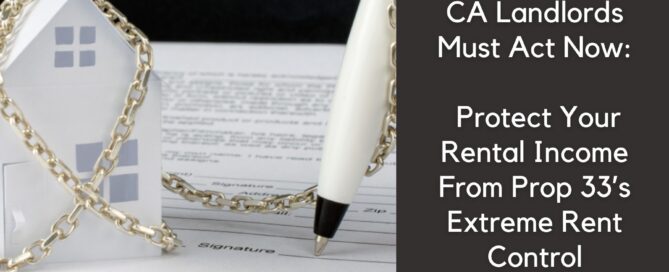
CA Landlords Must Act Now to Protect their Rental Income From Proposition 33’s Extreme Rent Control

Several measures will be on the November 5th ballot that we as voters need to be aware of, but none will affect Landlords like California Proposition 33, an Extreme Rent Control measure.

“Justice for Renters Act” is a measure brought by Michael Weinstein, an anti-housing activist. This measure aims to overturn 1995’s Costa-Hawkins Act, which is currently the state’s most significant rental housing protection law. Costa-Hawkins protects certain properties, such as single-family homes and new construction, from local rent control. It also protects against vacancy decontrol, which allows landlords to bring the rental rate up to market value during vacancy periods.

Prop 33 isn’t Weinstein’s first attempt at rent control, but previous tries were both voted down in 2018 and 2020. In years past, he’s spent nearly $100 million during his previous campaigns and has vowed to continue fighting until statewide rent control passes.

Here’s what passage of Proposition 33 would mean for California landlords:

  • Implementation of Vacancy Control: Prop 33 would allow cities and counties to implement vacancy control, preventing landlords from adjusting the rent to market value during times of vacancy.
  • Repeal Costa-Hawkins: Prop 33 would remove exemptions for single-family homes and new construction by repealing Costa-Hawkins
  • Discourage the Building of New Homes: The measure could impact the building of new homes, due to regulatory constraints.
  • Market Instability: With increased rent control, the market could see an exodus of landlords, causing an already pressured housing market to become more volatile.
  • Increased Pressure on Cities and Counties: Cities and counties will feel the pressure to implement more stringent rent control measures.

So what does this mean for landlords, especially those of single-family homes? It means that if your property is currently below the market value, there is a great chance that it will stay that way, and you will never be able to make up the difference. You are, in fact, robbing your present self, your future self, and the next generation.

I understand it’s hard to think about increasing the rent on your residents, you don’t want to put them out or cause a vacancy. Vacancies cost you money, but at the end of the day it’s better to have a vacancy now, rehab the property, and get more rent, than to be sitting $1,500 a month under market into the future.

I guarantee that Weinstein and the supporters of Prop 33 aren’t going to help replace the AC unit when it goes out. Or pay the property taxes when they are due. You are still going to be responsible for paying for those things, but with less income coming in. You are going to put more towards your rental property and less in your retirement account. You are going to have less for family vacations, and less to put towards maintenance.

If you’ve been holding back and not increasing rents, thinking you will regain the rent when the property becomes vacant, I strongly encourage you to rethink that.

I recently meet with an owner who is losing $2,900 a MONTH between three properties. That’s $34,800 a YEAR. The average resident stays five years in a rental home. In five years, this owner will lose $174,000.

That’s just in lost rents, let’s talk about lost sleep because the owner is worried about how they will pay the next round of property taxes, or install the new AC unit. The toll the stress takes on you because you are robbing Peter (yourself) to pay Paul (the rental property).

If you don’t want to be held hostage for the next 30 years, like landlords in San Francisco, I encourage you to speak up now and in November.

Thanks to the efforts of California Apartment Association, the last two efforts for statewide rent control were thwarted. We need to band together to make sure Proposition 33 doesn’t pass in November.

Here’s a link to make your voice heard now. https://californiansforresponsiblehousing.org/

Here’s a website with more information: https://noonprop33.com/

For more helpful information to our CA Landlords, be guided on the New Security Deposit Law in this article below.

By |2026-04-07T06:59:20-07:00August 6, 2024|Industry News, Landlord Education, Property Ownership|Comments Off on CA Landlords Must Act Now to Protect their Rental Income From Proposition 33’s Extreme Rent Control

New Security Deposit Law for California Landlords

California Assembly Bill 12, effective from October 11, 2023, has brought about significant changes. The most notable is the reduction of the maximum security deposit for most residential rentals to one month’s rent, down from the previous allowance of up to two months’ rent on vacant properties or three months’ rent for furnished units. It’s crucial to understand that this new regulation only applies to leases entered into after July 1, 2024. Leases prior will remain the same for the security deposits and pet deposits.

Additionally, the new law prohibits landlords from asking for the last month’s rent upfront, deposits for pets, and any other upfront payments as lease conditions, as these are considered part of the security deposit. So it’s a one month security deposit and they cannot use the security deposit as last month’s rent. We have them initial that section in 2 areas in the lease.

How the Law Came to Be

Before the current change, landlords could charge up to 200% for non-furnished homes and up to 300% for furnished homes. Due to the rising rental rates in California, it was thought that the security deposits plus the first month’s rent combined made it nearly impossible for renters to afford a place to live. Lowering the security deposit requirements, the hope is that more people will be able to afford a place to live.

Exceptions to AB 12

There are some exceptions to the new law.

  • A landlord can charge two months’ rent for a security deposit by meeting all the following conditions:
    • The landlord owns no more than two residential rental properties, with a maximum of four units being offered to rent
    • The landlord is the sole personal proprietor of the rentals or operates through a limited liability company in which all members are natural (i.e., not corporate) persons
    • The resident is not a member of the state or federal armed services

Understanding the landlord’s property ownership is a challenge for property management companies. The law is silent on whether properties owned by the landlord outside of California are included in the ‘total’ number of rental properties. If a resident discovers that the landlord holds more than one property, it could lead to serious consequences for the landlord and the property management company, including potential reports to Fair Housing or small claims cases.

Penalties for Security Deposits

While there is no exact penalty listed for not complying with the new law, there are existing Security Deposit laws, and this would fall under those penalties. In California, if a landlord mishandles a security deposit, the landlord could be held liable for up to two times the security deposit in addition to the original amount, for three times the security deposit.

Attorney James Blucker, a Southern California Real Estate attorney, discussed the matter with me and advised that it’s better to err on the side of caution and charge only one month’s rent for the security deposit, especially since the law isn’t clear on how to determine the number of properties a landlord owns.

Thinking Outside the Box

Landlords and Property Management Companies must think outside the box on these issues. Pet rent can still be charged. As of the writing of this article, you can charge your security deposit based on the total rent (base rent plus pet rent).

If a resident has a pet, we can mandate that they have an increased insurance policy to cover any pet damage. If you don’t require your residents to have renter’s insurance, now is a good time to get that in place. It’s important to note if the animal is an assistance animal, you can’t require this.

What Can You Do

First and foremost, ensure you have adequate landlord insurance to cover unforeseen situations regarding pets. This article explains what your landlord’s insurance policy should include.

Secondly, voice your opinion when these issues are being voted upon. You can stay current by joining Management One’s newsletter by clicking here. We send out up-to-date information when bills directly affecting landlords come down the pipe.

Here are the other helpful things on What You Need to Know as Landlords for 2024.

e-bike parked on a boulevard

By |2024-07-05T11:04:24-07:00July 5, 2024|Industry News, Landlord Education, Property Ownership|Comments Off on New Security Deposit Law for California Landlords
Go to Top