Extreme Heat & Your California Rental: A 2026 Landlord Guide to Air Conditioning Duties, Repairs & Tenant Safety
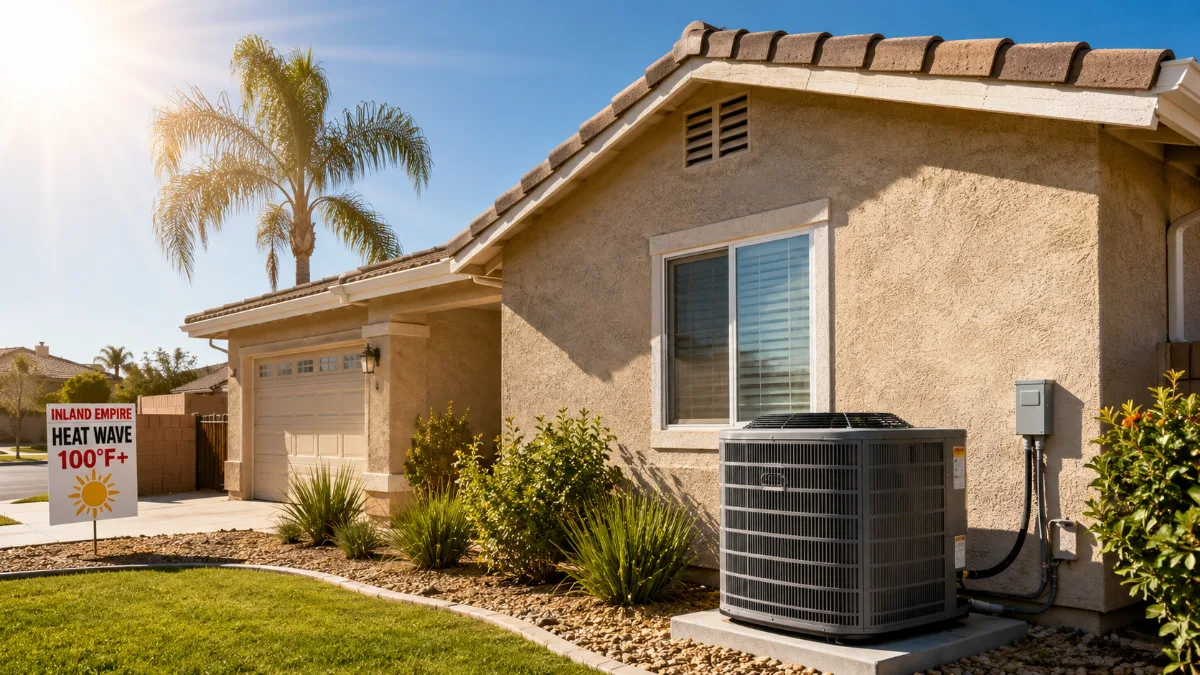
When triple-digit temperatures settle over Riverside, Corona, Moreno Valley, and the rest of the Inland Empire – and the marine layer never reaches Orange County – a broken air conditioner stops being a comfort issue and becomes a safety one. Every summer, California owners ask the same question: ” Am I legally required to provide and repair air conditioning for my tenants? The answer is more nuanced than a simple yes or no, and getting it wrong can expose you to habitability complaints, rent withholding, or an unsafe situation for a vulnerable tenant. This 2026 guide breaks down what the law actually says, what it doesn’t, and how smart owners handle cooling duties before a heat wave forces the issue.
Is a landlord required to provide air conditioning in California?
Here is the part that surprises most owners: California has no statewide law requiring a landlord to install air conditioning. The state’s habitability standard, built on the implied warranty of habitability, lists heating as a required feature but does not list cooling. So a bare unit with no AC is not, on its own, legally uninhabitable in most of California.
That said, the air conditioning maintenance law in California turns on one key fact: was AC part of the deal? If the unit came with a central system or wall units, if your listing advertised “central air,” or if the lease mentions air conditioning, then you have voluntarily made it an amenity of the tenancy. Once you do that, you are generally on the hook to keep it working.
The moment air conditioning is advertised, written into the lease, or already installed when the tenant moves in, it stops being optional. Courts and code enforcement treat a provided-then-broken amenity very differently from one that was never offered. If you don’t want the maintenance obligation, don’t market or promise cooling you aren’t prepared to service.
AC repair: what’s the landlord’s responsibility in California?
When air conditioning is a provided amenity, and it fails, the tenant makes a repair request, and the clock starts. Under California Civil Code Section 1941.1, a landlord generally must address habitability-related repairs within a reasonable time, which for many repairs is treated as roughly 30 days. But “reasonable” is the operative word – and during an Inland Empire heat wave, reasonable can mean days, not weeks.
Think of AC repair responsibility on a sliding scale:
- Routine underperformance (the system is a little weak, the filter is dirty): standard timeline, schedule a technician.
- Full failure in mild weather: prompt but not emergency; keep the tenant informed.
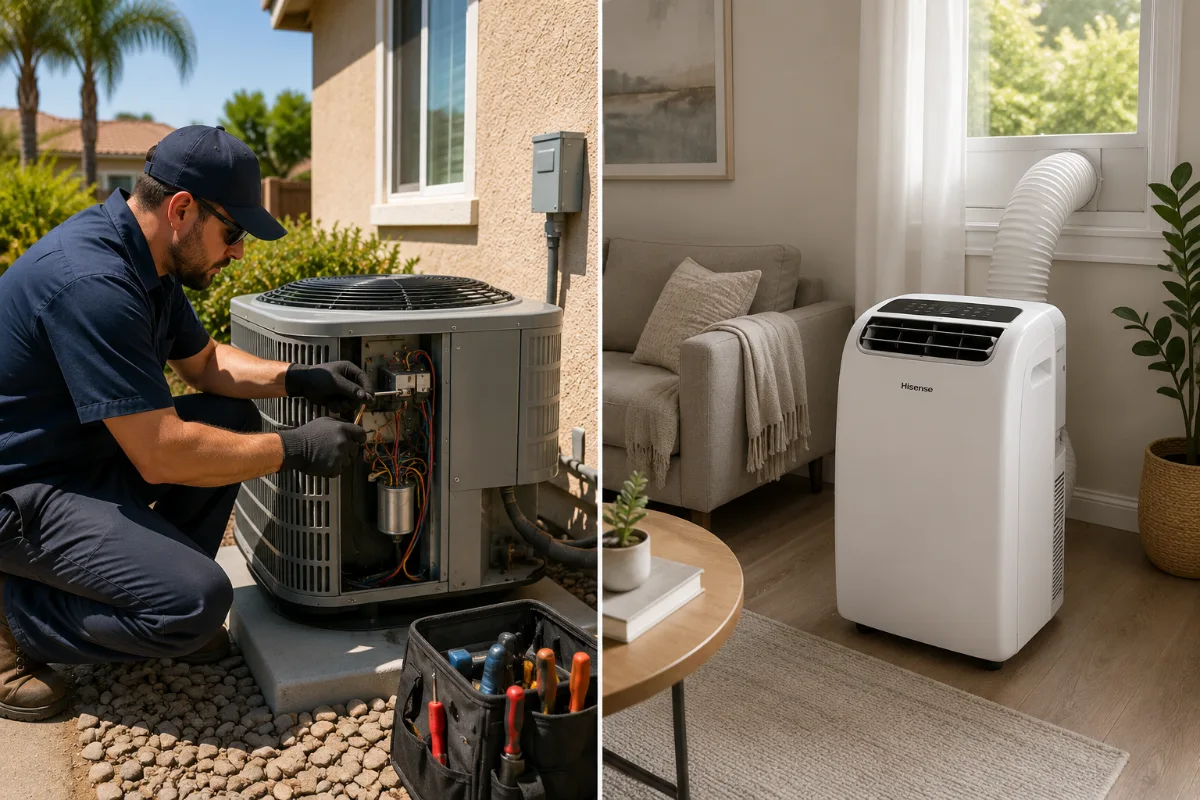
- Full failure during extreme heat, especially with vulnerable occupants: treat it as urgent. A supervised repair, a portable cooling unit as a stopgap, or a short-term relocation may all be reasonable responses.
Extreme heat and tenant safety in the Inland Empire
The Inland Empire is one of the hottest metros in California. Riverside, San Bernardino, Ontario, Hemet, and the desert-adjacent communities regularly see summer highs above 100°F, and heat waves can stretch for a week or more. Orange County is milder near the coast but bakes inland in cities like Anaheim, Orange, and Yorba Linda.
That climate reality changes how you should think about cooling failures. Extreme heat is a genuine health hazard – heat exhaustion and heat stroke send Californians to the ER every summer, and the risk climbs sharply for older adults, infants and young children, pregnant tenants, and anyone with heart or respiratory conditions. When a cooling system fails on a 108-degree afternoon, a tenant’s health, not just their comfort, is on the line.
Before summer peaks, build a fast-response plan: a go-to HVAC vendor who takes priority summer calls, a couple of portable AC units or evaporative coolers you can deploy same-day, and a written policy that flags any cooling-loss ticket during a heat advisory as urgent. A stopgap cooling unit delivered the same day both protects your tenant and demonstrates good faith if a dispute ever arises.
How proactive owners stay ahead of AC problems
The cheapest AC repair is the one you prevent. A few habits keep systems running through the worst of the Inland Empire summer and cut down on emergency calls:
- Pre-season service every spring. Have condensers cleaned, refrigerant checked, and filters replaced before the first heat wave – not during it.
- Make filter changes easy. Supply filters or set a reminder; a clogged filter is the number-one cause of “the AC isn’t cooling” tickets.
- Document the system’s condition at move-in and move-out, which also protects you on deposit questions tied to who pays for what when a tenant vacates.
- Set tenant expectations in writing. Spell out how to submit a cooling issue and what “emergency” means, so a routine request doesn’t escalate.
A property manager who tracks maintenance across a portfolio – like the team behind Riverside property management for owners across the Inland Empire – can batch pre-season tune-ups and keep an on-call vendor list ready for the days when every landlord in the region is calling the same HVAC companies at once.
A quick note on habitability and legal risk
If a provided cooling system fails and the landlord unreasonably delays a repair, a tenant may have options under California habitability rules – from formal complaints to, in some cases, repair-and-deduct or rent withholding. Heat that rises to a genuine safety threat can quickly escalate a slow repair into a habitability dispute. The practical takeaway: respond fast, document everything, and never let a heat-season cooling ticket sit.
This article is general information for California rental owners, not legal advice. Habitability rules and local ordinances vary, so confirm your specific obligations with a qualified attorney before acting on a repair request, notice, or dispute.
Management One helps Inland Empire and Orange County owners handle summer AC maintenance, emergency repairs, and habitability compliance so you never have to scramble on a 108-degree afternoon. Reach out for a free consultation and let our local team keep your rentals cool, compliant, and tenant-ready all season.
Frequently Asked Questions
Is a landlord required to provide air conditioning in California?
There is no statewide law that requires a California landlord to provide air conditioning as a standard of habitability. However, if AC is included in the lease or already installed in the unit, the landlord generally must keep it in working order and repair it in a reasonable time when it breaks.
Does a landlord have to repair a broken AC unit in California?
If air conditioning was provided as part of the rental – advertised, written into the lease, or already in the home – it becomes an amenity the landlord is responsible for maintaining. Under Civil Code 1941.1, once a repair request is made, the landlord generally has about 30 days to act, and far sooner when extreme heat makes the home genuinely unsafe.
How hot is too hot for a rental during an Inland Empire heat wave?
There is no single legal temperature, but Riverside and Inland Empire summers routinely top 100°F, and such heat can be dangerous for older tenants, children, and people with health conditions. When indoor heat threatens tenant safety, treat a cooling failure as an urgent repair, not a routine one.
Is this article legal advice?
No. This is a plain-English summary to help owners understand their AC and heat-safety obligations. Rules vary by city and situation, so confirm specifics with a qualified attorney or talk to our team before acting on a repair request or notice.

Related Posts