Orange County (949) 721-6608 – Riverside County (951) 735-2000

Management One

Orange County (949) 721-6608
Riverside County (951) 735-2000

Management One

About mgt1stg

This author has not yet filled in any details.
So far mgt1stg has created 156 blog entries.

How Best to Manage Your Property: Professional VS Self Management

You have a rental property, now what? Do you manage the property yourself or hire a property management company? I mean really; how hard can it be to manage a rental property? You place an ad on Craig’s List, maybe put a “For Rent” sign in the yard, take a couple of calls from tenants, ask a couple of questions, and place the one your “gut” tells you is the best one, right? Simple, right? The short answer is WRONG!

The long answer is WRONG as well, but let me share with you why.

Problems with Self-Managing Rental Property

In the “good ol’ days” a man or woman’s handshake was their bond; you didn’t need a lengthy lease explaining all the do’s and don’ts of the agreement. The rent is $1200 due on the first of each month– period end of story.

Not so now.

Now you need to screen tenants thoroughly, check their current employment, check their current landlord, and the previous landlord. Run a credit check–yes–run a credit check.

Now you’re thinking, well how do I do that? Guess I will “Google it.” Yes, you will find the answer on Google and use one of their suggested companies, but now that you have the report, what do you do with it? How do you make heads or tails out of the report you just ran? What does the FICO score mean, does it really matter what the FICO score is, or do you look at positive and negative accounts?

So many questions, and now your head is swirling….

But it doesn’t have to be this complicated. Professional management companies will do all this legwork for you so that you can focus on the things in life that really matter: family, friends, and yourself!

Now, let’s fast forward to getting the repairs done on the rental property. Where to start? How do I find a contractor that will give the best pricing? How long will the repairs take, a few weeks, a month?

Time is money and the longer your rental property sits vacant you are losing about a $100 day. Do the math; if you wait two weeks while you get bids, meet the contractor at the property, then wait another two weeks to a month for the repairs to be completed, you are out $3000 to $3400 in lost income. Not to mention the cost of the repairs and the cost of your time meeting with contractors, etc.

Property Management Companies are familiar with all the paperwork

Most professional management companies have contractors that work with them, know the routine and can get the repairs done in about a week. Think about that for a minute: no waiting at the rental property for a contractor for two hours only to find out they are running late, or they don’t show up at all. You don’t have to worry about scheduling the carpet company, the painting company, or the electrician, you can just send in the check, and the property management company handles the rest.

Now you are thinking, well I am handy and retired, I will just do the repairs myself. Did you know that hiring contractors to do the work on a rental property is actually a tax benefit to you? Yes, that is true and good news. When doing the work yourself, you can only write off the materials, but when you have a contractor do the work, you can write off the materials and labor. So, let the professionals handle it and enjoy retirement.

The rental property is ready for a tenant, now what? You found a tenant that looks good on paper and your “gut” thinks is a good fit for your property. You meet the happy couple and their three kids, and you hit it off so well. You pick them, and they move-in. Things are moving along swimmingly until they call you at 5 pm on a Friday evening: there is water all over the garage….

Their personal belongings are getting ruined, and they want it fixed right now. They need hot water, they need to take showers, they are threating to make a complaint with Fair Housing if you don’t fix it right now. Well, there goes your Friday night plans…You are now stuck trying to find a plumber that is willing to come out tonight and not charge you double or triple the normal service right because after all, they like their Friday nights as well.

Professional Property Management Companies Handle Tenants for You

Professional management companies have contractors take those frustrating repair calls. They work with contractors who are willing to go out after hours, and not charge double and triple the rates, thus allowing you to enjoy your Friday night. Professional management companies make sure that tenants have renter’s insurance, so if their belongings are damaged, the burden is not on you the homeowner. Professional Management companies are up on Fair Housing laws and know that hot water is a luxury and reporting to Fair Housing would get a tenant nowhere.

The first of the month rolls around and you get that dreaded text from your tenant (they don’t call anymore, that’s too old fashion) “Hi! It’s me, your tenant at 1515 John Street, I know the rent is due today but I don’t have the money. I can pay you on the 10th when my next check comes in. Is that ok?”

A little of panic and anxiety creeps up, you already sent in the mortgage payment for this month, because your gut told you they were good tenants and would pay on time. Now the check you sent is going to bounce, you weren’t prepared for the tenant not to pay.

Ok, don’t panic you’ll just transfer money from your savings to your checking account and that should be ok, right. They will pay on the 10th, right? That’s what they said, and they are good people (per your gut check).

So, you respond back, “Yes, the 10th will be fine, but no later. I have a mortgage to pay, and I don’t want any late fees from the mortgage company.”

The 10th rolls around and you are checking your bank account. Did the tenant pay you today as they promised?

Then you receive another text message, “Hi, it’s me again. The money I thought was coming didn’t show up today. I am really sorry about all of this. I know we can have the money together by the 25thof the month, is that ok?”

Your internal response is now more panic, “The 25th? No, that is not ok. I have another mortgage payment due on the 1st and I already borrowed from my savings account to cover this month, I don’t have the funds for next month, thanks to you.”

But that’s not what you say. Instead, you text back, “Okay that is fine, but please no later, and this is really putting me in a bind.”

The 25th rolls around, then the 26th, now the 30th, and guess what no money….. now what?

Well now, you must call an eviction attorney.

Woman with a grimace on her face

Property Management Companies Can Deal with Uncomfortable Evictions

Time to use our trusting friend “Google” he knows where to find everything we need, right?

Google says there are 20 eviction attorneys that service your city. But which is the best one, how much do they charge? You’ll probably have to spend your lunch break calling and interviewing attorneys.

The first questions they will ask you are: did you post a 3-day notice? Did you mail a 3-day notice? What does your lease agreement say about late payments?

Your answers will most likely be, no, no, and my lease agreement doesn’t say anything about late payments. With professional management companies, we take all the stress away from dealing with a tenant that doesn’t pay rent. Most property management companies make rent due on the 1st of the month, give a small grace period of 2-4 days, and then start charging late fees, posting 3-day notices, and will file the eviction for you, if needed. Let the professionals be the bad guys, and you get to enjoy life.

Now your property is empty, and you have to start all over again. Ask yourself this question, “do I self-manage again or hire a professional property management company to take on all the headache of managing a property myself?”

Let the professionals handle it, and you reap the benefits of owning a rental property.

Professional woman sitting at her desk speaking with a client

By |2024-11-18T10:40:20-08:00November 18, 2024|Landlord Education, Property Ownership|Comments Off on How Best to Manage Your Property: Professional VS Self Management

Mastering 1031 Exchanges: How to Defer Taxes and Build Real Estate Wealth

Are you thinking of selling your investment property and cashing out? Before you do, consider the impact on your profits. According to the Riverside County Assessor’s Office, the average home price in Riverside County for 2023 was $615,000. If you sell an investment property at that value and make a profit of $300,000, failing to reinvest through a 1031 exchange could lead to a tax hit of around 33.3% (20% federal capital gains tax plus 13.3% California state tax). That’s a staggering $99,990 in taxes—funds that could instead be used as a down payment on a new investment or even to help family members begin their real estate journey.

So what are 1031 exchanges, and why is knowing what they are before you sell your investment property essential to protecting your wealth?  In this article, we’ll break down the basics of 1031 exchanges, explain what they are, and why they’re a crucial strategy for anyone considering selling an investment property.

What is a 1031 Exchange

A 1031 exchange, named after Section 1031 of the U.S. Internal Revenue Code, is a tax-deferral strategy used by real estate investors to defer paying capital gains taxes on investment property sales. By reinvesting the proceeds into another “like-kind” property, investors can continue building wealth while deferring tax obligations.

This tax-deferral tool especially benefits those looking to upgrade properties, diversify portfolios, or adjust investment strategies without incurring an immediate tax burden. However, strict rules govern the timing and nature of the exchange, so it’s essential to work with experienced professionals to navigate the process successfully.

What are the Requirements for a 1031 Exchange?

The primary requirement is that the replacement property must be of an equal or greater value than the property you are selling.

Additionally, there are strict timeframes within which the replacement property and the sale property transactions must occur.  We’ll learn how these timeframes apply depending on the type of 1031 exchange you’re undertaking below..

Types of 1031 Exchanges

1. Simultaneous Exchange

A simultaneous exchange occurs when the property you sell and the property you purchase close escrow on the same day. This type of exchange is also called a “drop and swap exchange”. Before the 1980s, all exchanges were simultaneous.

2. Delayed Exchange

A delayed exchange is the most common exchange. A delayed exchange occurs when you close escrow on the property you sell but have not identified the property you wish to buy yet.

In these cases, to qualify as a 1031 exchange, you must identify the purchase property within 45 days of the sale escrow date. Afterward, the purchase must close within 135 days following the sale escrow date.  In effect, then a delayed exchange applies where you complete the purchase transaction within 180 days of the sale transaction.

3. Reverse Exchange

A reverse exchange is very similar to a delayed exchange; however, a reverse exchange is when you acquire the replacement property before selling your current property.

Like the delayed exchange, you must identify the sale property within 45 days (giving investors with multiple rental properties time to evaluate which property they wish to sell) and close the transaction within 135 days, for a total grace period of 180 days.

4. Improvement Exchange

An improvement exchange, also known as a “build-to-suit” or “construction” 1031 exchange, allows investors to defer capital gains taxes by reinvesting the proceeds from a sold property into a new property that will be improved or built to suit their needs.

Unlike a standard 1031 exchange, an improvement exchange enables the taxpayer to use exchange funds to purchase a new property and cover construction or renovation costs. The unique advantage here is that the improvements count toward the total value of the replacement property, helping to meet the “equal or greater” value requirement of the 1031 exchange rules.

However, all improvements must be completed within the exchange’s 180-day timeline, and the taxpayer must adhere to strict regulations, typically working with a qualified intermediary who holds the improvement funds and manages the process. This strategy is popular among investors seeking to customize new investments, upgrade assets, or even build from the ground up without incurring immediate capital gains taxes.

Professional Resources for 1031 Exchange

To have a successful, stress-free exchange, it’s essential to have a knowledgeable team behind you. It’s a good idea to enlist the help of the following professionals:

  1. CPA
  2. Qualified Intermediary (QI), like a title company
  3. Real Estate Agent or Broker
  4. Financial Advisor (possibly)
  5. Real Estate Attorney

Frequently Asked Questions about 1031 Exchanges

Can I live in my 1031 Exchange Property?
A. Yes, you can eventually live in a 1031 exchange property, but specific rules apply. Initially, the property must be used as an investment or for business purposes to qualify for the tax deferral under 1031 exchange rules. This means you’ll need to rent it out or use it in a way that generates income for a period of time. The IRS generally recommends holding the property for at least two years in an investment capacity to demonstrate clear intent. After that period, you may convert the property to personal use, following what is known as a “qualified use” period.

If you decide to convert it to a primary residence, keep in mind that if you eventually sell it, you’ll need to meet certain conditions to qualify for any exclusions on capital gains taxes, such as living in it for at least two of the five years preceding the sale. However, the amount of gain you can exclude may be limited, and some of the deferred capital gains from the original exchange could still be taxable. Consulting a tax advisor is always a good idea to ensure compliance with all IRS regulations in this type of scenario.

What is the cost of an Exchange?
A. Typically, around $1000, and the QI (Qualified Intermediary) can make interest on your money until it goes into the property you’re buying

Can I do an exchange with a family member?
A. This raises RED Flags with the IRS. It can be done, but there are specific rules that must be followed. We recommend against it.

Can I sell one property and buy three more?
A. YES, as long as you meet the exchange requirements you are undertaking.

Can I sell a Single-Family Home and buy a 4-plex?
A. YES, as it’s considered a like-for-like exchange; that is, you’re exchanging an income property for an income property.

Real-Life Example of a 1031 Exchange

An Investor sold an office/industrial complex for $2,500,000. The investor used the proceeds to purchase another commercial building and two single-family homes. Since the investor reinvested in other income-producing investment properties, the investor avoided $500,000 in capital gains tax.

Generational Wealth

We have all the resources you need to complete a successful exchange and save you hundreds of thousands in capital gain taxes. Thus, you can create generational wealth for yourself, your kids, and your grandkids.

By |2024-10-31T10:57:24-07:00October 31, 2024|Industry News, Landlord Education, Property Ownership|Comments Off on Mastering 1031 Exchanges: How to Defer Taxes and Build Real Estate Wealth

Top 5 Neighborhoods in Menifee, California

Menifee, California, has a population of 116,834. Menifee is in Riverside County. Living in Menifee offers residents a sparse suburban feel, and most residents own their homes. In Menifee, there are a lot of parks.

Many families and retirees live in Menifee, and residents tend to have moderate political views. The public schools in Menifee are above average.

With all the different neighborhoods Menifee offers, it can be tough to decide where to live. I’ve selected five great neighborhoods based on my tenure in property management.

Let’s tour the city, shall we?

1. Andalusia

Andalusia is a gated common interest development community of 104 residences, each with its own private entrance. Their buildings and landscaping feature Mediterranean architecture reminiscent of the Andalusia region in Spain. This wonderful community offers a pool and clubhouse.

The common area includes a stunning pool, spa, recreation center, and more than 100 palm trees. The unique environment is further enhanced with a beautifully designed palm grove near the large central water fountain and a rose garden near the pool.

At night, well-placed lighting emphasizes the beauty of the architecture, fountains, and landscaping and makes it a joy to walk around the streets of their safe community.

The average rental rate for a 3-bedroom home in Andalusia is $ 3,207 a month. The average purchase price for a 3-bedroom home is $ 362,000.

2. Menifee Lakes

Menifee Lakes is a spectacular gated community.  Offering three lakes, several parks, and miles of walking trails, Menifee Lakes is a highly sought-after community. Residents of the lake enjoy fishing, kayaking, and boating. If that’s not enough, residents can visit the Bay Club, where you will find waterslides, two refreshing swimming pools, and a fitness center. Not to mention the 20,000 square foot event center is spectacular.

Be sure to golf a few rounds at the Menifee Lakes Country Club. Featuring lush 36 acres of rolling greens, challenging fairways, and more. The great Ted Robinson influenced much of the design of this stunning course.

The average rental rate for a 2-bedroom home in Menifee Lakes is $ 2,481 a month. The average purchase price for a 2-bedroom home is $ 563,000.

3. Park Ridge at Menifee Town Center

Enjoy resort-style living at Park Ridge. Park Ridge is a masterplan community made up of new single-family homes. Residents of this amazing community can enjoy amenities such as a 5-acre park, walking trails, and a state-of-the-art recreation center.

Love wine tasting? You’re in luck the Park Ridge is a short 20-minute drive to Temecula’s wine country. Don’t feel like driving? No problem, enjoy the many delicious restaurants located in the Town Center.

The average rental rate for a 3-bedroom home at Park Ridge is $ 3,010 a month. The average purchase price for a 3-bedroom home is $ 510,000.

4. The Oasis

The Oasis is a beautiful community surrounding the 36-hole Menifee Lakes Country Club. This well-established community offers reasonably priced homes, great amenities, and an active lifestyle. It is ideally set in the heart of southern California within an hour of the ocean and the desert.

The gorgeous clubhouse includes a fitness center, grand ballroom with stage, arts and crafts studio, billiard room, and library. Outside, residents can enjoy tennis, bocce ball, and shuffleboard courts.

Plus, the glorious California sunshine by the outdoor pool and spa. The barbecue area is a great place to mingle with neighbors and meet new friends.

The average rental rate for a 2-bedroom home in The Oasis is $ 2,654 a month. The average purchase price for a 2-bedroom home is $ 553,000.

5. Sun City

Sun City was the first master-planned community of its kind in this area. Low-maintenance single-family homes and attached homes provide open floor plans perfect for today’s active adult buyers.

Residents can get in touch with their creative side in the woodworking shop, lapidary studio, and ceramics studio. There is also a card room, fitness center, billiards room, table tennis, and indoor shuffleboard courts.

Sports enthusiasts can attend a Lake Elsinore Storm minor league baseball game or play a round of golf at the Menifee Lakes Country Club. The Santa Rosa Ecological Reserve and Diamond Valley Lake provide gorgeous views while fishing, hiking, or boating.

The average rental rate for a 3-bedroom home in Sun City is $ 2,455 a month. The average purchase price for a 3-bedroom home is $ 417,000.

If you want to rent a home or purchase in one of these fantastic communities, Management One and our affiliates can help. We have a dedicated leasing team that loves to help families find their next home.

By |2024-10-30T10:00:14-07:00October 30, 2024|Lifestyle, Property Ownership, Resident Education, Uncategorized|Comments Off on Top 5 Neighborhoods in Menifee, California

6 Essential Questions to Ask Your Property Management Company

So, you’ve decided to hire a property management company. Whether it’s because you no longer have the time to manage, you’ve acquired more properties, or you want someone with a little more experience to handle your property, a property manager can likely help you with your problems.

Gone are the days where you’re forced to do your own maintenance, select your own residents, and handle property accounting. These days there are hundreds of good property management companies to choose from that specialize in managing properties just like yours.

Want the short and sweet version on this blog, check out this video below.

6 Essential Questions

However, not every property management company is the same. Between different prices, philosophies, and services, it can be challenging to narrow down which company is right for you. To help you through that process, we’ve come up with a list of 6 questions you should always ask a property manager. The goal of these questions is to help you figure out which companies will best be able to serve you and take good care of your properties.

1. What involvement do I have as an owner?

2. How often do you do inspections, exteriors, and interior? If they say randomly, that means NEVER, run the other way.

3. How long are your properties typically on the market for rent before they rent?

4. How long will it take to make my property rent ready?

5. Do you have fixed maintenance prices with your contractors? (Critical)

6. How do you screen residents?

Let’s look at each question in turn, below.

1. What kind of involvement do I have as an owner and what decisions do I get to make?

All management companies are different. A property manager will serve as the middleman between the landlord and the resident. This relationship works best when you let the property manager have most of the control.

If you’ve managed your own properties before, you might be hesitant to fully let go and let someone else do all the work. However, if you are micromanaging everything the property manager does, it will likely slow down the process.

For example, when a property management company first takes on your property, one of the first things they’ll do is a walkthrough of your property. They’ll inspect the exterior, the front and backyards, and all the rooms. The goal here is to see what aspects of your property might need to be updated or replaced. As the owner, you have the final say on which updates are made as you are the one paying for it.

On the flip side, to get the rent, you want your property has to be able to compete, and sometimes that means spending more on repairs than you thought, but it will pay off for you in the long run as residents will stay longer in most cases. Think of your rental property as a hotel, yes, a hotel. When you own rental property, you have to make a mental shift in thinking from “well it’s just a rental I can do the bare minimum” to “the residents are my guest, and if I start off on the right foot, they will stay much longer.” This a fatal mistake 90% of landlords make, and it costs them in huge vacancies.

Property managers will likely notify you about significant repairs and emergency repairs, as well. Minor fixes usually aren’t worth the extra time it takes to notify you.

2. How often do you do inspections?

First, there are three kinds of inspection exterior, interiors, and pet inspections. Routine inspections are an essential part of proper property management. This ensures that your property manager is monitoring the property and any issues that may arise with it.

A property management company should inspect the property a minimum of once per year. They should have a checklist of what they are looking for, i.e., chipped paint, old water heaters, etc. Annual inspections provide the property managers with the opportunity to catch any unreported maintenance issues or resident-caused damage. Pet damages can be detected with blacklight devices and other tools. It’s best to address these things quickly as letting a problem fester for a mere two extra months can cause a lot of damage.

Monthly exterior inspections keep your residents accountable. Even good residents will drift; let me explain. Raise your hand if you drive over the speed limit. Most of you probably just did, right? Well, does that make you a bad person? No, of course not, you are just “drifting” on your speed. Just about the time you get used to “drifting,” you see the patrolman, and you lift your foot off the gas. Why? Because the patrolman just created accountability. When a management company’s van drives by your rental property every month and takes a picture and looks at several key factors from the outside, they keep your resident accountable, and that means your property is being adequately maintained and appreciates at a higher rate.

The property inspector can also check for any unauthorized pets or residents in the property. If someone did not put down a pet deposit at the start of their lease, but you see obvious pet damage, you can make a note of that.

3. How long are your properties on the market?

Make sure you ask what the company’s vacancy rate is. Property management companies should be tracking their vacancies. If they don’t know this number, it likely means they aren’t keeping track of their data. If you don’t know your numbers in a management company, you don’t know your business.

4. How long will it take to make my property rent-ready?

It’s essential to know how long it will take to get your property ready to put on the market. You might be expecting the property management company to put your house up as soon as they acquire it, but there are a couple of factors that go into this. When a property manager takes on your property, one of the first things they will do is evaluate your property for needed updates and repairs. A typical make-ready (the process to get your property ready for rent) takes roughly 7-17 days, depending on the property.

A good contractor should be able to complete $1000 in work a day, so a $7000 job should take one week to be 100% complete.

Older properties will typically require more updates than modern properties. If your property has a lot of outdated light fixtures, old wallpaper, and peeling paint, it might take a few more days than expected.

While you might want them to speed things up and get the house on the market, it’s best to listen to their recommendations. When it comes to updating your property, they know what will attract and keep residents. After all, beautiful properties typically attract qualified residents. The goal of this question is to establish a timeline and keep expectations realistic.

5. Do you have fixed maintenance prices with your contractors? (Critical)

Most management companies allow contractors to charge whatever they want for a job, stating “their prices, are their prices.” While this is true to a degree, contractors that work with management companies should offer better pricing due to the volume of work provided. Also, be sure to ask for any warranty information on replaced items.

6. How do you screen residents?

Property management companies generally have specific criteria when it comes to screening residents. Most management companies check credit, income verification, rental references. This is standard for most property managers.

To have a low eviction rate, a management company must go much further. Yes, this costs the company money, and its, but critical to you getting a good resident. A seasoned management company will check previous rental history and debt ratios, just like a bank does when they make you a loan. They will run credit as well, but you can have an 800 FICA score on your way to bankruptcy. What management companies want to know is how much money does the resident have going out and coming in? What did the previous landlord say about them? How did they leave the property? Did they get their security deposit back? The answers to these questions will tell you the tale of the tape.

When it comes to the selection of the resident, most property management companies will pick the resident themselves. They usually recommend this because there are several Fair Housing laws that owners are not aware of. If they are responsible for selecting the resident and end up violating one of these laws, it can be an expensive mistake.

Even if you think, “Well, I don’t want to rent my property to college students/a family with kids,” that is against the law. It might seem like a simple thing, but any discrimination is discrimination. It’s best to leave it to the professionals as they likely have written, non-discriminatory rental criteria.


What You Should Do if You Decide to Hire a Property Manager

  • Use the handy checklist we’ve provided in this guide, so you ask the right questions, and so you can see how the management companies measure up against each other.
  • Get your insurance set up as we have outlined in this guide. If you don’t have time to do this, don’t rent out your property.
  • Set up a separate checking savings account and have all your rent go into this account. If you don’t, you will squander the money away and wonder why do I have this rental property check out “Are You Robbing Your Own Piggy Bank” This is critical to have for several reasons as explained in the article
  • Focus on the dollar amount of the management fee, not the percentage.
  • Talk to at least three references; if they don’t give out references, don’t walk but run the other way.

Tyler Sudman of Management One Property Managment

By |2026-04-07T08:56:12-07:00October 11, 2024|Landlord Education, Property Ownership|Comments Off on 6 Essential Questions to Ask Your Property Management Company

Do I have to accept Section 8 in California?

Do landlords in California have to accept Section 8?

Yes, landlords do have to accept Section 8.

The Section 8 Housing Choice Voucher program, a federally backed program, is a form of government rent assistance. According to the Housing Authority of Riverside County, pre-COVID, the wait list for housing vouchers was 80,000 applicants. As of July 2023, 137,000 applicants were waiting for funding.

When Congress established Section 8 of the Housing and Community Development Act in 1974, one goal was to ensure that people earning low wages could find “decent housing and a suitable living environment” outside public housing units.

On January 1, 2020, California implemented two bills requiring landlords to accept Section 8 or housing vouchers as an income source from applicants. Rental property owners and management companies cannot discriminate against an applicant or deny the application because they have a housing voucher.

Section 8: How Section 8 Housing Regulations Work

Do you remember the Clint Eastwood movie “The Good, The Bad, and The Ugly?” Some landlords equate renting to residents on Section 8 the same way. With a guaranteed rent payment each month, renting to a Section 8 tenant has its advantages; but it also presents challenges that can be very time-consuming to navigate.

Today, people who meet income requirements can apply to the program to receive a voucher when it becomes available. If they are approved and selected and then find an apartment or house with the voucher, their local housing authority sends payments directly to landlords or the property management company.  The payments cover some or all of the voucher holder’s rent. The payments aim to make housing more affordable for voucher holders by ensuring each household pays no more than 30% to 40% of its income on rent.

Before the 2020 legislation that made it mandatory to accept Section 8 vouchers, it was common for property owners to advertise that they did not participate in Section 8 and wouldn’t consider any residents with a housing voucher.

This practice was common because participating in the Section 8 program was seen as an administrative burden. There are many hurdles to cross, including a home inspection, verified habitability, and an approved residency. The delay in getting approved and prepared could cost landlords money in lost rent.

On the other hand, some landlords appreciated the Section 8 program, seeing it as a guaranteed source of income. You know the rent will come in every month because it comes from a government agency, not an individual. However, for most owners, the Section 8 process was seen as a waste of their time. With the legislative change, all landlords and property management companies must accept Section 8 and housing voucher applicants.

Section 8: 2024 Applicant Rental Criteria Changes

Before January 1st, 2024, landlords could use the same criteria for all applicants, Section 8 and Non-Section 8, when qualifying an applicant for a home.

If your requirements state that all residents must have more positive than negative credit, all applicants must meet that criteria.

As of January 1st, 2024, Section 8 applicants must be asked if they want their credit evaluated. They can elect not to have their credit considered as part of the process. The thought behind this law is that most people with housing vouchers are there for a reason, and most likely, their credit will not meet the standards to qualify for a home.

Fair Housing Is Checking for Compliance

The passage of SB 329 and SB 222 means that California residential landlords throughout the state will no longer be able to say they don’t participate in Section 8, VASH, or other rental assistance programs. Now, tenant’s rights groups assess whether landlords are aware of and complying with the law. Landlords who don’t currently participate in rental assistance programs are advised to respond to inquiries about whether they accept Section 8.

This change means that ads can no longer state that Section 8 is not accepted. The Fair Employment and Housing Act (FEHA) states:

that it is unlawful to make, print or publish or cause to make, printed or published any notice, statement, or advertisement concerning the sale or rental of a housing accommodation that indicates any preference, limitation, or discrimination based on any enumerated protected class, including a source of income. Accordingly, it is essential that all advertising (including ads posted on personal and third-party websites such as Craigslist) be revised to remove any references such as “No Section 8” or “We do not participate in Section 8”.

Jumping the Section 8 Housing Hurdles

Since the new legislation came into effect, Management One has processed over 30 Section 8 applications. We’ve learned how to navigate Housing Authority hurdles. It’s important to note that just because an applicant has a voucher, or an F-sheet doesn’t mean they qualify for the property they are applying for.

We highly recommend you call the Housing Authority office and inquire about the applicant and provide them with the specifics of the property they are applying for. When approving an application, Housing looks at what utility company services the property, the rental rate, and if the appliances are gas or electric. If the applicant doesn’t qualify for the property, there’s no sense in spending time filling out the 34 pages that make up the application.

The approval process takes about one to two weeks. If the application is approved, the next step is the inspection. Inspectors assess the property to ensure it’s safe for the incoming resident. You may have heard horror stories about Housing coming in and making a laundry list of demands before they will approve an application. However, we’ve found that’s not the case. In our experience, if a home fails a Housing inspection, it’s usually because the property was built to what is now an outdated code standard that needs to be updated.

Once the home passes inspection and the resident moves in, the Housing Authority can take up to six weeks to send the payments. In the meantime, the resident is responsible for paying their portion of the rent. Once the Housing Authority establishes the payments, they come in like clockwork on the first of each month.

Working with the Federal Government requires a lot of work and patience. Knowing how to navigate these hurdles yourself or teaming up with a management company familiar with the process will give you peace of mind.

Another article that California landlords need to be aware of is the New Security Deposit Law.

By |2024-09-30T11:25:27-07:00September 30, 2024|Industry News, Landlord Education, Resident Education|Comments Off on Do I have to accept Section 8 in California?

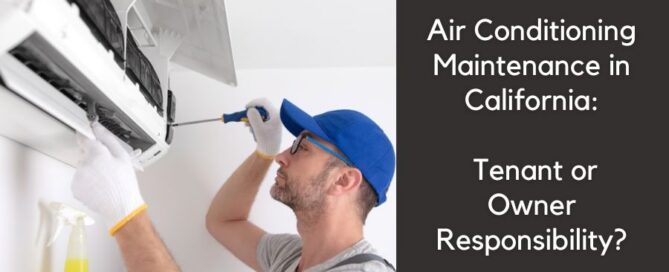
Air Conditioning Maintenance in California: Tenant or Owner Responsibility?

In the sweltering heat of Southern California, rental property air conditioning maintenance is not just a matter of comfort—it’s a critical issue of habitability and resident satisfaction.

While there may be debate over who should bear the legal responsibility for maintaining these systems in rental properties, there are compelling reasons why landlords should take the lead. For owners, not only is it a matter of resident satisfaction and retention, but it is also a consideration around property preservation and, ultimately, keeping down expensive air conditioning unit replacement costs.

In this article, we’ll look at the legal, financial, and practical benefits of landlords maintaining air conditioning units, ensuring their properties remain safe and comfortable.  At the same time, we’ll identify the importance of resident responsibility around basic maintenance tasks such as regular filter changes.

  1. Legal Obligation for Habitability: In California, landlords are legally required to provide and maintain a habitable living environment. In regions like Southern California, where temperatures can soar, functional air conditioning systems are essential to ensure the property remains habitable. Failure to maintain these systems could lead to violations of Fair Housing standards, exposing landlords to legal risks.
  2. Resident Satisfaction and Retention: A well-maintained cooling system significantly contributes to resident comfort, especially in Southern California’s hot climate. When landlords take responsibility for maintenance, it fosters good resident relations, leading to higher satisfaction, fewer complaints, and longer tenancy, which reduces turnover.
  3. Preservation of Property Value: Regular cooling system maintenance helps preserve the property’s value by preventing damage caused by overheating, water intrusion from plugged lines, mold, or other issues that can arise from poorly maintained AC systems. Landlords who invest in regular upkeep protect their long-term investment and avoid costly repairs or replacements down the line.
  4. Energy Efficiency and Cost Savings: Proper cooling system maintenance ensures AC units operate efficiently, reducing energy consumption and lowering utility bills. While all residents in Management One properties pay utility bills, an energy-efficient system can be a selling point for prospective residents and reflects positively on the property’s overall management.
  5. Liability and Risk Management: If a cooling system fails due to lack of maintenance and results in property damage or health issues for residents, landlords could be liable for negligence. Landlords mitigate these risks by assuming responsibility for maintenance and avoiding potential legal disputes and insurance claims.


Management One’s Approach to AC Maintenance

Ten years ago, we implemented a policy that during vacancies properties under went a heating and cooling system tune-up. The vendor services the whole system, including changing out the AC filters. We’ve found this policy has paid great dividends for landlords and residents alike. Before making this change, 8 out of 10 residents would move in, and there would be an issue with the AC or heater. There is nothing more disheartening than moving into a new home in the middle of summer and finding out the AC unit isn’t working correctly. Ensuring property habitability and a new resident’s comfort goes a long way in establishing trust and long-term harmony.

Owners’ AC Maintenance Responsibilities

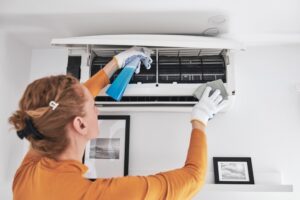
Effective September 1, 2024, Management One implemented a new program to help ensure the longevity of heating and cooling systems. Once a year, during the annual inspection, we will have the AC and heating system tuned up, and the AC filter changed. This tune-up includes cleaning and servicing the inside and outside units. The basic cost to the landlord is $110, with any required repairs beyond the tune-up, at an additional cost.  This provides our owners the peace of mind that comes with knowing the ongoing status of their property’s cooling system and the ability to plan for future replacement costs.

Residents’ AC Maintenance Responsibilities

You might be asking yourself doesn’t the resident have any responsibility for helping to maintain the AC units and their comfort? The answer is, yes, they do! Their lease agreement requires them to change the AC filter every 90 days. Having a professional company service the system annually and giving it a once-over benefits landlords. We can prevent a burnt-up compressor from a dirty filter or loss of all the freon due to a leak. The inspector will also report to us if the resident has kept up with filter changes. If they haven’t the resident will be fined $100 for a first violation and $200 the second time.  They will also be subject to their lease not being renewed.

In conclusion, it’s to their own benefit that landlords be responsible for maintaining air conditioning systems in Southern California rental properties. By ensuring these systems are adequately maintained, landlords fulfill their legal obligations around habitability, enhance resident satisfaction, and reduce the risks associated with system failures, protecting their property investments. Ultimately, proactive maintenance of cooling units is a wise and necessary practice that benefits both landlords and residents, fostering a positive rental experience and ensuring the property’s long-term success.

Below is a List of our Top Picks for Air Conditioning Companies in Orange County, CA.

By |2024-09-04T14:53:02-07:00September 4, 2024|Landlord Education, Maintenance, Resident Education|Comments Off on Air Conditioning Maintenance in California: Tenant or Owner Responsibility?

Top 5 Neighborhoods in Lake Elsinore, California

Lake Elsinore, California, has a population of 73,849. Lake Elsinore is in Riverside County. Living in Lake Elsinore offers residents a sparse suburban feel, and most residents own their homes. In Lake Elsinore, there are a lot of parks.

Famous for the warm thermal winds that blow in from the neighboring Ortega Mountains. Those winds have turned Lake Elsinore into a significant center for skydiving, hang-gliding, and other aerial sports.

Many families live in Lake Elsinore, and residents tend to lean liberal. The public schools in Lake Elsinore are above average.

With all the different neighborhoods Lake Elsinore offers, it can be tough to decide where to live. I’ve selected five great neighborhoods based on my tenure in property management.

Let’s tour the city, shall we?

1. Canyon Hills

Canyon Hills is nestled in the foothills of Lake Elsinore, surrounded by its natural beauty. From the preserved natural open space to private recreation centers, sprawling community parks, and local shopping centers, residents who choose Canyon Hills will find an old-fashioned sense of community.

Established in 2001, Canyon Hills grew in stages to a total of 3,028 homes consisting of attractive and unifying community design themes with a down-to-earth aesthetic reflected throughout each of the neighborhoods.

The average rental rate for a 3-bedroom home in Canyon Hills is $2,985 a month. The average purchase price for a 3-bedroom home is $632,475.

2. Summerly Community

Summerly is a vibrant community in Lake Elsinore, California. The development of Summerly began in 2012 and has continued to flourish over the years with new neighborhoods and resort-style amenities.

It is a special kind of place where a sense of community just happens. Quaint neighborhood streets connect new homes to parks, trails, amenities, and all the fun you can handle.

Located near plenty of shopping centers filled with restaurants, retailers, and other necessities.

The average rental rate for a 3-bedroom home in Summerly is $2,850 a month. The average purchase price for a 3-bedroom home is $629,900.

3. Alberhill Ranch

Nestled in the picturesque hills above Lake Elsinore and surrounded by green belts and neighborhood parks, the community of Alberhill Ranch blends perfectly within its environment.

Tree-lined streets and lush common area landscaping link every home with various neighborhood amenities for you and your family to enjoy.

Alberhill Community Park covers over 20 acres and includes soccer fields, playgrounds. Residents also enjoy access to the Alberhill Ranch Swim Club, a private, gated aquatic center with panoramic views of wooded hilltops and the sparkling waters of Lake Elsinore.

The average rental rate for a 3-bedroom home in Alberhill Ranch is $2,750 a month. The average purchase price for a 3-bedroom home is $630,000.

4. Westlake

Inside the gates. Beyond your dreams. At Westlake, you’ll write your next chapter embraced by the simple conveniences of stylish homes in a private gated enclave.

Hang out at your private recreation center, make a splash with family and friends in the exclusive community pool. It’s a lifestyle as easy as the cooling afternoon breeze.

Located steps from the northwest shore of Lake Elsinore and nestled against the foothills of the Santa Ana Mountains, Westlake offers the active outdoor lifestyle of Lake Elsinore and Temecula, along with the convenience of access to I-15 and Ortega Highway for nearby Orange County and San Diego commuters.

The average rental rate for a 2-bedroom home in Westlake is $2,450 a month. The average purchase price for a 2-bedroom home is $409,900.

5. Tuscany Hills

Tuscany Hills is a large residential community in Lake Elsinore, California. The community is comprised of several residential developments—Watermark, Tesoro, Vellagio, Classics, Arabella, and Volterra—which offer upscale single-family homes built between 1973 and 2006.

Provides residents with a variety of recreational activities to enjoy daily. The community has a private recreation center that features an outdoor swimming pool and sports courts that overlook the Tuscany Hills’ scenic landscape.

Conveniently located just minutes from Lake Elsinore, where locals can spend the day jet skiing, boating, and fishing.

The average rental rate for a 3-bedroom home in Tuscany Hills is $3,000 a month. The average purchase price for a 3-bedroom home is $703,000.

If you want to rent a home or purchase in one of these fantastic communities, Management One and our affiliates can help. We have a dedicated leasing team that loves to help families find their next home.

By |2024-08-30T09:45:08-07:00August 30, 2024|Lifestyle, Property Ownership|Comments Off on Top 5 Neighborhoods in Lake Elsinore, California

Repairs…The Necessary Evil of Owning a Rental Property

Owning a rental property comes with its share of benefits and some pitfalls, and repairs fall into the latter category. But I think repairs tend to get a bad rap, or the resident gets accused of being too needy or picky. And while that might be the case sometimes, it’s not the case most of the time.

Much like you or I, we desire a nice place to live in, one that is maintained, one that we are proud of; most residents desire the same thing. They are not out to nickel and dime you or to live in the Taj Mahal, even though sometimes it might seem that way.

Do I have to Complete this Repair?

Understanding where the requested repair falls might help you determine if the repair is necessary.  Generally speaking, repairs fall into one of four categories:

  1. Habitable
  2. Safety
  3. Cosmetic
  4. Operational

Lets look at the characteristics of repair type and what they entail.

Habitable Repairs

Habitable repairs are repairs that are needed to make sure the home is livable per Fair Housing. An example of this is fire damage to a home. A resident can’t live in a home that has fire damage, so mitigation must be done right away. Plumbing, electrical, and locks must be working on the property.

Safety Repairs

Safety repairs are repairs that are needed to ensure the safety of your residents and their guests or even the general public. An example of this type of repair is a buckling driveway. The buckling in the driveway is a tripping hazard. Should a resident report the matter and you opt not to have it repaired, then the resident or someone else is injured, you are opening yourself up to ligation. In cases like this, a resident also has the right to report you to Fair Housing and even move out, leaving you with a mortgage and a rehab to make the property rent ready for the next person.

Cosmetic Repairs

Cosmetic repairs are repairs that would improve your property but don’t affect someone’s ability to live in the home. An example of a cosmetic repair is the exterior painting of the home. Painting your home that hasn’t seen paint for 15 years or more and has taken a beating from the Southern California sunshine is a good idea to maintain your home, but it has no bearing on the resident living in your home. These types of repairs will come up, and that’s why it’s important to budget for them. That is why I highly recommend setting up a Rental Property Piggybank. Click here to see how to set one up and why you must have one.
smashed piggy bank with money on a table

Operational Repairs

Operational repairs are repairs that need to be repaired because the home was rented with the item in working order and is part of the lease agreement. An example of an operational repair is an oven. The oven might be completely broken, or it might work so, so. It might warm up a pizza, but it won’t roast a turkey since the home was rented with a fully functioning oven; you are required to replace it. Other examples would include a dishwasher; if you rent the home with a dishwasher and it breaks down, you must replace it.

Exceptions

Having said all that, there are exceptions to the rule when it comes to repairs. Case in point, carpet most of the time falls into the cosmetic category. However, there are times when the carpet really should be replaced; no one wants kids playing on the stained and smelly carpet. Nor do you want to walk on a carpet that is “clean” but looks dirty because of the stains that are so embedded in the fibers that no matter how much you clean the carpet; they are still visible.  Carpet is one repair that you can quickly recoup your costs on. For example, the resident is requesting carpet and its lease renewal time, agree to replace the carpet in turn request that the resident signs a two-year lease. The rental increase of $100/per month each year over the two years will help offset the cost along with your tax write-offs on the carpet replacement. Let’s face it, if you don’t replace the carpet or make minor repairs, your residents will move out, and you will face rehab and a vacancy. Your biggest enemy in rental property is vacancy more than anything else because you face months without any rent coming in and putting out cash to repair, paint and clean it for the next resident which averages about $3900 nationally.

Reality

Most Residents take excellent care of your rental property, their home. And they appreciate owners that take care of the home as well and don’t view them as “the renter.” The reality is most residents would love to own a home, but in today’s market, it’s hard to come up with a down payment, etc. and so they are in a situation of having to rent a home. Sure, there are a few that rent because they don’t have to make the repairs, pay property taxes, etc. but that is the minority, not the majority. In a recent survey conducted by the National Association of Residential property managers, 60% of residents say that “lack of maintenance and poor customer service” is the number one reason they move from a property, it’s not raising the rent. What residents are saying is, they will stay in a property longer if the owner is willing to maintain the home and they will also be okay with a moderate rent increase each year. That’s a win-win for all properties involved.

Benefits

As the owner of a rental property, you receive tax benefits for owning rental property; repairs are a tax write-off along with your management fees. You benefit from the appreciation of your home value, and someone else paying off your mortgage. We have several owners whose residents have been in the property for 10, 15, and even 25+ years. Some even own the property free and clear because rents have increased over the years each year, and they have now paid the mortgage off.

Two-way Street

Maintenance is a two-way street. It is the responsibility of both the landlord and the property management company. It’s our job to make sure you are not nickeled and dimed and that repairs are completed correctly. For this reason, we operate off a pre-set price list, which controls costs for you. We dictate the prices contractors are paid. These prices are set based on 100’s of hours of research by shopping local repair stores, negotiating prices with suppliers directly, providing discounts for items purchased in bulk. We shop local tradespeople and receive estimates for painting, roofing, etc. All to provide you with the best prices and provide the residents with timely service.

Additionally, we contact each resident after the repairs are completed to ensure the repair was completed, and all is well. By calling the residents, it holds contractors accountable knowing someone is checking on the repair afterward, and helps ensure your residents stay longer in your investment property. This scenario is a win-win for all parties.

Next Time…

So, the next time the phone rings, and it’s our maintenance department advising you of a major repair needed, like new carpet or exterior paint…or you receive your monthly rent check, and you see a repair was made during the month…keep some of these things in mind as it’s our goal to keep your property in good condition, raise your rents moderately each year so you have money to pay for those repairs and keep your resident staying in your property.

By |2024-08-19T09:00:09-07:00August 19, 2024|Maintenance, Property Ownership|Comments Off on Repairs…The Necessary Evil of Owning a Rental Property

CA Landlords Must Act Now to Protect their Rental Income From Proposition 33’s Extreme Rent Control

Several measures will be on the November 5th ballot that we as voters need to be aware of, but none will affect Landlords like California Proposition 33, an Extreme Rent Control measure.

“Justice for Renters Act” is a measure brought by Michael Weinstein, an anti-housing activist. This measure aims to overturn 1995’s Costa-Hawkins Act, which is currently the state’s most significant rental housing protection law. Costa-Hawkins protects certain properties, such as single-family homes and new construction, from local rent control. It also protects against vacancy decontrol, which allows landlords to bring the rental rate up to market value during vacancy periods.

Prop 33 isn’t Weinstein’s first attempt at rent control, but previous tries were both voted down in 2018 and 2020. In years past, he’s spent nearly $100 million during his previous campaigns and has vowed to continue fighting until statewide rent control passes.

Here’s what passage of Proposition 33 would mean for California landlords:

  • Implementation of Vacancy Control: Prop 33 would allow cities and counties to implement vacancy control, preventing landlords from adjusting the rent to market value during times of vacancy.
  • Repeal Costa-Hawkins: Prop 33 would remove exemptions for single-family homes and new construction by repealing Costa-Hawkins
  • Discourage the Building of New Homes: The measure could impact the building of new homes, due to regulatory constraints.
  • Market Instability: With increased rent control, the market could see an exodus of landlords, causing an already pressured housing market to become more volatile.
  • Increased Pressure on Cities and Counties: Cities and counties will feel the pressure to implement more stringent rent control measures.

So what does this mean for landlords, especially those of single-family homes? It means that if your property is currently below the market value, there is a great chance that it will stay that way, and you will never be able to make up the difference. You are, in fact, robbing your present self, your future self, and the next generation.

I understand it’s hard to think about increasing the rent on your residents, you don’t want to put them out or cause a vacancy. Vacancies cost you money, but at the end of the day it’s better to have a vacancy now, rehab the property, and get more rent, than to be sitting $1,500 a month under market into the future.

I guarantee that Weinstein and the supporters of Prop 33 aren’t going to help replace the AC unit when it goes out. Or pay the property taxes when they are due. You are still going to be responsible for paying for those things, but with less income coming in. You are going to put more towards your rental property and less in your retirement account. You are going to have less for family vacations, and less to put towards maintenance.

If you’ve been holding back and not increasing rents, thinking you will regain the rent when the property becomes vacant, I strongly encourage you to rethink that.

I recently meet with an owner who is losing $2,900 a MONTH between three properties. That’s $34,800 a YEAR. The average resident stays five years in a rental home. In five years, this owner will lose $174,000.

That’s just in lost rents, let’s talk about lost sleep because the owner is worried about how they will pay the next round of property taxes, or install the new AC unit. The toll the stress takes on you because you are robbing Peter (yourself) to pay Paul (the rental property).

If you don’t want to be held hostage for the next 30 years, like landlords in San Francisco, I encourage you to speak up now and in November.

Thanks to the efforts of California Apartment Association, the last two efforts for statewide rent control were thwarted. We need to band together to make sure Proposition 33 doesn’t pass in November.

Here’s a link to make your voice heard now. https://californiansforresponsiblehousing.org/

Here’s a website with more information: https://noonprop33.com/

For more helpful information to our CA Landlords, be guided on the New Security Deposit Law in this article below.

By |2026-04-07T06:59:20-07:00August 6, 2024|Industry News, Landlord Education, Property Ownership|Comments Off on CA Landlords Must Act Now to Protect their Rental Income From Proposition 33’s Extreme Rent Control

6 Factors Can Make or Break Your Rental Property Investment

Investing for your financial future requires more than just finding and purchasing a property at a good price. You did your research and have decided you want to make rental property investing your path to financial security. You’re understandably anxious to find your first property and start collecting rental income. But before you hand over a down payment on a bargain-priced single-family home, there are some factors to consider that will significantly affect the property’s ability to bring in the long-term income you desire.

It’s important to have a strategy for finding a property that will help you reach your financial goals, and the initial step in that strategy needs to be a financial analysis of the potential purchase. A financial worksheet, such as that offered in HOLD: How to Find, Buy, and Rent Houses for Wealth, will walk you through the process of determining whether a property is a sound investment. It will help you compare purchase price, interest expense, as well as maintenance and repair costs against rental income and appreciation to determine whether it’s a good investment for you at this time. However, there’s more to finding a good investment than simply finding a bargain property. There are other factors that will influence your ability to rent the property later

Do your research before you buy

When you are searching for the right property to add to your rental portfolio, it’s critical to perform the following actions:

1. Investigate the neighborhood

The neighborhood surrounding your potential property will influence the types of residents you’ll attract. For higher-quality residents, choose a decent property in an area where people actually want to live, rather than a fixer-upper in a run-down neighborhood. If you buy in a neighborhood close to a college or university, be prepared for student residents and frequent vacancies. If you opt for a middle-class neighborhood, you’ll likely attract more stable, family residence. It’s a plus if you purchase in a neighborhood with amenities such as schools, parks, movie theaters, supermarkets, and access to public transportation.

2. Factor in property taxes

Property taxes will vary by location. High property taxes will take a significant bite out of your cash flow, which you need to consider in your financial analysis. However, higher taxes typically signify a higher-class community with greater potential for attracting quality, long-term residents.

3. Consider school districts

If your target residents are middle-class families, the quality of the local school district is an important issue. Schools with poor reputations will deter the residents you’re seeking to attract. This will affect your monthly cash flow as well as the long-term appreciation of your investment.

4. Look into local crime rates

The public library or local police department will have crime statistics for different neighborhoods. Residents want to feel safe in their homes. A property in a neighborhood with a lot of criminal activity will be much harder to rent, will not generate the income you desire, and will likely depreciate in value —unless the crime rate is actually going down. In that case, you may get a great price for a property that will increase in value as the neighborhood improves.

5. Learn about the local job market

People often relocate to be near where jobs are found, increasing your pool of potential residents. But you also need to be aware of what types of companies are moving into the area, as some could have negative effects. Think like a resident. Would you desire that tire manufacturer as a neighbor? Chances are neither would your residents.

6. Research natural disasters

If you plan to invest in an area prone to earthquakes, hurricanes, tornados, floods, or other disasters, not only is your investment at risk of major repairs or mitigation activities but your insurance rates will also be higher. Investing in the single-family home rental market is still a great option for building your retirement nest egg. But if you simply cross your fingers and leave your investment choices to chance, you just might end up eating that egg to survive. The success of your property investment starts with the right properties — and that takes work.

You Found an Invest Property, Now What?

Investing starts with planning at Management One. Being Real Estate Investment Planners as well as professional property managers gives our investors a tremendous advantage when it comes to investing in residential property.

For starters, we know exactly where you need to buy properties, that are in the best rental areas with the highest rents and lowest turnover.

Real Estate Planning Services

If you’re just starting out and don’t know what you need to do first, we can help you begin with our Real Estate Investment Planning Program. On the other hand, if you are a seasoned investor and have already purchased property, we can take you to the next level in Real Estate Investing. Of course, we will also be able to manage both your current and future properties. You’ll also have secure, online access, 24/7, to your entire portfolio.

Single-Family Home Retirement Strategy (SFHRS)

This is one of our most popular and helpful programs for you as an investor. As the investor, you control everything but do none of the work. This is a true retirement program. Unlike your retirement funds in a mutual fund or 401k where you rely on fund managers to make decisions, with our program you are 100% in control of your portfolio. Therefore, you choose, and you control what assets will be there when it’s time to retire, not like many other retirement programs which have been hard hit recently and the owners have had no control over those losses.

Schedule a FREE consultation and Start investing in YOUR future, today!

Schedule a Fee Consultation to Learn More about Management One Property Management Services

By |2026-04-07T09:02:21-07:00July 25, 2024|Property Ownership|Comments Off on 6 Factors Can Make or Break Your Rental Property Investment
Go to Top