Orange County (949) 721-6608 – Riverside County (951) 735-2000

Management One

Orange County (949) 721-6608
Riverside County (951) 735-2000

Management One

Top 5 Eviction Attorneys in Riverside

Picture this: It’s the 10th of the month, and there’s a missing piece in the puzzle of your day. Like a mysterious disappearing act, the resident’s rent payment has yet to make its grand entrance. You’ve tried it all – the calls, the texts, the emails – heck, you’ve even put up a 3-day notice that practically screams “pay up or make way!” But it’s like a silent game of hide and seek, with your resident as the champion hider.

Now, hold on a second. This is uncharted territory for you. It’s like stepping into a suspenseful thriller where the plot has taken an unexpected twist. The big question on your mind: What’s the next move in this high-stakes game? This isn’t your everyday scenario; it’s like navigating a maze blindfolded.

So, where’s the compass pointing? Whom do you call? Sherlock Holmes isn’t available, and Batman is busy protecting Gotham. You need a hero – or maybe just some solid advice. It’s time to venture into the unknown, armed with determination and a sprinkle of resourcefulness. Because when life throws you a curveball, you can either duck or take a swing.

Fasten your seatbelt because this rollercoaster will kick it up a notch. Who knew rent collection could turn into such an adventure? Prepare to make some decisions, write your script, and discover a new problem-solving dimension. The spotlight is on you, and the stage is set. Let’s unravel this mystery together.

What to Consider in Finding an Effective Eviction Attorney


Across the span of the past forty years, Management One has weathered numerous eviction storms, garnering us a wealth of wisdom on the art of enlisting an eviction attorney. Throughout this journey, we’ve collaborated with a handful of the legal maestros in the lineup below. Additionally, some legal eagles mentioned are in the trusted circle of other management companies nearby.

Now, let’s talk business. Here’s the deal: price tags aren’t the show’s sole stars when handpicking an attorney. You see, there’s a bigger picture at play, and sometimes, that cheaper option might just come with a side of regret. At the heart of it all, we’re flagbearers for the philosophy that when legal matters knock on your door, it’s time to usher in the professionals. This isn’t amateur hour.
If you find yourself in need of an eviction attorney here is a list of the Inland Empire’s top eviction attorneys to help aide, you with this process. A good attorney should give you a weekly update so ask them that before you hire them. We’ve got a front-row seat to the crucial role of using up-to-the-minute legal forms for serving those all-important 3-day notices as a landlord.

Here’s the inside scoop: the forms you need and the specific wording required sometimes play a game of musical chairs, changing unexpectedly. So, don’t even consider reaching for a generic 3-day form off the shelf – it’s like playing with legal fire.

Here’s the kicker: if the form isn’t just right and doesn’t have all the right blanks filled in, you could find yourself marching toward a court date that’s a good two months later. And guess what? If those forms aren’t up to snuff, the Judge will pull the plug and make you start from square one. Yeah, you read that right – complete do-over. This isn’t a misstep you can afford to make. But hold on, the fun’s still ongoing. You’ve got to serve that resident, and let’s be honest, it’s a bit of a headache. Who has time to loiter around, waiting for them to stroll in? Your schedule deserves better, like beach days and movie nights, am I right?

Now, enter the superhero in this story – the attorney. When you bring one on board, they’re like your personal logistics guru. They’ll handle the nitty-gritty so you can bask in that peace of mind sunshine.

Let’s get real briefly: Filing an eviction isn’t a DIY weekend project. It’s not for the faint of heart, and there’s a reason attorneys devote years to schooling. Even if you’re a seasoned property management wizard, it’s all about learning from the masters. Our trusty eviction attorney keeps us in the loop with the latest legal twists and turns and ensures our notices sing the right tune. Remember, even the pros need a little guidance. So, let’s leave the eviction dance to the experts and save your beach time for the beach.

Should you ever find yourself in the eviction attorney arena, fear not! We’ve got your back with a lineup of the crème de la crème eviction attorneys in the Inland Empire. These legal virtuosos are here to lend a hand and guide you through the process.

Now, let’s talk about a little something called communication. When hunting for your legal champion, ask them this pivotal question: “Can you deliver a weekly update?” That’s right, a good attorney isn’t just about the legal expertise; they’re about keeping you in the loop and easing your mind. So, before you sign that dotted line, ensure you’re locking in a weekly dose of updates from your legal guru.

Unraveling the Cream of the Crop on our list.

Top Eviction Attorneys in Riverside:

1. Law Office of James M. Blucker

With a robust range of expertise, the Law Office of James M. Blucker is your trusted source for legal solutions. From Real Estate matters to Landlord/Tenant disputes, Unlawful Detainer/Eviction cases, Civil Litigation, and more, their skillful team covers diverse areas, including Real Estate Litigation/Transactions, Business Law, Estate Planning, and Bankruptcy.


With office locations in Ontario CA and Costa Mesa CA, the Law Office of James M. Blucker is dedicated to forming genuine connections with clients while offering professional and effective representation. Backed by a profound understanding of California State law, their motto, “THE LAW OFFICE OF JAMES M. BLUCKER IS HERE FOR YOU” underscores their devotion to guiding clients through complex legal matters.

Navigating intricate legal issues doesn’t have to be done alone. The Law Office of James M. Blucker provides the essential legal advice, counsel, and representation you need. Let their brilliant team ensure your legal concerns are addressed completely and skillfully.

2. Eviction Group, A Professional Law Corporation

At the forefront of landlord-tenant legal solutions, Eviction Group, A Professional Law Corporation, is a notable California-based firm specializing in Residential and Commercial Unlawful Detainers. Serving the expanse of Southern California, from Los Angeles and Newport Beach to Riverside, Irvine, Lake Elsinore, San Bernardino, Corona, Anaheim, Rancho Cucamonga, Murrieta, Palm Springs, San Diego, and Huntington Beach, their services are accessible across the region.

Eviction Group caters exclusively to the interests of landlords. With their headquarters in Los Angeles CA, supplemented by offices in Newport Beach CA and Riverside CA, they are strategically positioned to offer comprehensive support.

Eviction Group operates on an appointment-only basis at multiple locations to accommodate clients’ convenience. Recognizing the significance of accessible resources, they provide FREE forms and notices on their website. With a firm belief in expert guidance’s pivotal role, their experienced attorneys ensure landlords are guided from the outset, minimizing the potential for costly errors in rent recovery and property possession. Choose Eviction Group for a partner dedicated to safeguarding landlords’ rights and interests.

3. Fast Evictions Service

Fast Evictions Service has advocated for landlord rights in California since 1979. Offering a comprehensive spectrum of services encompassing Eviction, Collection, and Small Claims Attorney Services, they stand as a beacon of competence and support for landlords across the state. With strategically located offices in San Bernardino, they serve the entirety of the state along with the neighboring counties of Los Angeles, Orange County, Riverside, and San Diego County.

Fast Evictions Service’s core focus on Eviction Law and Collection Law underscores its devotion to mastering every facet of landlord-related legal matters. As a specialized law firm dedicated to landlord rights, Fast Evictions Service provides free advice, reflecting its commitment to empowering landlords with knowledge. Tenant eviction forms are conveniently accessible on their website, simplifying the process for clients.

Meticulousness, consistent communication, and expeditious resolution define Fast Evictions Service’s approach. Their emphasis on accuracy, client notification, and efficient eviction processes is a testament to their promise of delivering quick and precise solutions. When safeguarding landlord rights, trust Fast Evictions Service to provide a dependable ally on your legal journey.

4. Cal-Lawyer

Cal-Lawyer, based in Riverside with satellite offices in Costa Mesa CA, Palmdale CA, and Pasadena CA, is a legal powerhouse deeply devoted to client concerns and accurate detail. Their impressive growth is a testament to their unparalleled drive for excellence.
Having earned numerous accolades, including Top-Rated Lawyer, Client Champion, and America’s Most Honored Lawyers, Cal-Lawyer’s reputation for superiority is resounding.

They offer industry-leading legal representation spanning diverse practice areas, ensuring effective support for clients needing litigation and trial representation. Embracing practice areas such as criminal defense, personal injury, landlord-tenant law, real estate, contracts, and probate matters, Cal-Lawyer’s proficiency transcends boundaries.

Cal-Lawyer’s approach is rooted in genuine connection and thorough immersion in their clients’ cases. By delving deep into their clients’ situations, they gain a nuanced understanding of the issues at hand, enabling them to provide the most effective legal solutions. Select Cal-Lawyer is the go-to partner for navigating complex legal scenarios. Embark on a legal journey of profound insight and excellence with Cal-Lawyer.

5. Express Evictions

A specialized Law Firm experienced in Landlord-Tenant law, Real Estate Law, and Unlawful Detainer Lawsuits, Express Evictions is your solid partner for efficient eviction needs. With a statewide presence, Express Evictions caters to the entire state of California. Whether residential, commercial, mobile homes, or post-foreclosures, their proficient, fast, and thorough eviction services are unmatched.

Focused on swift and legal resolutions, they meticulously explore avenues to solve eviction concerns promptly. Express Evictions relieves landlords by providing expert assistance and guidance, enabling them to stay attuned to their daily responsibilities. Boasting over three decades of collective experience, their seasoned Eviction Lawyers navigate complexities adeptly.

Central to their ethos is ensuring clients understand the eviction process. This commitment underscores their dedication to transparency and empowerment. Express Evictions strives for a seamless eviction process, conscientiously avoiding errors that could lead to lawsuit dismissal. Express Evictions is your reliable partner that champions proficiency, legality, and a streamlined approach to eviction matters.

Management One’s Eviction Guarantee is in Your Pocket


Now, here’s where being in the Management One circle truly shines. When you are part of our family, eviction worries melt away. Why? Because we’ve got your back with Eviction coverage, a safety net extended to residents we’ve thoughtfully placed in your property. Say goodbye to those eviction-induced headaches and the financial woes that tag along.

But that’s not all. Brace yourself for a weekly update extravaganza. Like clockwork, you’ll be privy to the latest and greatest on the eviction front. What’s happening right now, and what’s the next tactical move in this intricate chess game? We’ve got your answers. Evictions are like a choose-your-own-adventure tale, with twists and turns hinging on your resident’s actions – or lack thereof.

So, remember, when the eviction narrative unfolds, you’re not alone. You’ve got the best in the business, a stellar legal team ready to guide, protect, and ensure your story has the happiest ending.

By |2026-04-07T09:23:38-07:00August 25, 2023|Landlord Education, Property Ownership|Comments Off on Top 5 Eviction Attorneys in Riverside

Top 5 Eviction Attorneys in Orange County

Imagine owning a slice of paradise in Orange County – a lush property that radiates comfort and luxury. You’ve done everything meticulously, dotting all the i’s and crossing all the t’s. Credit checks, work history verifications, reference calls – the whole nine yards. Even a decent deposit was secured. Yet, fate’s fickle hand has dealt you a blow you never saw coming. The rent, that sacred pact, remains unpaid despite all assurances. You’ve become a one-person communication orchestra – calls, texts, emails – all met with deafening silence. You’ve even reached out to the references who once championed your residents. But the silence remains resolute.

But what now? The frustration boils within, and the temptation to change the locks or reclaim your cherished property asserts its pull. After all, you’re the rightful owner, aren’t you? Tempting as it may be, venturing down that road of unlawful actions could unravel all you’ve built. Your resident’s debt accumulates daily, and money slips through the cracks. A constant drip, bleeding your pocket at $110 per day, akin to torching a hundred-dollar bill each morning. In just ten days, you’re staring at over a thousand dollars gaping hole. This is the crossroads where legality meets financial prudence. Each step from here requires a measured response that preserves your rights, safeguards your investment, and upholds the law.

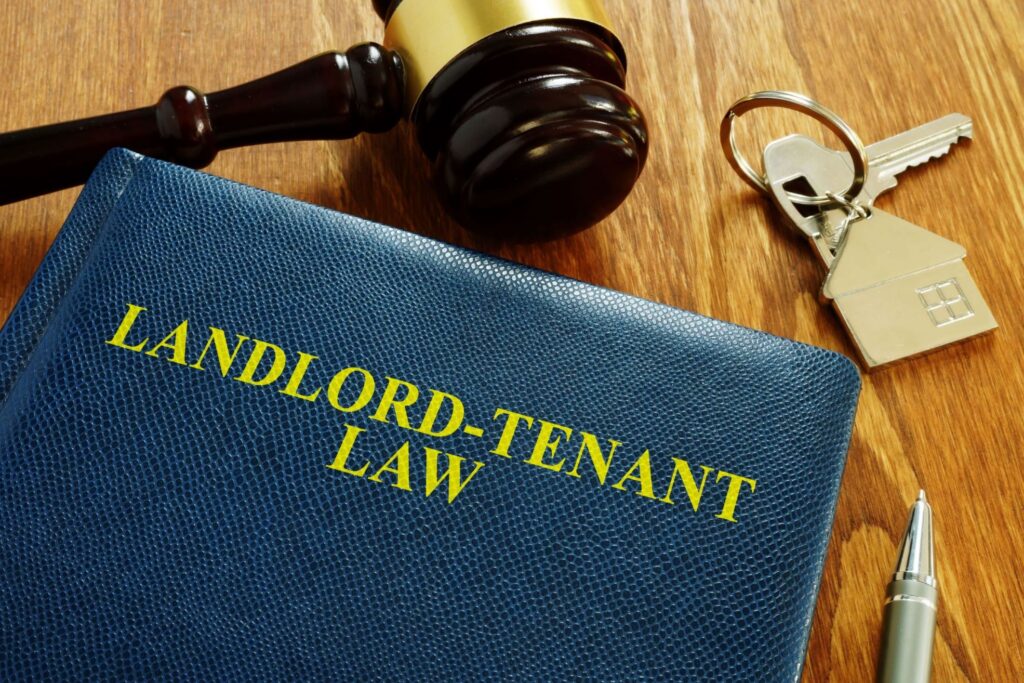
Landlord-Tenant Law Book

When searching for solutions, you naturally turn to platforms like Google and Yelp. You’ll stumble upon many eviction attorneys ready to offer their expertise. Your quest revolves around securing the services of the top eviction attorneys in Orange County. This careful selection reflects your determination to ensure that your case is managed with the utmost professionalism and skill, aligning perfectly with your expectations and the complexities of your situation. Here is the list of those who made it to the top.

Top Eviction Attorneys in Orange County:

1. Law Office of James M. Blucker

With a robust range of expertise, the Law Office of James M. Blucker is your trusted source for legal solutions. From Real Estate matters to Landlord/Tenant disputes, Unlawful Detainer/Eviction cases, Civil Litigation, and more, their skillful team covers diverse areas, including Real Estate Litigation/Transactions, Business Law, Estate Planning, and Bankruptcy.

With office locations in Ontario CA and Costa Mesa CA, the Law Office of James M. Blucker is dedicated to forming genuine connections with clients while offering professional and effective representation. Backed by a profound understanding of California State law, their motto, “THE LAW OFFICE OF JAMES M. BLUCKER IS HERE FOR YOU” underscores their devotion to guiding clients through complex legal matters.

Navigating intricate legal issues doesn’t have to be done alone. The Law Office of James M. Blucker provides the essential legal advice, counsel, and representation you need. Let their brilliant team ensure your legal concerns are addressed completely and skillfully.

2. Duringer Law Group PLC

With an esteemed legacy of over 30 years, Duringer Law Group PLC has established itself as a distinguished leader in the rental housing industry. Operating from offices in Anaheim Hills CA and Lake Arrowhead CA, this prominent law group is renowned as one of the nation’s largest and most seasoned landlord-tenant law firms, specializing in eviction law and debt collection.

Exclusively devoted to representing owners and managers of residential and commercial income properties, the Duringer Law Group PLC is a formidable force in eviction actions across Orange, Los Angeles, Riverside, San Bernardino, San Diego, and Ventura counties. Their reach extends statewide through a network of proficient attorney services and registered process servers, providing representation that transcends geographical boundaries.

Guided by a resolute mission, “We Are Dedicated To Serving Your Needs,” Duringer Law Group PLC exemplifies dedication and commitment to its clients. With their unwavering competence, unparalleled experience, and comprehensive service, they are an invaluable resource for navigating the intricate landscape of landlord-tenant law.

3. Eviction Group, A Professional Law Corporation

At the forefront of landlord-tenant legal solutions, Eviction Group, A Professional Law Corporation, is a notable California-based firm specializing in Residential and Commercial Unlawful Detainers. Serving the expanse of Southern California, from Los Angeles and Newport Beach to Riverside, Irvine, Lake Elsinore, San Bernardino, Corona, Anaheim, Rancho Cucamonga, Murrieta, Palm Springs, San Diego, and Huntington Beach, their services are accessible across the region.

Eviction Group caters exclusively to the interests of landlords. With their headquarters in Los Angeles CA, supplemented by offices in Newport Beach CA and Riverside CA, they are strategically positioned to offer comprehensive support.

Eviction Group operates on an appointment-only basis at multiple locations to accommodate clients’ convenience. Recognizing the significance of accessible resources, they provide FREE forms and notices on their website. With a firm belief in expert guidance’s pivotal role, their experienced attorneys ensure landlords are guided from the outset, minimizing the potential for costly errors in rent recovery and property possession. Choose Eviction Group for a partner dedicated to safeguarding landlords’ rights and interests.

4. Strictly Evictions

Based in Cypress CA, Strictly Evictions is a steadfast law firm exclusively committed to assisting landlords in navigating eviction proceedings. Specializing in providing thorough legal representation and guidance throughout eviction, they are a dependable ally for landlords seeking dependable assistance. Serving Orange, Riverside, and San Bernardino counties, Strictly Evictions takes on every facet of the eviction process with precision and efficiency.

With over two decades of experience in Residential and Commercial Evictions, Strictly Evictions boasts an extensive range of mastery. From pursuing judgments through trial or default to skillfully negotiating stipulations for judgment without trial, their proficiency covers the spectrum. A unique advantage they offer is the option to initiate your eviction hearing by phone, eliminating the need for an office visit and streamlining the process for convenience.

Choose Strictly Evictions for a partner that leverages skill, dedication, and meticulous attention to detail to provide timely solutions for eviction needs. With Strictly Evictions by your side, you can confidently navigate the complexities of eviction proceedings and secure your rights as a landlord.

5. AWB Law

Nestled in Irvine CA, AWB Law is a reliable legal partner that prioritizes personalized service, working closely with clients to assess their legal requirements and devise tailored strategies that uphold their interests and needs. With a dedicated team of adept real estate attorneys, AWB Law leverages their knowledge to address a wide spectrum of real estate law matters.

From navigating complex quiet title actions to offering expert assistance in lease drafting and review, breach of lease litigation, and subpoena compliance, AWB Law stands as a beacon of competence. Their expertness extends to resolving real estate property disputes encompassing ownership, landlord-tenant, neighbor, and security deposit conflicts.

AWB Law’s mission centers around delivering prompt, top-tier legal services to clients with real estate needs. Their commitment to excellence has set an exceptional benchmark in practicing California real estate law. Acknowledging their prowess, they are honored as one of the Best Real Estate Attorneys in Irvine for 2022 by Expertise.com. Collaborate with a partner dedicated to ensuring your legal success, backed by a legacy of distinction and adherence to delivering paramount solutions.

To circumvent the pitfalls of a costly, prolonged eviction process, it’s essential to enlist the services of an attorney armed with an assertive strategy aimed at yielding swift outcomes. Choose a professional who maintains unswerving determination, refusing to falter in the face of early tenant opposition or resistance. The choice of attorney can significantly influence the trajectory of your legal proceedings.

When working with clients, attorneys frequently encounter two distinct archetypes that drive their approach:

The Nice Guy

This individual is inclined towards a conciliatory path, seeking the quickest and most amiable resolution possible. Their focus is on minimizing conflict and reaching an understanding with the opposing party.

The Aggressor

Conversely, the aggressor employs a forceful and confrontational approach, employing tactics designed to intimidate the opposition. This person may employ threats to prolong the process while accruing costs and leveraging the specter of legal action to coerce concessions.

In pursuing a successful eviction process, aligning with an attorney whose strategy aligns with your goals is pivotal. In legal disputes, preserving your sanity is a paramount concern. Swift resolution becomes more than a desire; it transforms into a necessity. Choosing an attorney who refuses to entertain any frivolities from the opposing side becomes crucial in safeguarding your mental well-being and legal interests. Moreover, the value of staying informed must be considered. A regular weekly update from your attorney’s office keeps you in the loop, ensuring you know the ongoing progress. Remember, the right attorney isn’t just a legal representative – they’re your ally in achieving peace of mind amidst legal complexities.

Here is a related article worth reading on the 6 Tenant Responsibilities When Moving out of a Rental Property.

featured image text

By |2026-04-07T08:56:03-07:00August 24, 2023|Landlord Education, Property Ownership|Comments Off on Top 5 Eviction Attorneys in Orange County

Squatters Rights: Do They Have More Rights than Landlords?

What are Squatters’ Rights?

Squatters’ rights are legal allowances to occupy a property without the owner’s permission if they weren’t served an eviction notice. The rights vary from state to state, but the overarching theme is the same. The squatter can become the new legal owner of the property after a certain amount of time.

In California, a squatter can live on a property for a minimum of 5 years, have established utilities in their name, possibly pay property taxes, and can prove adverse possession. Adverse possession means squatters can prove that they are open about living in the property without the owner’s permission (i.e. establishing utilities in their name), haven’t signed a lease, and have lived in the property illegally for a certain amount of time. According to Adverse Possession, they now are the new legal owner of the property.

What are Landlord Rights?

Covid brought about a slew of “squatters” across the nation, not just in California. In researching this concept of “squatting” I was appalled to see just how lenient the law is in favor of squatters and how little recourse landlords have against the squatters.

Story after story depicted the helplessness of landlords against the thieves living in their homes.

In Texas, a landlord listed her property for rent. Upon a phone call from her HOA, she stopped by the home and was shocked to find a family of 5 living in her home. The police couldn’t get them out because they had taken up residency in the property and presented a signed lease. Turns out this family had been evicted from three other homes in the area, and this landlord was just her next victim.

In January 2020, a couple in Riverside, California bought the home of their dreams. Escrow closed and their nightmare began. The sellers refused to move out, becoming squatters in a home they no longer owned. Thanks to Covid and the eviction moratorium, the new homeowner’s hands were tied. Out of desperation, the couple reached out to a local news station who did a cover story on the situation. The heat was on the squatters and soon they packed up their bags and left.

A handyman in Northern California flipped the script on unsuspecting squatters in his mother’s vacant home. Having no help from local authorities and the courts being backlogged, he decided to take matters into his own hands. He became a squatter on the squatters. His methods were unconventional and although they did work, a confrontation could have ensued and ended very differently. He was successful and ultimately, he and his mother were able to sell her home.

The overall theme here is that landlords have little to no rights when it comes to squatters. There is a movement that is brewing to bring changes to the laws against squatters. The more landlords speak up to their local government, the better chance it is for these laws to change. We will keep you updated as more information becomes available.

How to prevent squatters?

There are methods you can take to prevent squatters. According to Zillow, there are 5 ways you can protect yourself from squatters.

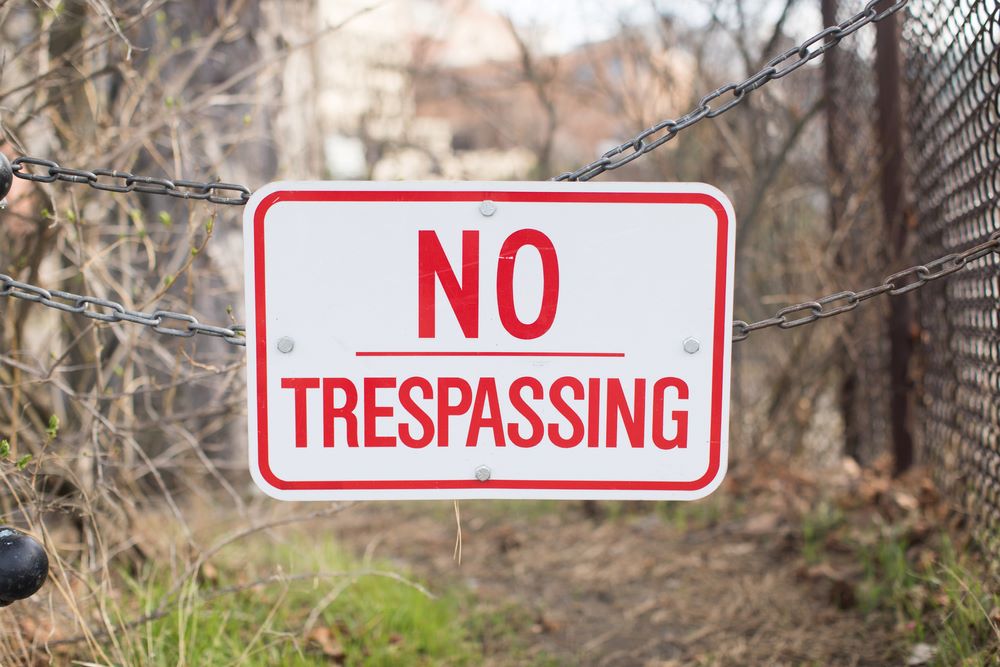
  1. Post “No Trespassing” signs on all doors and gates. Trespassing is illegal and can lead to an arrest. By having these signs, squatters are first considered trespassers and you might be able to get them out faster.
  2. Check your property regularly for signs of squatters and trespassers.
  3. Have your property manager, friends, or family members check the property regularly if you don’t live in the area.
  4. Screen applicants thoroughly to verify their rental history.
  5. Fill vacancies quickly.

At Management One, we take squatting seriously. We’ve had a few squatters over the years, as to be expected when you have vacant homes. Due to swift action by our team, we’ve been successful at removing the squatters promptly and without incident.

Actions that we take to prevent squatters include:

  1. When a property is vacant, we put up signs on all doors and the main windows that state the home is being monitored and that “No Trespassing is allowed.”
  2. We conduct weekly drive-by inspections of the property to ensure there is no one living in the property.
  3. We have contractors that are at the property completing work, so there is never a long period of time that the home sits completely empty.
  4. We rent properties quickly to avoid long vacancy times.
  5. We thoroughly screen residents to verify their rental history and employment history.
  6. We obtain identification on all prospective residents before allowing them to view a home.

If we find squatters in the home, we call the local authorities immediately so there is a record of the complaint against the squatters. Most of the time, calling the police will get the said squatters to vacate the home based on their trespassing. Having said that, there is little to nothing that the authorities can do. They will say it’s a civil matter and evict the squatters.

What to do if you find squatters in your home?

First post 2-3 no trespassing signs on your property. Then call the local authorities and see if they are willing to help remove the squatters based on their trespassing. If nothing else, it will create a record that you attempted to remove the squatters, thus not “allowing” them to take up residency in your home.

If the police can’t help you out. Contact an eviction attorney and start the eviction process. Depending on your County and State, the time frame for an eviction will vary greatly. In Riverside County, evictions take a fraction of the time as it does in San Bernardino County. Get the ball rolling ASAP, remember the longer the squatter lives in the property and sets up the house, the harder it will be to get them out. (If you need help on this, we have vetted eviction Attorneys who can help)

Lastly, and I Can’t Stress this Enough…

If you are a landlord, make sure you have “Malicious Intent” with your landlord policy. If the squatters damage your home, this portion of your policy will kick in and cover the damage and it does not cost a lot, sometimes nothing. Some owners have been reimbursed tens of thousands of dollars. The bottom line is this, don’t rent out your property without it. Please note most insurance companies think squatter damage is vandalism, it is NOT. Again, call us at 951-735-2000 or 949-721-6608 if you need any help, we have the best insurance carriers, who pay out when you have a claim.

If you are a homeowner with your property listed for sale, check with your insurance company to see if there is coverage that includes malicious damage to your property. Ask to have your coverage extended past 30 days while the property is vacant. It’s better to be safe than sorry.

Conclusion

As I mentioned previously, speak up, and vote when bills are presented that cause harm to landlords. Don’t think “my voice won’t matter”, if landlords don’t ban together and speak out, the opposite side will gain traction, and owning rental property will be a thing of the past. Owning rental property is truly a great way to grow your retirement and generate great wealth for the next generation.

To learn more about insurance, read this article next: “How to Tell if you have the Best Insurance Coverage.”

a vandalized home

By |2026-04-07T09:04:16-07:00July 6, 2023|Landlord Education, Property Ownership|Comments Off on Squatters Rights: Do They Have More Rights than Landlords?

Squatters Right In California

We all know California is at the forefront of many things, social and otherwise. Among those things are items such as the topic of squatter’s rights. You may not know this, but California has had squatter issues since the 1800s. During the California Gold Rush, this was a real problem, particularly with mine stakes. Never-do-wells are not strangers to the concept of jumping in and making their own that belongs to others.

However, here we are addressing squatters in California and items such as Adverse Possession.

You may not think squatters are a huge problem, but I can tell you firsthand, it is. Not only have we had to battle this in the renting of properties (and we will give you some tips on handling this later in the article), our sales division, First Choice Investments, has also had to deal with it.

This past weekend my son and I were out looking at homes to buy. It was quickly apparent that about 40% of these homes were listed with no signage. Odd if you’re selling a house, right? Sellers are opting not to install yard signs to safeguard against squatters. Two properties definitely had squatters, and here’s the scary part for the property owner of one: the squatters also had running utilities. Why is this important? If the squatter has established utilities in their name, that is a path to adverse possession. Shoot, just having water and power on, in the owner, or realtors name, period, makes removing the squatters out much harder in California!

Adverse Possession

So, what is Adverse Possession? Well, if you want to get in-depth, read this:

In short, from the same article:

“Adverse possession is a doctrine under which a person in possession of land owned by someone else may acquire valid title to it, so long as certain common law requirements are met, and the adverse possessor is in possession for a sufficient period of time, as defined by a statute of limitations.”

In other words, they steal it. If you Google “Oakland Man Adverse Possession” you will find this in the #1 spot.

This squatter paid the property taxes for a few years, and bingo, the house was his. If that doesn’t send chills down your spine, well…

Here is an example of the challenges we, in The Golden State, contend with:

In California, if a squatter illegally enters your vacant property, sets up utilities, you know, water and electricity has a fridge running within the home and has a bed to sleep on, congratulations, you have a “tenant.” To get rid of this freeloader, you must go through the eviction process! Yep, court is in your future.

There is also what I call the “Unwitting Squatter.” I have no idea what the legal term is, to be honest. This is not a person who deliberately moves into a property illegally. They were duped. This is, potentially, the harder one to defend against vs. intentional squatting.

You see, an intentional squatter moves in, knowing it is not their property; they know they have no legal rights to the property. However, they move in anyway.

An unwitting squatter thinks they have renter’s rights. Here is how it works:

A scammer has somehow gained access to the property and rents it out as if they have the leasing rights. The mark pays the deposit, first month’s rent, then usually, but not always, receives the ill-gotten keys. They mark moves in, all happy to have a place to sleep, then it all goes sideways. The property owner discovers this, then one of two things happen: The unwitting squatter moves out and loses significant money to the scammer, or they opt to dig their heels in, resulting in eviction proceedings.

How can you reduce the odds of squatters moving into your house?

Well, a good property management company can help. However, as an individual owner managing your own property, you have options too. Traveling to the property and checking it daily is one. Or paying someone to do that.

Living in the house until it rents is another. That can be a little awkward, however.

Also, installing an alarm system can help. However, are you willing to pay for a two-year contract to protect your property for a week, month, or even two months?

Featured image text: " Best Doors Lock for a Rental Property"

Fully Secure Your Investment Property

What we have found is that fully securing a property is vital. That means doors and windows are property and fully locked, and even double-locked in the case of windows. If a bad guy simply walks into an unsecured house, then it is not breaking and entering.

Key control: do it! Between residents, always change the locks! Make sure only your authorized people have access.

Consider a Ring Doorbell or similar device. This way, you can see who is entering the property. You do need WIFI at the property, that is, small peanuts to pay for to have the peace of mind that you have “eyes” on your property at all times.

Keep rehab times short on properties. Now and again, our contractors do run across someone who broke into sleep in a vacant property. They do not let them stay, not even if they have to “get a few things.”

We had a property a few years back where unwitting squatters entered. They had given a lot of money to a scammer and moved right in. One of our big bosses discovered this and made them leave toot-sweet. There were no ifs, ands, or buts.

Call the police and prosecute unauthorized intruders who have entered your rental property. And don’t feel bad about it, at worst they will get a bed and a few meals.

When a resident vacates, get the property to rent-ready condition ASAP, then move the new residents in right after. I hear horror stories about two-month rehabs, up to one-year rehabs. That is insane! No rehab should take that long! Every day your property sits vacant, there is a risk of something terrible happening. Squatters, water leaks, you name it.

Make it look like someone is at the property. Our contractors leave lights on all the time. I have even run across radios playing in the house just to make it seem like someone is there.

At the end of the day, you want peace of mind, and that is what a property management company ought to provide. That encompasses peace at all levels, squatters, rehabbing, renting, maintaining. After all, don’t you have better things to do when you can hire a management company for $3.00 a day?

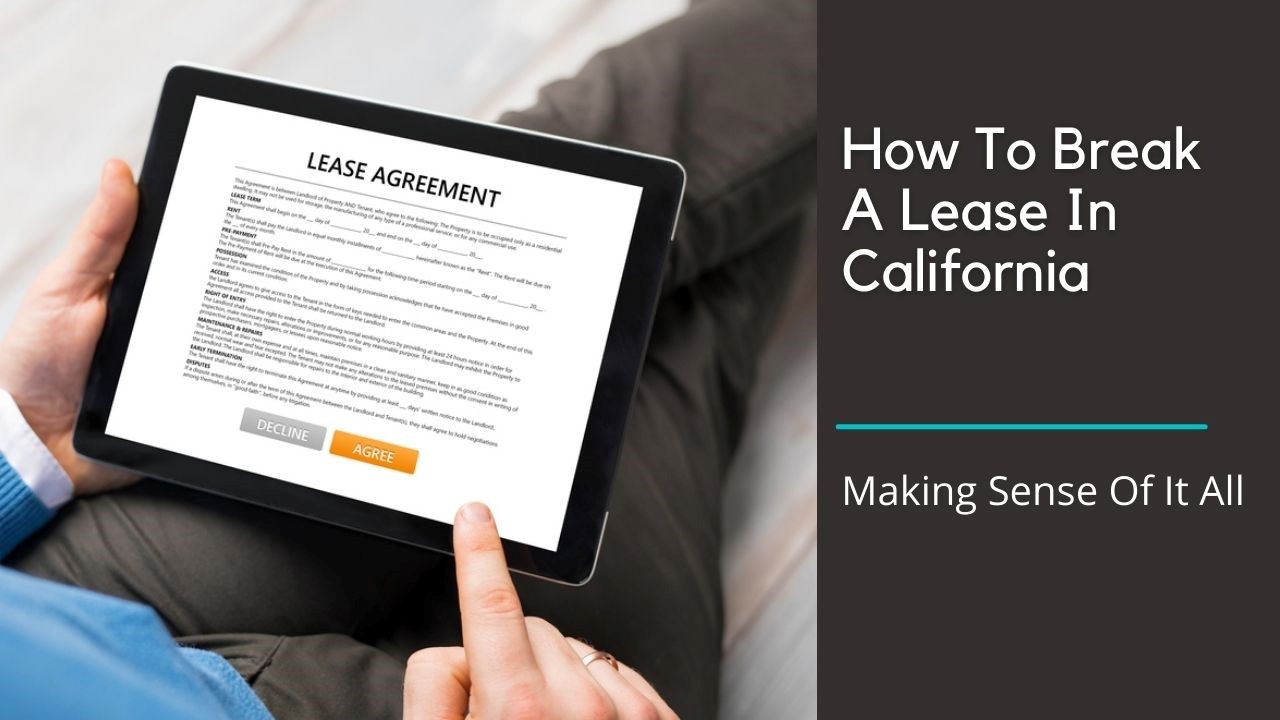
Check out this article on How to Break a Lease in California, it’s definitely worth a read!

person reading a lease agreement on their tablet

image with text "Ready to talk to Tyler about an investment property? Call him at 951-735-2000"

By |2023-07-06T14:48:21-07:00July 6, 2023|Landlord Education, Property Ownership|Comments Off on Squatters Right In California

Gap Coverage: Landlord Insurance Has A Costly Loophole

The cold hard truth is that most of you are incredibly underinsured on your landlord policies.

Over the last three months, I’ve personally been involved in several “alligator” cases within the company. An “alligator case” is a major issue such as a roof leak that leads to mold issues. During this time, I discovered that nearly all the policies I reviewed lacked at least one of the four main elements that every policy should have.

Those elements are:

1)Malicious Intent

2)Loss of Rent/Loss of Use

3)Vandalism

4)Fire and Liability

Malicious Intent

Let’s start with Malicious Intent. This is when a resident intentionally damages your home. We’re talking carpet ruined by pets or lack of cleaning. Holes in the wall. Broken windows, stolen appliances, you name it. Malicious Intent doesn’t cover normal wear and tear. Things such as paint over two years old or carpet over 10 years old.

Currently, I am assisting a landlord with a situation where the resident has let the grass die off and is refusing to allow us to enter the property.

I asked the landlord to send me a copy of their insurance policy. What I discovered was mind-boggling. The company that issued the policy (USAA) doesn’t offer Malicious Intent coverage. USAA is a great company but it’s imperative that you have this coverage to protect you against damages caused maliciously by the resident.

My concern is since the resident let the yard die and is refusing to let us in the home, what are they hiding from us? My experience tells me that there is damage inside the home.

My advice, first, find a new insurance company. Secondly, in the meantime, increase your liability coverage. I will discuss this later in the article.

Loss  of Rent/Loss of Use

Now let’s talk about Loss of Rent or some call it loss of use.

Loss of Rent comes into play when something happens to the property that causes an unexpected, prolonged vacancy. For example, a house fire, or mold remediation, or a flood.

Most policies that have loss of rents will pay you rent for up to 12 months. In the last 12 months, we’ve had three house fires. Two were caused by the resident and one was an electrical failure in the attic.

All three fires caused the whole house to be condemned and the residents had to relocate. Two of the three will take between 10 and 12 months to be built back. The third should only take 4 months.

The long-term build-backs will receive loss of rents ( this is the same amount of rent you were getting with the resident in the property) because the resident had to permanently relocate. The third one, the resident is receiving displacement rent from their renter’s insurance. Allowing the resident to pay rent and stay in a hotel while the build-back is happening.

So, loss of rent is a very big deal to keep you from losing your investment property if you cannot make the mortgage payments for a year without rent.

Vandalism

Now let’s talk about Vandalism. People can be so cruel, helping themselves to things that don’t belong to them, including the copper from your AC unit or breaking into your vacant unit and stealing the kitchen appliances.

That’s where the vandalism part of the policy comes into play.

Vandalism coverage will protect you if someone steals your AC unit or breaks into your home. There is a catch, you need to read the fine print on your policy, most will not cover any damage if the property sits vacant for longer than 30 days. If you know your property is up for rent, or that you are planning an extensive renovation, then you might call your insurance company and advise them. Some will allow you to extend the coverage to 60 days instead of 30. Having that extended coverage could mean the difference between you spending $6,000 on a new AC or you having to pay a $1,000 deductible and your insurance company replacing the unit.

Fire and Liability

Fire and Liability are the next topic of discussion and they are a huge topic. Let me ask you this, when was the last time you looked at the replacement value coverage of your policy? Most insurance companies are not keeping up with inflation. What does this mean to you? It means that most likely you are incredibly underinsured and you will have to come out of pocket with a large sum of money.

True Story: There was a kitchen fire in a condo. The resident started cooking and went to the grocery store leaving her food on the stove. Thankfully, the resident has insurance. However, the landlord’s policy was so underinsured that he had to pay $42,000 out of pocket. Of course, the two insurance companies will duke it out and come to an agreement.

In the meantime, the landlord is out the $42,000 and had to come up with that cash so the repairs can commence. He had no idea that the insurance company wasn’t increasing the replacement value as property values rose and inflation hit. Some policies have a “gap coverage”, that will kick in if there is a discrepancy between the current coverage and the market conditions at the time. So in this case, if the landlord had this coverage, the “gap coverage” would have kicked in and covered that additional $42,000.

After hearing this, I was enraged, and I personally called his insurance agent and questioned him as to why these policies are so underinsured. His answer was, “I don’t have time to review all of my client’s files. If they don’t ask, I don’t adjust”.

Scary, wouldn’t you agree? I thought so, which is why I’m continuing to preach about insurance and the importance of reviewing your policies on an annual basis. I don’t want any of you to be in the position that this investor found himself in. If there is anything that you do for yourself this year, please make sure you review your policy and make sure you have these four main elements in your policy, call us to give you what your property is worth so it’s insured properly.

Tyler Sudman of Management One Property Management

By |2023-05-04T03:05:25-07:00May 4, 2023|Landlord Education, Property Ownership|0 Comments

Avoid Robbing Your Piggy Bank on Rental Property Costs

Don’t do it…..Picture this for just a minute…You just received a notice from your resident that they are vacating after six years, and you know your rental property is going to have some hefty repairs. When the resident moves out, either you or your management company conducts an inspection, and you discover you’re facing $8,000 to make the property rent-ready for the next resident. Gasp…” You’ve been ROBBED. Panic sets in because you know that your piggy bank (aka your bank account) is EMPTY or close to it. Where did all your money go? Your property has been rented for six years, you’ve been getting moderate increases in rent each year, yet you have no significant money to pay for these unexpected repairs. How can it be that your account is EMPTY?

The answer: YOU ROBBED YOURSELF

That’s right! And now you’re thinking, “Why do I own this property? Maybe I should sell it?” Don’t do this either, read on…

Let me explain. During the last 30+ years of owning and running a property management company, I have seen this scenario play out hundreds of times. Landlords are often caught off guard by major repairs or even a single large repair or improvement after a resident has moved out of their home after several years. They are not prepared for these types of repairs. Sometimes even the smaller repairs catch a landlord off guard. The old saying “Save for a rainy day” is true when you own a rental property. For this reason, I started teaching landlords the SECRET….

Keep reading to find out the SECRET to financing your current or next rental property repairs and improvements…

Advantages of Owning A Rental Property

Having a rental property has many advantages. Typically, the property is appreciating at a rate of 2-7% a year, depending on the property location. Then there are the tax benefits, where on one single-family home, you can save up to $2,500 on your income taxes every year. Having the ability to write off the interest on the loan, insurance, home repairs, and property management fees is a plus. Almost every operating cost is a write-off. The loan on the property reduces its principal by $200-$500 every month solely from the rent the resident pays. Eventually, over the next fifteen to thirty years, the resident will help pay off the loan on the property for you. Once your property is paid off, you have a steady stream of cash flow every month for the rest of your life. Sounds great, right? While these are all great reasons to invest in a rental property, I was once told by my real estate mentor, many years ago, that you can’t pay the repair bills with any of the above.

Downsides to Owning A Rental Property

Two of the downsides of rental property ownership are maintenance/repairs and vacancies. We all know things will eventually wear out, but sometimes we’re not prepared for it. Especially when those items are of the high-ticket variety, like painting, flooring, appliances, air conditioners, and even blinds, moving out can create a financial hardship for a resident. These things can add up to a few thousand dollars very quickly. Even the small things, like a $100 faucet repair or a dishwasher replacement at $400 a pop, can dig into your personal checking account.

Money that you may have had other plans for, right? Sometimes I’ve seen owners not

take a pre-planned vacation with the kids simply because when a renter moved out and repair bills came in, they couldn’t afford to do so, and that truly saddens me. A $10,000 bill to repair or replace a leaky roof shouldn’t be a tragedy that prevents a family vacation. It doesn’t have to be that way!

Believe it or not, I have the answer. What I am about to share is something I practice for the properties that I own. I even use other management companies to manage my properties in other states where I own property. So, you can say, I sit where you sit. I understand well the trials and tribulations of repairs and maintenance expenses, and just like you, I must be prepared financially for when they come up. 

Avoid Being Surprised

Here are a few simple ways I recommend to help you avoid being surprised or even blindsided by repairs and maintenance of your rental property. Let’s start by explaining what not to do. What typically happens when a new real estate investor purchases a rental property is, they use a personal checking account. We will call this “Option A.” In this scenario, when there is a repair, the management company will either deduct it from the rent or ask you to send in a check to cover the cost of the repair. Then, as the rent comes in, the management company will either electronically deposit it into your personal checking account or mail you a check to deposit. Also, as the management company raises the rents on your property, that additional money keeps going into that personal checking account. Guess what happens?

You have more money coming in, but it just gets eaten up in that checking account for personal things, like groceries, family vacations, braces for the kids, a day at Disneyland, etc. Every day, life purchases and bills come out, and that is where the challenge begins. With Option A, your money becomes commingled with your personal checking account and life. Over the years, you can’t figure out what is personal and what is investment money. 

It is then that you begin to feel like you will always be robbing your personal checking account to pay for repairs on your rental property. Over time, that starts to wear on you, and you begin to wonder why you have the rental property in the first place, right? How would I know this?

Because I’ve lived it. The appreciation rate at which your property value is going up isn’t seen because you can’t use that money right now. Then the tax write-offs are not seen as much of a benefit anymore because the write-offs are now entangled in your other personal expenses and taxes.

That is when we begin to forget about all those savings on taxes. Also, even though the resident is paying down your loan each month, even a couple of hundred dollars is like watching grass grow, so, unfortunately, our focus is only on one thing. That’s right, taking money out of your personal checking account to pay for repairs on your rental property. Again.

Now let’s talk about Option B. There is a simple fix to this, and here it is. In option B, you open and set up a separate checking or checking savings account and name it “Checking investment rental account.” (If you have multiple properties, you can combine them all in one account.) I recommend you deposit a minimum of $1,000-$5,000 from your personal savings account to your new “checking investment rental account.” If you must start with less, do it anyway because it’s essential you begin immediately. Next, pay your mortgage or mortgages, taxes, insurance, and repairs from this account. Second, deposit or contact your management company, if you use one, to electronically deposit your rent into this new account. Here is the secret to why it works. As rents increase, almost every year, that extra rent will start to build this new account. Let me give an example. When the rent increases just $50 a month each year for 6 years (which is only a 2.9% rise in rent on average) and is deposited into your checking account, in 6 years you will have $12,600, and if the rent increases $100 a month, you will see  $25,200 in your new checking investment rental account after 6 years. You will now have the money for rental repairs because you’re not using it for daily expenses. See the diagram below. It’s just like compounding interest. 

Maintenance and Repairs

You can’t have a rental property without repairs. We know that, and if you use Option B, not only will you have the money to pay for repairs, you’ll have enough for the large ones. In 5-7 years, you might have $10-20,000 in additional income to repaint the exterior of the home, replace the flooring, or buy a new appliance. You’ll want to improve your property to ensure it’s in good shape because one day, it will be paying you, just like mine is paying me today.

I have several properties today that I own outright. They are paying me today every single month, and what a great feeling it is. Not to mention the properties are worth, on average, 5-7 times what I paid for them 15 and 30 years ago.  Plus, I still write off my repairs, taxes, insurance, etc., on my taxes, offsetting the rental income I get each month. Using this strategy allows you to enjoy the journey while you build towards your retirement. You will find yourself buying more properties because now it’s exciting, and paying for repairs becomes painless.

End of Year Assessment

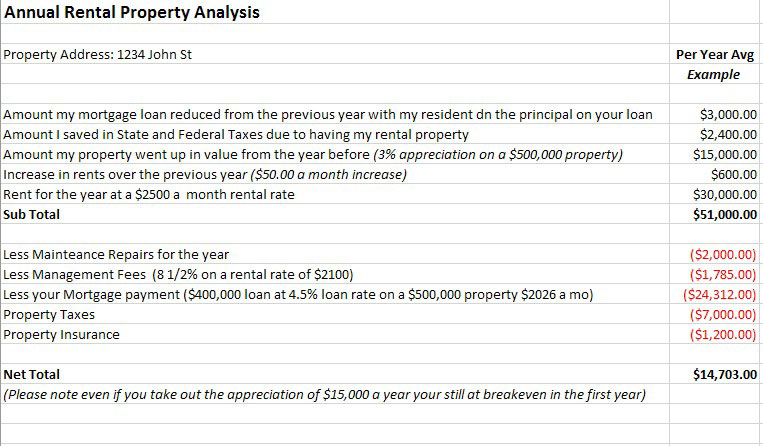
Lastly, I encourage you to do one more thing once a year. Ask your CPA or person doing your taxes, how much you saved on your income taxes on FEDERAL and STATE, and write that down. Also, look at how much your mortgage has reduced from the year before and write that down. Also, your Real Estate Agent can tell you how much your property has increased in value in the last 12 months. Write down how much you made in increased rents during the previous year, and then total all the columns. Taking one hour a year to do this will give you a whole different perspective on your rental property. See the diagram below that you can use.

Real Life

Recently, I received a call from one of my clients, with whom I started doing business 42 years ago in Riverside, CaliforniaBelieve it or not, I met them knocking on doors. They bought a home for $35,000. Gene and Betty now live in Georgia, and they were just reviewing their financials while doing their taxes. Gene said he just wanted to call me to say, “thank you.” He said, “They are now worth over 1.7 million dollars primarily due to you, Ron, on all the investments we’ve done with you. We are set for life with all the income they have coming in and are traveling and enjoying life.” Gene and Betty are just great regular ordinary people, not big investors, who started small and ended up big. Gene went on to say “all those people who didn’t believe in you and your strategy way back then Ron, are not having the life we have today, and that’s sad. I wish more people would have followed your strategy.

In closing, I wish this all for each of you, in that you too will end up big like Gene and Betty. There is still time to get started, whether you recently purchased a rental property or have owned your investment for 20 years. Start TODAY with Option B! 

By |2023-02-15T09:16:00-08:00February 15, 2023|Landlord Education, Property Ownership|Comments Off on Avoid Robbing Your Piggy Bank on Rental Property Costs

How to Find an Honest Contractor

Looking for an honest and reliable contractor? They come in all types, from plumbing to pool contractors, to landscapers, electricians, you name it.

I believe that most, the majority that is, are honest contractors, hard-working men, and women, people who have opted for the joy of fixing things and daily changes of scenery instead of sitting in an office day in and day out.

Maybe I’m concocting a Norman Rockwell painting mixed with a Budweiser commercial here, but the service sector really is a massive part of the nation’s workforce and a vital component of everyday life. 
Having inspected properties since 2010 for banks, real estate brokers, insurance companies, and now for Management One, I can tell you that distinguishing between good and bad contractors is vital, and finding an honest contractor will make your life much more straightforward. So, let’s dive in.

What about the bad apples, the dis-honest contractors?

Yes, there are some dishonest contractors out there, entirely true, a lot of them as a matter of fact, but I think an ounce of forethought and prevention can prevent most cases of contractor abuse. We have all heard the horror stories of the roofer who gets paid half upfront, does a quarter of the work then disappears, or the pool guy who gets a hefty deposit, excavates, then seemingly ceases to exist.

I knew some folks a year ago, good churchgoers as a matter of fact, who would cheat their roofing customers any chance they got.

A guy I know, we’ll call him James, was working for these folks and asked the boss why they were putting on the cheap roofing materials when the customer paid for upgraded roofing material. “Look at this house. It’s ugly. Why put lipstick on a pig?” When he replied that the customer ought to get what they paid for he was told, “That’s their problem,” by the laughing boss.

Yes, there are bad actors, but you can minimize the possibility of poor, sloppy work, slow work, and your hard-earned money being absconded with by doing a little work on your end first.

About that elusive honest contractor…

How to choose a good apple from a barrel that does have bad apples?
What would you do? You would stop and examine each apple carefully, looking for bruises and holes, would you not? Yes, yes you would.

How is it any different with a contractor? It boggles my mind that anyone seemingly opens a phone book (yes, I’m old) and stabs their finger in the plumber section, boom, choice made. Or Googles up “Roofer” and the pretty ad wins. But yes, some people do exactly that!

Due Diligence to Find that Honest Contractor

Check. Verify. Check. Verify. THEN pull the trigger.

Isn’t that a lot of work?

Yes, yes it can be a lot of work, but you like to keep your money, don’t you?

  • Check references, particularly on larger jobs. Call people, the contractor has done work for in the past. If the contractor won’t provide this information to you, then maybe it’s just not meant to be. Take that as a sign and move on to the next contractor.
  • Use licensed and insured contractors only. If they are just a “Handyman” you found on Craigslist, they may not be either insured or licensed. Ask.
  • Check YelpGoogle, Better Business Bureau, Angie’s List and believe it or not, Facebook reviews. There are also other specialized portals dealing with and ranking many contractors, check those as well. Do keep your “nonsense sniffer” operating on this step. What I mean is to be aware that sometimes disputes happen through no fault of anyone involved. Joe Shmoe wants a roof done for three dollars; the contractor comes back with a bid of $8000, Joe blasts the contractor because the contractor won’t play ball. It happens, but many times you can distinguish between nonsense and reality.
  • Ask people you know who had similar work done for them for references, and ask how it turned out. Who did they use?
  • Get it in writing. That means everything involved with the job to be done.
  • Never pay upfront, nor should you ever “pay half now and a half when the work is finished.”  Pay the contractor the full amount when the work is done, and it meets your approval. There are some exceptions, such as pool deposits and the like; however, you should question even those scenarios. Where does the money go and what percentage is refundable should I change my mind? Get it in writing.
  • Also, keep in mind that the “The Bid is the Bid” mentality can sometimes work against you. When a contractor bids, they cannot foresee everything that may happen during the job. Sometimes items pop up in the middle of the work, something that needs attention, something that may cost you more. When the honest contractor does come to you with this item, do listen and consider what they are telling you. If they must come back another time to do the work, disassembling the item to fix the said item, will cost you more, perhaps substantially more.
  • Get multiple bids, especially on high-dollar items, but do bear in mind that sometimes the cheapest bid could cost you more in the long run.

Example:

Your wood patio cover needs repair because it has wood rot.

Contractor A) says you should just replace it outright with an aluminum cover to keep you from having this issue again in a few years. Quotes you $2670 for the demolition of the old 200 square foot cover and installation of a new aluminum cover the same size.

Contractor B) bids $850 to repaint the wood cover. What about the rotten wood? “Don’t worry ’bout it, I’ll take care of it?” he says while patting his beer belly and chewing his cigar.

Contractor C) bids $2200 to demo the old cover and put up a new cover also made of wood. Yes, you save over $400 right now, but in 10 years you’re paying AGAIN.

Who’s an honest contractor here?

With A) you’re taking care of the whole problem.

With B) you find out a year later that he spackled the rotten wood flush, then painted the whole thing. You know this because the whole cover collapsed and you’re having to go to court and may lose everything because someone was injured.

Finally with C), it’s an okay solution, but realistically you are throwing good money after bad.

The cheapest bid is not always the best bid, that’s the moral of the story. However, neither is the most expensive in some cases. It really revolves around your tolerance for expense versus risk, risk being of concern first, followed by concern for cost.

Mistakes happen. There are whole industries set up with this thought in mind. You carry automobile insurance; realtors carry Errors and Omissions insurance, your house has Homeowners Insurance because we humans make mistakes, we commit errors. Heck, in baseball there’s a whole category devoted to how many errors any player in any position has made, and awards for players who commit the least. Not a single ballplayer is perfect, and neither is your contractor.

If a contractor errs, give them the opportunity to “make it right.” An honest contractor will not hesitate to do so if the error is truly theirs. However, if the error is egregious and the contractor does not take responsibility, do bear in mind that if your contractor is licensed and insured (if you use real contractors as we do, that is), you do have recourse. The licensing board, the courts, and of course, social network rating systems.

There is a difference between “getting the job done” and getting the job done right.

— Dwight C. Gibson, Jr.

At the end of the day taking care of your property in the best conceivable way while looking at the big picture will not only save you money, but you’ll feel darned good about it.

Learn more about choosing the right contractor in our post Quality Contractors vs. Cheap Contractors.

Contractor on site holding his work hat and wearing a toolbelt

By |2023-02-03T13:27:58-08:00February 3, 2023|Landlord Education, Maintenance|Comments Off on How to Find an Honest Contractor

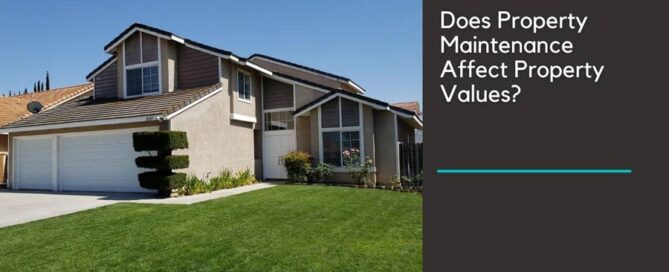
Does Property Maintenance Affect Property Values?

Can you believe what the market is doing? As a homeowner who lived through the meltdown of the “Twenty Aughts,” I’m constantly astounded how much the market has accelerated. Further, as with any gain, no small amount of fear accompanies massive wealth gains. However, while safeguarding gains is essential, so is protecting one’s assets. We will touch on that in a few ways, such as acquisitions, buy and hold, and buy and flip.

First, Will the Market Keep Rocketing Up?

In a word, yes. In a more prolonged sense, yes, provided interest rates stay sane. Do you remember when people agreed to pay up to double digits on home loans? 18% interest was not uncommon. Today, about 2.85% is not uncommon, which has made a massive difference in buying patterns.  Look at it this way, if your property makes gains of 12% in a year, that 3% loan is nothing. But what happens if (or when) the federal reserve hikes rates? (See the most recent deliberations here) Well, in California, not too much. Sure, it will cost more to borrow money, but…

There are not Enough Properties to go Around

In one of our recent webinars, this was a topic that came up. Property owner participation is highly encouraged in these events! One owner asked about values and rental rates dropping. Addressing the interest rates, as I did above, was done, but what about inventory?

As Ron said, even if the home builders started right now and built non-stop for the next ten years, there still wouldn’t be enough properties to go around! Southern California has been so far behind on new housing starts for so long that a dwelling shortage is expected. It’s supply and demand.

While the price rocketeer ride may slow, it should not crash any time soon. Still, prudence is always advised! All the more reason to…

Maintain Your Property…

What is the difference between a class A or B property and a class C? Professional management makes a difference, as does the area’s location, amenities, and desirability. B properties are a little older, more out of the way, and have fewer amenities than class A properties. Class C properties you typically find in economically disadvantaged areas. They usually require extensive rehabs, upgrades and typically have higher vacancy rates. These can be a bargain to snap up and, surprisingly, aren’t that difficult to bring up to C+, or even B, standards. However, if the whole neighborhood has sunken into the depths of despair, it’s a lot harder to bring a C property up.

So, How Do You Keep Your A or B Property an A or a B?

Maintenance. Such a lovely word. It’s right up there with phrases such as Property Rehab, Re-Key before Move In, Gentrification, and Rent Ready. Okay, a little overkill there, I’ll admit, but maintenance is a golden word and a noble aspect when it comes to your investment. Stop and think about it: you are providing a home to somebody. This is where children could grow up and remember their whole lives. Birthdays, and anniversaries will be experienced. Waking to a new day, every day, the hopes and dreams of the occupants taking flight, every day. On that note…

The Resident has Responsibilities Too

The resident paying their rent on time is not their only obligation. The renter also has an obligation to keep the property in good condition. Wear and tear will happen. We all know that, just as we know that, as an owner, there are obligations. The grand hope is that a synergistic symbiosis will occur, whereby the owner’s hopes and dreams coincide with the renters. Mutual benefit, in other words. Rent rate: at the market and tolerable. Interior conditions, cozy and cost-effective. Exterior conditions, safe and appealing.

But what happens if maintenance slips? You get vacancies, then incur rehab costs, simple as that. If a home is sub-standard, what would motivate a resident to pay more for it when the lease renewal comes about? A convenient location may be reason enough. The kids in school, another. But let’s be real here: someone willing to live with “subpar” likely isn’t too keen on maintaining that at the same level or better. The only people I have ever known (or heard of) that chill in a subpar situation gladly is the Addams Family. And even at that, I must admit, their house was kind of cool…
So, what to do?

Fix-It. But be Smart About it!

Bear in mind that any improvements you make should be of improving the property’s value. And most improvements should be made when the home is vacant (between residents, as opposed to “hey, they’re at work, let’s put in a new kitchen!).

So far as maintenance, that will come a little later.

Below are some basic guidelines, and bear in mind, when you do any significant changes to a home while it is occupied, you run the risk of encountering the ol’ “Hey-the-bank-is-open-let’s-ask-for-everything” syndrome.

Flooring

The carpet lasts 8 to 10 years. Luxury Plank Vinyl, 15+ years. Tile, done right, decades. Laminate, 15+ years.

Paint

Interior

Do this only between residents. There are a few exceptions to this, and residents should NEVER be permitted (not encouraged) to paint the inside of the house. They will, as a novice rule, paint doorknobs, switch and socket plates, and windows.

Exterior

Changing the outside color scheme to the most popular current colors can significantly impact your property’s value. However, only do this when the property needs paint. That green-colored house of yours? Leave it green until 1) it needs to be rented or sold or 2) when wood rot damage is a distinct possibility.

Yard Improvements.

Between residents is the time to do this. Several years ago, we had a house where the bushes in front of the house made the residents feel and behave like no one else in the whole wide world.

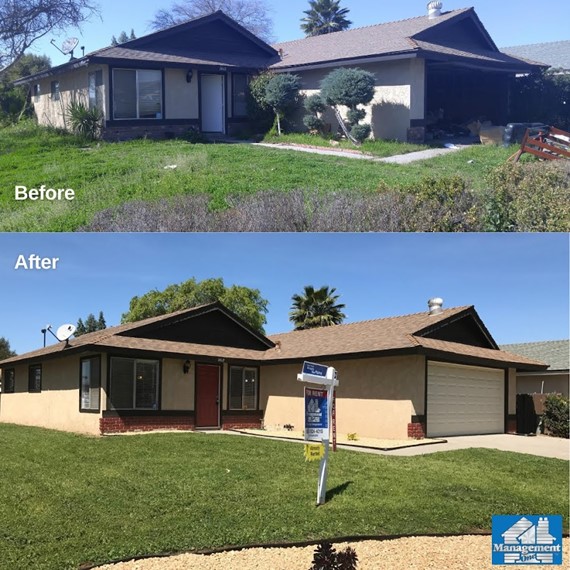
Another concern is that the time of drought – and water restrictions – is coming back. This is a house that did hide behind foliage, and we made that all go away. It never really left. So, utilizing alternate ground covers could entice the right resident. See the image below.

before and after views of a property's yard improvement

Before/After: Yard Improvement

Kitchen Upgrades.

This single item can boost your home value the most. Generally, you put $15k into the kitchen. You improve the home’s value by $25k. No other item impacts a home’s value as much.

This is another item that you should undertake between residents. The most obvious reason is that your resident will be kitchen-deprived for a few days.

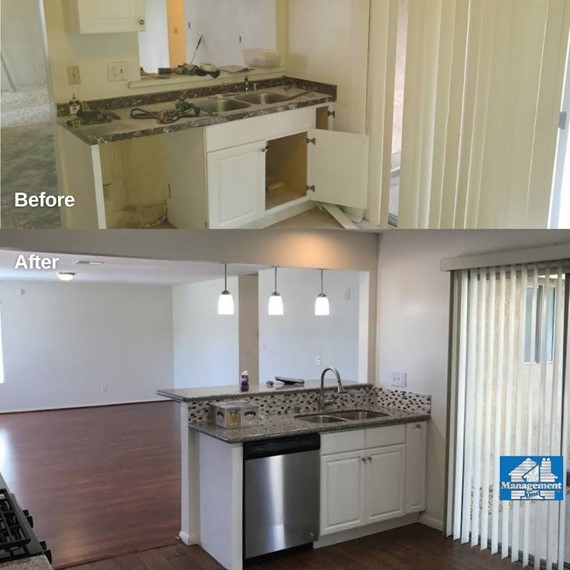
before and after views of a property's kitchen improvement

Before/After: Kitchen Improvement


Check out our Rental Property Transformations page to see more before and afters.

Maintenance

Keeping it Ongoing and Operating

Day-to-day is the key operative phrase here. You see, it’s easy to lose sight of a property to an extent as a property owner. It’s also, apparently, easy to lose sight for years if my days doing insurance inspection are any indication. I saw so many properties that had extreme deferred maintenance that it was downright disheartening.

However, we see nearly all the properties we manage monthly, at the very least! I can tell you, firsthand, what a difference that makes. But what are the day-to-day maintenance needs of a rental property?

The Shortlist

Like any property, a rental property requires maintenance constantly. Be it foliage rampaging, paint fading or peeling, or, in a longer-term sense, termites, awareness, and action help to preserve your investment.

At the same time, as I stated above, there are items that one only does with a vacancy.

The challenge I face all the time is deferred maintenance. And while I get that some items are not cost-effective nor raise property values (fences, I’m looking at you…), some do and protect you, too.

For example, outside:

  • Paint
  • Garage doors
  • Front AND rear yards
  • Uneven sidewalks and driveways

Inside:

  • Kitchens that show a lot of love (or, better put, age… you gotta love a 70’s kitchen, right?)
  • Window coverings that are falling apart
  • Counters that show a lot of age, time, wear
  • Worn out flooring

Exterior paint has a HUGE impact on your property value and curb appeal. Your wallet too. Here are the current top color combinations from MyMove.com.
This website was not chosen just willy-nilly, I looked at several, and my goodness, so many sites list Green as a great exterior color. It isn’t.

Exterior paint as a value enhancer is not the only reason to paint. Wood rot will follow exposed wood. Every. Time.

Garage Doors

A good many people have waited on upgrading their wood swing-up doors (they still have those???) to sectional doors, and now we are seeing prices skyrocket to the point of pain. However, in that 30% of the frontage of most homes is garage doors, even now, it is a great way to enhance curb appeal. Additionally, wood swing-up doors still have those blasted heavy-duty springs which impart an enormous amount of energy when they break loose.

Front and Rear Yards

Keeping the front yard looking good, no brainer, right? Right. Generally, a property retains residents longer and rents the faster with a landscaped backyard. But a good many people do not think much about their rental property back yard.

Uneven Sidewalks and Driveways

Best to take care of this item right away because someone will take a spill, and we will all regret that. I knew a guy years ago, his son took a spill, and he, being a shyster, was utterly convinced he’s just won the lotto.

Kitchens and Baths

Keep this general rule of thumb in mind: for every dollar, you put into the kitchen, expect that plus another 40% back in value gains. For every dollar you put into a bathroom, you pretty much make your money back in value.

Counters

Replacing counters can raise a property profile pretty well, but a helpful hint: Never put new counters, such as granite, or quartz, on old cabinets. You spend all that money to put in lovely counters; they do deserve better than that. And so do you.

Worn Out Flooring

Sometimes the flooring needs doing. Stains and excessive wear on the carpet that’s a good indicator that, yeah, it’s time to change the flooring out.

With that in mind, generally, it’s a bad idea to do this with an occupied property, but not impossible. Just be sure to get a good lease in place with annual increases to help protect your investment.

Also, if vacant, do consider changing the carpet out for a longer life product, like laminate, luxury plank vinyl, or porcelain. Yes, the cost is 3 to 4 times more, but it will last longer than carpeting, and the impact on a renter? Stellar. You are far more apt to get a better resident who stays longer.

Bottom Line…

Literally, this is the last line I’m writing on this, and it is the bottom line as well:

Pay as little as you can for the best you can get and get the most rent you can for the least expenditure. Okay, this is the actual last line:

Call us here at Management One. We know stuff.

Grimacing man sitting at a table in front of his laptop

By |2026-04-07T09:05:27-07:00December 16, 2022|Landlord Education, Property Ownership|0 Comments

5 Property Improvements that Aren’t Worth the Money

Rental properties need constant upkeep, just like an owner-occupied property does. However, as a property owner – or even as a renter (because you’re going to buy a house one day, yes?) – there are home improvements that are simply not worth the money. I might just go overboard on this topic… Oh, and by the way, some items ARE worth the money, when it comes to home improvements. Check those out here…5 Improvements that are Worth the Money

Homes have a LOT of items!

A house is a house, right? Yes, as a single unit, that is correct. Like many things, a home is a collection of over 3,000 items. Some materials require maintenance, some that don’t, and a gang of disciplines is trained to take care of each other. It’s sort of like a body, there’s the skeleton, skin, and internal bits that make it all work. Okay, in my insane little world, it is similar, anyway.

During my tenure as a property inspector, inspecting thousands of homes, I have seen landlords sink thousands of dollars into repairs that don’t matter in the grand scheme of things and neglect repairs that do matter. Also, owning a rental property can either make you or break you, depending on a lot of factors. Spending wisely vs. foolishly is but one of those factors. Today we will focus on the five improvements that are not worth a hill of beans.

Here are the five items that we commonly see landlords spending foolishly on:

  1. High-end flooring (because it looks nice)
  2. High-end appliances (because I like them)
  3. High-end counters (on old cabinets)
  4. New fencing (because good fences make good neighbors)
  5. New Windows (because old windows, Ewwww!).
  6. Bonus item – solar panels

    High-End Flooring

    There is nothing wrong with high-end flooring in a rental property, aside from it being expensive, possibly needing maintenance, and the high replacement cost; if it gets damaged. But apart from that, it’s great. Does it rent a home faster? Maybe. Does it bring in more monthly rent? Possibly. Will the renter stay longer? Again, a maybe, but likely not.

    You see, just like a home sale, the flooring makes a little difference, but not necessarily a significant difference. Everyone has different personal tastes. That dark laminate, you may love it, but a sizable portion of the populace prefers carpet. And that laminate is about three times more costly than carpet.

    On the other side of the equation, a house undergoing significant improvements, such as upgrading the kitchen and bathrooms, YES, do that flooring then too, but you don’t have to go to a high-price laminate! Improve it, in other words! Don’t spend on the high-end product that you might put in your personal home, instead, go for middle-of-the-road flooring.

    High-End Appliances

    We have a great many owners I have worked with over the years, and what I come away with, consistently, is the different ways people view their rental properties. I have seen people blow massive amounts on custom wood gates.  Bypassing the badly needed appliance replacement, and I have seen the reverse, throwing a lot of money at appliances at the expense of everyday old functional and necessary items.

    Since we are in the kitchen already, the heart of the home, so to speak, let’s address the appliances and the counters. Shoot, while we’re there, we will talk about the cabinets as well.

    If you’re holding a rental property for a time, a few years, maximize your ROI, return on investment. A range is a range, a dishwasher is a dishwasher, and a microwave/hood combo is a nightmare. That inexpensive stove/oven range will cook food exactly the same as that high-end one. But I have to caution you, that used one you found online for cheap could be the most expensive cheapie you ever saw! Same with a dishwasher, get it now, with a warranty and all that too. And that microwave hood combo? Just say no. If the house is vacant and the item needs repair, think about replacing it with a simple hood. You’ll save a lot over time!

    High-End Counters

    If you’re considering replacing the kitchen counters (or even the bath counters), do yourself a solid: Replace the cabinets too!!! There’s a special place in Hades for folks who put expensive new counters on old beat-up cabinets. Price it all out first. In a kitchen, that smartly spent $15,000 can easily yield $25,000 in property value. In a bathroom, though, unless the baths(s) are hideous, you’ll basically break even.

    There is no good reason on Earth to slap $2500+ of counters on beat-up $10 cabinets. I get it, those 4″x4″ white ceramic tiles that are cracked and beat up, yep, they are ugly as sin. The grout is awful. You wouldn’t let your worst enemy, let alone family, make a sandwich there. There are other options, like glazing the counter. You’re going to spend a lot less!

    Back to Appliances

    Now that you’ve decided to replace the whole kitchen, you can consider upgrading appliances. Remember, though, that tastes change over time. That brush stainless-look appliance suite may be out of style in a year or two. Just watch, avocado green appliances will make a comeback. Naw, just kidding. At the end of the day, we live mostly in our kitchens, whether it be ourselves, family, or friends getting together, and it also will rent your rental property quicker.

    New Fencing (not the sport)

    So here in California, we like our yards all neat and fenced in. Theirs is theirs; ours is ours. When you travel back East, you will find backyards simply running into each other, and to me, that is just not any good. Mine is mine.

    So, for some inexplicable reason, the builders in Southern California decided that it would be a great idea to divide many properties and developments with wood fences. Yep, we got sunshine, weather, wood rot, and termites. This decision was iffy at best.

    However, just because a fence is wooden doesn’t mean it’s terrible. A wood fence, if cared for – and maintained – can last decades, but that means everyone must do their bit. That fence between your property and the neighbor, you BOTH own it, as you both benefit from it. That is California law.

    Simple things like keeping the ever-present Bowser (the dog, not the Mario Brothers character) away from the fence are important. Replacing slats as they break or rot is important, and even sealing the fence with paint can prolong the life of a wood fence by many years.

    Now, of course, at some point, that fence will need replacement, but I urge you, to get every last year out of it because you know what? Fences don’t add a lick of value to your property’s value. Zilch. Add posts to keep it upright, fine, add slats, whatever you have to do, but fence replacement is a zero ROI (return on investment) deal, for the most part.

    Sharing that cost

    When the time comes to replace that shared fence between your neighbor and your property, if it isn’t in writing, what the neighbor said they would contribute to the project does not exist. Your neighbor may be the nicest person ever, but when it comes time to pony up their share of that replacement fence, the odds of follow-through is right about 6% at the low end, 12% at the high that they actually will pay their half. This depends on the region, of course. Just be prepared to force that neighbor to pay up in court, and, oh, and at the same time, to now have an E-neighbor or Enemy Neighbor. You are, honestly, better off merely paying and having the work completed. And remember, low ROI.

    New Windows

    Years ago, we lived up in Claremont, CA, the south end of town. Although Claremont has an excellent reputation, as far as trees, colleges, etc., the Southern end of town was referred to as “Pomont,” as in Pomona-Claremont. North Claremont-ers (rich part of town) thought of it as Poor-Claremont (half-million-dollar homes? Poor? It’s all relative).

    We rented, and the one gripe we had about that house above all others was the leaking windows. The windows leaked sound from the 10 freeway. They leaked warm air during summer and cold air during the winter. The 1958-era windows did not leak rain, thankfully.

    We asked only once if the owner would consider replacing them, and like most answers, it was a solid no. It was bothersome, but whatever, right? Well, from my perspective now, (we moved from there over 11 years ago) the owners were absolutely right!

    Windows Cost A Fortune!

    Do new windows add value to a home? Little, if any. In this case, the house was all about location. The Claremont Colleges, the 10 freeway, proximity to jobs, the Village, and the snowing mountains to the north, are all draws that increase value. The windows add little, comparatively speaking. So, in a nutshell, if it ain’t broke…

    Solar Panels

    Don’t. Just don’t. If you are not legally required to install them like new construction is in California, and you don’t live on the property, what is the upside? Feeling good about saving the Earth? Noble and all, but if it makes only “cents,” it does not make “sense.”

    See, solar panels are usually mounted on the roof. Your roof is designed to shed water; it is the first and most crucial component of the envelope that protects your investment, your house. So, let’s see, weight, on top, holes drilled through, wires run through the holes, leaks, nope. Another thing is if you don’t clean them regularly, you’re diminishing the return anyway.

    Now, if you reside in the house, a solid case can be made for adding solar panels, like reduced electric bills and tax benefits, but the same risks still apply.

    So, on your home improvements, like anything, spend wisely, minimize your cost, and maximize your Return on Investment. Your wallet will thank you.

    Tyler Sudman of Management One Property Managment

By |2022-11-01T13:45:10-07:00November 1, 2022|Landlord Education, Property Ownership|Comments Off on 5 Property Improvements that Aren’t Worth the Money
Go to Top