Orange County (949) 721-6608 – Riverside County (951) 735-2000

Management One

Orange County (949) 721-6608
Riverside County (951) 735-2000

Management One

Section 8 Housing: Are Landlords Required to Accept It?

Do you remember the classic Clint Eastwood film The Good, The Bad, and The Ugly? For many landlords, working with the Section 8 Housing Voucher Program can feel similar—there are clear benefits, but also challenges that require additional effort and consideration.

As of December 2022, over 7.5 million individuals across the U.S. lived in households supported by housing vouchers. In Riverside County alone, more than 10,000 residents benefit from this federally funded rental assistance.

Established under the Housing and Community Development Act of 1974, the Section 8 program was created to ensure that low-income families could access safe, decent, and affordable housing in the private rental market—outside of traditional public housing.

For decades, many private landlords declined participation due to administrative burdens and perceived complications. However, in recent years, California’s legal landscape has shifted significantly.

Legal Obligations for Landlords

Effective January 1, 2020, California enacted Senate Bill 329 and Senate Bill 222, which prohibit landlords from rejecting applicants solely based on their use of a housing voucher. This includes Section 8, VASH (Veterans Affairs Supportive Housing), and other forms of rental assistance.

Housing vouchers are now legally recognized as a protected source of income under the California Fair Employment and Housing Act (FEHA). As a result, landlords may not advertise or indicate in any way that they do not accept vouchers. Doing so is considered discriminatory under Fair Housing laws and may result in fines, legal action, and reputational damage.

These laws are actively enforced through complaint investigations and “mystery shopping” practices conducted by Fair Housing agencies.

What Landlords Must Know About Voucher Applicants

When screening residents with housing vouchers, landlords must follow specific guidelines:

  • Income Qualification: Income multipliers (e.g., 3x rent) must be based only on the applicant’s portion of the rent—not the full amount. For example, if rent is $1,500 and the tenant’s responsibility is $300, the income qualification must be based on the $300.
  • Credit Screening: Landlords may not disqualify voucher holders based on credit scores alone. However, screening for rental history, prior evictions, and background checks remains permissible.
  • Additional Requirements: Participating in the program entails administrative steps such as a housing authority inspection, habitability certification, and lease approval—all of which may extend the leasing timeline.

How the Voucher Qualification Process Works

Applicants seeking Section 8 assistance must:

  • Join a waitlist, often months or years long due to high demand
  • Select a housing region and meet income limits set by local agencies
  • Verify legal U.S. residency for at least one household member
  • Undergo background checks, with exclusions for certain offenses
From “No Section 8” to Inclusive Advertising

In the past, landlords frequently used phrases like “No Section 8” in their listings due to procedural delays. Today, such statements are prohibited under California law.

This includes language used in online listings (Craigslist, Zillow, personal websites), printed ads, and communications from leasing staff. All employees and agents must be trained to respond appropriately to voucher inquiries. Stating “we do not accept vouchers” is now grounds for a Fair Housing violation.

Dispelling Section 8 Myths

Some landlords worry about increased risks with voucher tenants. However, Section 8 residents are bound by the same lease terms as all other tenants. Violations—such as non-payment, damage, or illegal activity—can still result in eviction and legal action.

Additionally, tenants risk losing their voucher if they breach lease terms, which provides additional incentive for program compliance. The accountability built into the program often results in long-term tenancies and reliable rental income.

Additional Protected Classes

In addition to housing voucher recipients, military personnel and veterans are also covered by California’s source-of-income protection laws. These groups may not be discriminated against based on how they pay rent.

What It’s Really Like to Lease to a Section 8 Tenant

The qualification process for Section 8 renters is extensive. At Management One, we work closely with the Riverside and San Bernardino County Housing Authorities, each of which has a unique approval process.

Riverside County Requirements

To lease to a Section 8 tenant in Riverside County, both the management company and the resident must complete a 17-page packet. Alongside this packet, landlords must submit:

  • IRS documentation confirming the EIN
  • A voided check
  • The signed management agreement
  • A completed W-9 for Management One
  • A signed owner statement verifying homeownership

Once submitted to the caseworker, the packet is forwarded to the RFTA (Request for Tenancy Approval) department. This team reviews the applicant’s income, rent amount, and utility costs using a sliding affordability scale. The analysis includes whether appliances are gas or electric and adjusts for utility provider rates.

If the proposed rent exceeds what is deemed affordable for the applicant, the RFTA department will submit a counteroffer—sometimes only $50 lower, other times up to $500 or more. If the reduced amount is acceptable to the landlord, the process continues. If not, the application is denied, though landlords must ensure the same rental terms would also disqualify a non-voucher tenant to avoid discriminatory practices.

After approval, our team performs a limited credit review (looking for prior evictions or rental debt), verifies rental references, and confirms the tenant earns 3x their portion of the rent. The applicant must then submit their portion as a holding deposit.

Meanwhile, the property must undergo a HUD inspection before move-in. One of the most common reasons for failed inspections is non-compliant GFCI outlets near water sources, which we proactively address during property rehabs. If a property fails, landlords have 10 days to correct issues before re-inspection.

It’s important to note: No tenant may move in until the home passes inspection, regardless of what was listed in the lease agreement.

San Bernardino County Requirements

San Bernardino County follows a similar process, with a few additional documentation requirements. In addition to the packet:

  • A copy of the deed must be submitted
  • A W-9 is required for each owner listed on the deed
  • If the property is in a trust, the full trust documents and W-9s must be provided
  • The management agreement and a W-9 for Management One are also required

Unlike Riverside County, San Bernardino often asks landlords to pre-qualify the applicant before the housing packet is submitted.

Once approved, HUD schedules an inspection, and landlords must resolve any cited issues before the tenant may take occupancy. First payments typically take 4–6 weeks after move-in. Thereafter, HUD payments are deposited like clockwork on the 1st of the month.

Ongoing Management and Communication with HUD

After a Section 8 tenant moves in, ongoing communication with HUD is required. The agency is often understaffed, and changes—such as updates to a tenant’s income—may take 4–6 weeks to process. Payment adjustments and recertification notices are issued regularly, sometimes up to six times per year, plus one annual recertification.

Although the program has its complexities, we’ve found that understanding the process and working within both HUD’s and Management One’s frameworks enables us to better serve our residents and protect our property owners’ interests.


By |2025-04-28T11:11:46-07:00April 28, 2025|Industry News, Landlord Education, Property Ownership, Resident Education|Comments Off on Section 8 Housing: Are Landlords Required to Accept It?

Avoid losing $40,000 like one landlord did.

Insurance, Insurance, Insurance!

This Landlord’s Insurance agent had him underinsured. There was a fire, and it cost the Landlord $40,000 out of his pocket. Insurance companies have no obligation or liability to keep your coverage adequate.

This is a critical topic, and I wholeheartedly believe in discussing it at least once a year.

“Why,” you might ask. I never want an accident to happen and a client of mine to say, “No one ever told me about this coverage.”

Since November 2023, we’ve had 57 water intrusion events. Whether from heavy rains on roofs, slab leaks, broken pipes, etc., water entered the property and caused massive damage. Damages range from collapsed ceilings to buckling flooring to mold.

Proper insurance for such events gives you peace of mind, knowing you will have coverage to mitigate the damages.

In addition to primary liability coverage, all landlord insurance policies should include four essential elements. These elements are:

1) Malicious Intent,

2) Fire,

3) Loss of Rents,

4) Vandalism.

Malicious Intent

Malicious Intent happens when the resident renting your home intentionally damages the property above and beyond “normal wear and tear.” We are talking about destroying the carpet to the point it must be replaced, holes in the walls, windows, and more.

While we don’t see these things very often, we do see them. So when it does happen, landlords are left scrambling to secure the funds to return the property to a rentable condition. This scenario is precisely why ensuring you have Malicious Intent in your policy is important. ( Note all insurance companies have different names for  this coverage, just make sure your policy covers this type of damage.)

Equally important is ensuring the resident has Renter’s Insurance so you can recoup the cost from their policy and not affect your premiums. YES, this coverage enables you to sleep at night. The best part is that most insurance companies don’t charge extra for this coverage.

Fire

Your fire policy will only rebuild part or all of your rental home, so this is pretty straightforward. Just make sure that you increase the replacement cost of the rental home each year. In the last two years, building materials went up 39.2%. Most insurance companies will not adjust for inflation. As the policyholder, you have the responsibility, so call your agent once a year.

Loss of Use

Now, let’s start thinking like an investor; you are all investors if you own a rental property. Your business is to make money with an investment/rental property! But what happens if the property burns down, or has so much water intrusion that the resident has to vacate the property, which happens, or the resident causes so much damage to the house that it will take six months to be fully repaired?

You still have a mortgage, taxes, HOA, and Insurance to pay, right? That payment doesn’t stop just because the home is vacant or distressed. Don’t worry! If you have Loss of Rents or Loss of Use coverage in your landlord’s insurance, you may sleep like a baby because you don’t have anything to worry about.

Loss of rent or, in some cases, Loss of Use will cover up to 12 months of the rental income! Some companies include this coverage in your policy for no additional fees, while others charge for it… IT IS WORTH IT! It might be a few more bucks a month but how much is your peace of mind worth?

What a great feeling to know that you will receive money while your property is being repaired.

Vandalism

Let’s say you are about to rent out the property, and a few days before your resident moves in, someone breaks in, and the property gets vandalized!

Again, homeowner’s insurance might not cover you, but the landlord’s insurance will! However, once your property is vacant for more than 30 days, your insurance will not cover you, so always get a 60-day vacancy policy. One stolen Air Conditioning unit could cost you $6,000 or more. You can activate your vandalism coverage in this case!

Something important to mention is that some mortgage companies require you to have a homeowner’s insurance policy while you have an active loan with them! Be sure to ask them if this is the case before canceling your homeowner’s coverage and only getting landlord’s insurance.

Liability

Though not listed in the top four items, liability is the primary focus of the insurance policy. After all, why have a policy if it doesn’t provide basic liability coverage? You may consider increasing the liability coverage to one million or more if your property has a pool or spa, since those are added risks.

For example, your resident has a small soiree, and a kid gets injured because he was running around the pool! We all know, unfortunately, the first thing that comes to some people’s minds is… LAWSUIT! Well, again, here is where you may be able to use your landlord’s insurance liability coverage, since this helps you pay for your expenses if you are found legally responsible after someone is injured on your property or if you are required to pay for damage done to someone else’s property. I carry $1,000,000 liability coverage on my properties.

Renter’s Insurance

We require our residents to carry a renters’ insurance policy. All new residents must provide a copy of their insurance prior to moving into the rental property, and all current residents must provide a recent copy of their declaration page before they renew their lease. We do this to protect not only the resident but also you.

Two recent fires were caused by residents. One resident had current insurance, and one had let their policy lapse. The condo flooded when a contractor working on the unit above hit a water line.

Thankfully, all parties are safe and no one was injured, but you never know when something might happen. People react differently when the pressure is on them.

If you are unsure about your policy, make time this week to talk with our insurance company and confirm your policy. You will be glad you did if you ever have to use it.

By |2026-04-03T06:07:49-07:00March 31, 2025|Landlord Education, Maintenance, Property Ownership|Comments Off on Avoid losing $40,000 like one landlord did.

Safeguarding Your Investments and Home: Five Key Strategies

Have you ever pondered the possibility of losing your investment property or your cherished home? It’s a thought many of us brush aside until faced with unforeseen circumstances. However, life’s unpredictability underscores the importance of being prepared. In this newsletter, we delve into five essential strategies aimed at safeguarding your assets and securing your family’s future.

[Disclaimer: Please note that while we offer valuable insights, we are not CPAs or Attorneys or Insurance Agents. We strongly advise consulting with a legal or financial professional to tailor strategies to your unique situation.]

1. Landlord Insurance: Protecting Your Investments

Investing in landlord insurance, known as a DP3 policy (Dwelling Protection Policy), shields your property against a myriad of risks. While this policy covers the dwelling itself, it’s crucial to ensure tenants have their own renters’ insurance to protect their belongings and displacement cost in the event of a major water leak. Depending on the number of properties you own, you’ll opt for either a personal umbrella policy or a commercial umbrella policy. The former suits landlords with three or fewer properties, offering a minimum coverage of $5 million and $500,000 in liability. For investors with four or more properties, a commercial umbrella policy should be considered to provide coverage of at least $5 million per property and a base liability of $500,000 per property. Despite its comprehensive protection, commercial insurance remains surprisingly affordable.

2. LLC Formation: Enhancing Asset Protection

Establishing a Limited Liability Company (LLC) proves invaluable in shielding your assets from potential liabilities. While forming an LLC in California may incur substantial costs. By compartmentalizing each property within its own LLC, you limit exposure to individual assets, mitigating risks associated with tenant disputes or legal claims. This approach ensures that any potential litigation is confined to the assets held within the respective LLC, safeguarding your overall investment portfolio.
3. Utilizing Lines of Credit: Financial Flexibility

One notable advantage of LLC ownership is the ability to secure lines of credit for each entity. By leveraging this strategy, you can demonstrate minimal equity in your properties, bolstering financial flexibility and tax benefits. However, it’s essential to consult with your CPA to ensure this approach aligns with your overall financial objectives.


4. Anonymity Through Out-of-State LLCs: Strengthening Privacy

Maintaining multiple out-of-state LLCs offers an additional layer of anonymity, shielding your property ownership from public scrutiny. This strategic approach not only enhances privacy but also reinforces asset protection by distancing personal assets from potential legal liabilities.

5. Homestead Exemption: Safeguarding Your Residence

For homeowners in California, understanding the homestead exemption is paramount. This legal provision safeguards a portion of your home’s equity from debt collection, shielding you from the threat of forced home sales or excessive equity seizure in bankruptcy proceedings. You can check out this article by Heston & Heston Law.

The previous exemption in California offered limited protection, capping at $75,000 for single individuals, $100,000 for families, and $175,000 for seniors or the disabled. However, effective January 1st, 2021, significant changes occurred. The exemption now ranges from a minimum of $300,000 to a maximum of $600,000, varying by county of residence. Conversely, states like Florida offer full equity protection for homeowners against debt collectors. Considering the limits and the fact that you can still lose some of your equity, homeowners in California may find it prudent to bolster their insurance coverage with a higher umbrella policy.

Furthermore, establishing a Land Trust LLC in Wyoming for your California properties, presents another avenue for safeguarding assets. By transferring property ownership to the LLC, individuals gain leverage in negotiations in the event of a judgment against them.

In essence, whether you own your primary residence or rental properties, asset protection is paramount. Taking proactive measures to shield your assets ensures greater financial security and peace of mind.

Are you considering selling your investment property? How about purchasing another rental property?

We have two incredible Real Estate Agents that work with Management One. There are several benefits of working with one or our agents.

As our client, our agents can work with the residents to see if they want to purchase the property, our agents work with our maintenance team to get the property “sale-ready”, and our agents know the in’s and outs for working with resident-occupied properties.

Call one of our amazing agents today for a consultation!

Krissia Pena with First Choice Investments, services Riverside, Corona, Moreno Valley, Perris, and the surrounding areas. You can reach her at 951-977-0709 or visit her website at https://www.fcione.com/.

Tyler Sudman with Sudman Agency services all of Orange County. You can reach him at 951-735-2000 x 105 or visit his website at https://www.sudmangroup.com/.

By |2025-03-03T11:15:13-08:00March 3, 2025|Landlord Education, Property Ownership|Comments Off on Safeguarding Your Investments and Home: Five Key Strategies

The 5 Secrets to Always Have Money To Pay For Repairs or Vacancies

Honey, we received the rent payment from our residents. All the bills are paid this month, let’s take the kids and go to Disneyland this weekend.”

STOP!  And let’s see if that’s in our rental property plan.

Don’t fall into this habit. As landlords, it’s easy to use the money that comes in your rental property to fund other stuff. Setting yourself up for stress when your rental property needs repairs or a major repair for $15,000, like a new roof.

Here are the 5 Secrets for success and always having money for repairs.

1) Set up a rental checking savings account. This account is separate from your personal checking account.

* If you own more than one rental property you can combine them all in one account.

2) When you open the checking account, open it with $1,000 to $5,000, at minimum, enough to make your mortgage payment.

3) Use this account to pay mortgages, taxes, insurance, and repairs for rental properties.

4) Have the rental payments deposited directly into this account. Avoid sending it to your personal account to prevent second thoughts on transferring the funds.  

5) When your taxes are completed, ask your accountant how much you got back because you own a rental property. Whatever the amount is, transfer it from your personal account into the rental checking savings account.

As rents come month after month, year after year, they go directly into that account. The account grows. Before you know it, you have enough money in the account to pay for the new roof and take a vacation.


Myth Buster:

“If I raise the rent, the resident will leave.”

We’ve proven this myth wrong. Over the last four years, we’ve been actively raising rental rates to compete with the current rental market.

Annually, we raise rent on approximately 500+ properties. In 2024, 8 residents moved due to rental increases. That’s only a 1.6% turnover. We are not price gouging; we are bringing properties up to the current market value within the amount allowed by law.

For example, one property was rented for $1425 in 2021. In 2022, we raised the rent by $269, in 2023, we raised the rent by $125, and in 2024 we raised the rent by $200. Now, the property is closer to market value.

We put another $3,228 into the owner’s rental checking account in the first year alone. In the second year, we added $1500, plus the $3228 from the year before, to their rental checking savings account. In two years, we added $4,728.00 to their rental checking account. In year three, we added another $2,400. That’s a total of $7,128 a year.

Year one $3228 extra

Year two $3228+$1500= $4728

Year Three: $3228+$1500+$2400= $7,128

Over 10 years, that’s an extra $71,280 in the owner’s rental checking account from just rent.

Not considering the amount you saved on your taxes from owning a rental property.

The average is $2,500  a year, so an additional $7,500.

So, in just 3 years, they now have $14,628 for repairs, vacancies, etc.

The residents are still in the home, loving the home, and the owner has additional funds to do any repairs and even consider some improvements to the property.

It’s important to point out that raising the rent yearly comes with some responsibility on behalf of the landlord. As you are increasing the rents, if you want to keep your resident, you must also put back into the property.

If your property were built in the early 1990s, it would likely have a wooden patio cover. The California sunshine beats up the wood; add the rain, wind, and termites, and that patio cover is probably on its last leg. Use some of the money from the rent increases to change the patio cover to an aluminum cover.

Paint the exterior of the home to maintain its integrity. Putting back into the home shows the residents that you care about the home and value them as a resident in your investment property.

Enjoy the Journey

It’s not all about business. You need to take time to enjoy the journey as well. Once you’ve established your rental checking account and have the funds from the property going to that account. You are no longer robbing yourself of your personal finances.

Your rental property should be funding itself. If it’s not, then let’s talk. I am happy to review your situation and see what’s working and what’s not.

Residents today will pay for value; they are not the residents of 30 years ago. We know we’ve rented over 11,000 houses.

Maybe you’ve been a softy and not raised the rent like you should.  Sometimes, we get so caught up in our everyday life and the grind that we forget to stop and evaluate things.

Just like you must have insurance on your property, you have to properly manage the cash flow of your rental property, which we just went over.

Over the last forty years, I have helped thousands of people with their journey of owning rental properties. If you’d like to schedule a time to speak with me, contact Kristan Pennington at support@mgtone.com or 951-289-4828, and she will schedule a time for us to speak.

My goal is for all our landlords to enjoy the journey of owning a rental property or properties. Have less stress, more fun, and build generational wealth.

By |2026-04-03T06:03:59-07:00January 30, 2025|Landlord Education, Maintenance, Property Ownership|Comments Off on The 5 Secrets to Always Have Money To Pay For Repairs or Vacancies

New California Landlord Laws: What You Need to Know

As of January 1, 2025, several new laws affecting landlords in California have come into effect, aiming to enhance tenant protections and promote transparency in rental practices. Key changes include:

  1. Tenant Screening Procedures (AB 2493):

  • Application Fees: Landlords can charge a potential tenant an application screening fee only if they accept applications in the order received and approve the first applicant meeting the established screening criteria. We have always done this at Management One so this does not affect us.
  • Disclosure of Criteria: Landlords must provide their screening criteria in writing alongside the application.
  1. Security Deposit Documentation (AB 2801):

  • Photographic Evidence: Landlords collecting a security deposit are required to take photographs of the rental unit:
  • Immediately before, or at the start of the tenancy.
  • Within a reasonable time after the unit is returned, prior to any repairs or cleaning for which deductions from the security deposit will be made.
  • After completing any repairs or cleaning.

         Provision to Tenants: These photographs must be provided to the departing tenant.

  • Implementation Dates:
  • For tenancies ending on or after April 1, 2025, landlords must take photographs after possession is returned.
  • For tenancies beginning on or after July 1, 2025, landlords must take photographs at the start of the tenancy.
  1. Positive Rent Payment Reporting (AB 2747):

  • Offer to Tenants: Landlords of residential rental properties are required to offer tenants the option of having their positive rental payment information reported to at least one nationwide consumer reporting agency.

         Frequency of Offer:

  • For leases entered into on or after April 1, 2025, the offer must be made at the time of the lease agreement and at least once annually thereafter.
  • For existing leases as of January 1, 2025, the offer must be made no later than April 1, 2025, and at least once annually thereafter.
  1. Rental Payment Methods (SB 611):

  • Fee-Free Options: Landlords must offer at least one fee-free method for rent payment, ensuring residents are not charged additional fees for valid check payments, even if electronic methods are preferred. Should you have any properties that aren’t managed by Management One, take note of this as it will affect you.
  • Military Personnel Considerations: Landlords are now required to provide explanations when requesting larger security deposits from military personnel.
  • Prohibition of Posting Fees for Notices: Landlords are now prohibited from charging tenants any fees for the preparation, delivery, or posting of termination notices, such as a 3-Day Notice to Pay Rent or Quit. This change eliminates additional financial burdens on tenants facing potential eviction and encourages equitable treatment in the landlord-tenant relationship. It is important to note that this adjustment presents significant operational costs for landlords and property management companies, including labor, transportation, and fuel expenses related to notice delivery.

Management One is in the process of updating its practices with our landlords to ensure full compliance with the new regulations.

Resident Screening Procedures (AB 2493)

For the last 40 years, Management One has accepted applications on a first come-first serve basis. We believe this is the fairest way to rent properties and remain above board with Fair Housing.

Security Deposit Documentation (AB 2801):

We currently take photos for all resident security deposit charges and provide them to the departing residents. Effective April 1st, 2025, we will start taking additional before and after photos to be in compliance with the new law. This takes a lot of  additional labor time to comply with this law as well.

Positive Rent Payment Reporting (AB 2747):

We currently use an online payment platform that offers residents the option to have their rental payment history reported to their credit.

Rental Payment Methods (SB 611):

Fee-Free Options: We currently allow residents to pay by cashiers check or money order along with paying online.

Military Personal Security Deposit– the law already only allows for Management companies and landlords to collect a security deposit equal to one-months rent, so we don’t have to worry about this.

Termination notice fees: We currently charge the resident a $100 posting fee for 3-day notice to pay or quit. Effective April 1st, Management One will charge the landlords $75 posting fee and Management One will take a $25 loss.

We are committed to working closely with our legal counsel to ensure that Management One and our clients remain fully compliant with new laws and Fair Housing regulations.

As legislation evolves, we will continue to provide timely updates to keep you well-informed and prepared.

By |2025-01-08T16:32:40-08:00January 8, 2025|Industry News, Landlord Education, Property Ownership, Resident Education|Comments Off on New California Landlord Laws: What You Need to Know

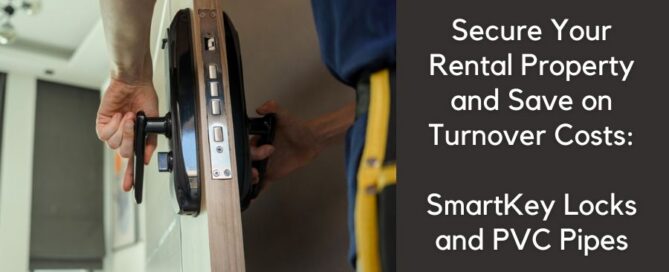
Secure Your Rental Property and Save on Turnover Costs with a Smartkey Lock and PVC Pipes

Vacancies can be stressful, especially with the risk of squatters gaining access to your property. Unfortunately, squatters’ rights can complicate the eviction process, often taking months and incurring significant costs. As a property management company, we’re here to help protect your investments with simple and effective security upgrades: Kwikset SmartKey Locks and PVC pipes for sliding doors.

Why Choose Kwikset SmartKey Locks?

SmartKey locks are an innovative, cost-effective solution for maintaining security between tenant turnovers. Here’s why they’re worth considering for your properties:

1. Quick and Affordable Rekeying

Kwikset SmartKey locks allow you to rekey a property without hiring a locksmith. This can be a game-changer for high-turnover properties, saving both time and money. For example, our preferred contractors offer SmartKey lock installation for approximately $390 for four doors. After this initial installation, each rekeying service costs only $75, a significant savings over the $300 minimum charge typical for locksmith visits every time you have to do this.

2. Enhanced Security for Added Peace of Mind

SmartKey locks are designed with advanced technology that protects against break-in tactics such as lock bumping and picking. This means that only the current resident has access, adding a critical layer of security for your property and helping to deter unauthorized entry during vacancies.

3. Streamlined Key Management

With SmartKey locks, you can rekey multiple locks to a single key, reducing the hassle of managing numerous keys. For landlords, this simplifies access across multiple units and ensures smooth transitions between residents.

Why PVC Pipes are a Superior Alternative for Sliding Door Security

PVC pipes are a low-cost, practical solution for sliding doors, providing a more robust barrier than traditional thumb locks. Here’s how they stack up:

1. Enhanced Security

A PVC pipe cut to fit the length of the sliding door track creates a secure, physical barrier that prevents the door from being opened, even if the thumb lock is bypassed. Unlike thumb locks, which can be tampered with, PVC pipes offer a reliable layer of security for both you and your residents.

2. Cost-Effective and Easy to Install

PVC pipes are inexpensive and require minimal installation effort — simply place them in the door track. Our preferred contractors can install PVC pipes on all sliding doors and windows for just $61.79, making it a budget-friendly way to enhance security across multiple units.

3. Durable and Low Maintenance

Thumb locks can wear out or become difficult to operate over time. PVC pipes, however, are durable and easy to replace if necessary. With no moving parts, there’s minimal risk of malfunction, providing a long-lasting security measure.

Are the Benefits Worth the Cost?

At Management One, we believe the investment in SmartKey Locks and PVC pipes is well worth the peace of mind and long-term savings. Recent experiences highlight the importance of these security upgrades:

Case Study #1

A property on Spruce St. in Riverside, which opted out of both PVC pipes and SmartKey locks, was left in disarray by squatters, delaying the new tenant’s move-in. Every day a rental property is vacant, an owner averages a $100 loss per day.

Case Study #2

A property on Lewisia in Moreno Valley experienced two incidents where squatters gained access through an unsecured sliding door. Because this property had Smartkey locks, our inspector could quickly rekey, locking out the squatters and saving the landlord locksmith expenses.

Case Study #3

A property on Delano in Riverside without PVC pipes or a Smartkey lock was broken into through a window. Squatters caused over $500 in locksmith fees and $300 in cleaning costs to restore the property.

The Long-Term Benefits

By incorporating Kwikset SmartKey locks and PVC pipes, you’re enhancing property security, reducing turnover costs, and saving time during vacancies. This small investment brings lasting benefits, helping to protect your property and maintain its value.

Meanwhile, here’s another informative article on Air Conditioning Maintenance in California: Tenant or Owner Responsibility?

By |2026-04-03T06:04:47-07:00December 2, 2024|Landlord Education, Maintenance, Property Ownership|Comments Off on Secure Your Rental Property and Save on Turnover Costs with a Smartkey Lock and PVC Pipes

How Best to Manage Your Property: Professional VS Self Management

You have a rental property, now what? Do you manage the property yourself or hire a property management company? I mean really; how hard can it be to manage a rental property? You place an ad on Craig’s List, maybe put a “For Rent” sign in the yard, take a couple of calls from tenants, ask a couple of questions, and place the one your “gut” tells you is the best one, right? Simple, right? The short answer is WRONG!

The long answer is WRONG as well, but let me share with you why.

Problems with Self-Managing Rental Property

In the “good ol’ days” a man or woman’s handshake was their bond; you didn’t need a lengthy lease explaining all the do’s and don’ts of the agreement. The rent is $1200 due on the first of each month– period end of story.

Not so now.

Now you need to screen tenants thoroughly, check their current employment, check their current landlord, and the previous landlord. Run a credit check–yes–run a credit check.

Now you’re thinking, well how do I do that? Guess I will “Google it.” Yes, you will find the answer on Google and use one of their suggested companies, but now that you have the report, what do you do with it? How do you make heads or tails out of the report you just ran? What does the FICO score mean, does it really matter what the FICO score is, or do you look at positive and negative accounts?

So many questions, and now your head is swirling….

But it doesn’t have to be this complicated. Professional management companies will do all this legwork for you so that you can focus on the things in life that really matter: family, friends, and yourself!

Now, let’s fast forward to getting the repairs done on the rental property. Where to start? How do I find a contractor that will give the best pricing? How long will the repairs take, a few weeks, a month?

Time is money and the longer your rental property sits vacant you are losing about a $100 day. Do the math; if you wait two weeks while you get bids, meet the contractor at the property, then wait another two weeks to a month for the repairs to be completed, you are out $3000 to $3400 in lost income. Not to mention the cost of the repairs and the cost of your time meeting with contractors, etc.

Property Management Companies are familiar with all the paperwork

Most professional management companies have contractors that work with them, know the routine and can get the repairs done in about a week. Think about that for a minute: no waiting at the rental property for a contractor for two hours only to find out they are running late, or they don’t show up at all. You don’t have to worry about scheduling the carpet company, the painting company, or the electrician, you can just send in the check, and the property management company handles the rest.

Now you are thinking, well I am handy and retired, I will just do the repairs myself. Did you know that hiring contractors to do the work on a rental property is actually a tax benefit to you? Yes, that is true and good news. When doing the work yourself, you can only write off the materials, but when you have a contractor do the work, you can write off the materials and labor. So, let the professionals handle it and enjoy retirement.

The rental property is ready for a tenant, now what? You found a tenant that looks good on paper and your “gut” thinks is a good fit for your property. You meet the happy couple and their three kids, and you hit it off so well. You pick them, and they move-in. Things are moving along swimmingly until they call you at 5 pm on a Friday evening: there is water all over the garage….

Their personal belongings are getting ruined, and they want it fixed right now. They need hot water, they need to take showers, they are threating to make a complaint with Fair Housing if you don’t fix it right now. Well, there goes your Friday night plans…You are now stuck trying to find a plumber that is willing to come out tonight and not charge you double or triple the normal service right because after all, they like their Friday nights as well.

Professional Property Management Companies Handle Tenants for You

Professional management companies have contractors take those frustrating repair calls. They work with contractors who are willing to go out after hours, and not charge double and triple the rates, thus allowing you to enjoy your Friday night. Professional management companies make sure that tenants have renter’s insurance, so if their belongings are damaged, the burden is not on you the homeowner. Professional Management companies are up on Fair Housing laws and know that hot water is a luxury and reporting to Fair Housing would get a tenant nowhere.

The first of the month rolls around and you get that dreaded text from your tenant (they don’t call anymore, that’s too old fashion) “Hi! It’s me, your tenant at 1515 John Street, I know the rent is due today but I don’t have the money. I can pay you on the 10th when my next check comes in. Is that ok?”

A little of panic and anxiety creeps up, you already sent in the mortgage payment for this month, because your gut told you they were good tenants and would pay on time. Now the check you sent is going to bounce, you weren’t prepared for the tenant not to pay.

Ok, don’t panic you’ll just transfer money from your savings to your checking account and that should be ok, right. They will pay on the 10th, right? That’s what they said, and they are good people (per your gut check).

So, you respond back, “Yes, the 10th will be fine, but no later. I have a mortgage to pay, and I don’t want any late fees from the mortgage company.”

The 10th rolls around and you are checking your bank account. Did the tenant pay you today as they promised?

Then you receive another text message, “Hi, it’s me again. The money I thought was coming didn’t show up today. I am really sorry about all of this. I know we can have the money together by the 25thof the month, is that ok?”

Your internal response is now more panic, “The 25th? No, that is not ok. I have another mortgage payment due on the 1st and I already borrowed from my savings account to cover this month, I don’t have the funds for next month, thanks to you.”

But that’s not what you say. Instead, you text back, “Okay that is fine, but please no later, and this is really putting me in a bind.”

The 25th rolls around, then the 26th, now the 30th, and guess what no money….. now what?

Well now, you must call an eviction attorney.

Woman with a grimace on her face

Property Management Companies Can Deal with Uncomfortable Evictions

Time to use our trusting friend “Google” he knows where to find everything we need, right?

Google says there are 20 eviction attorneys that service your city. But which is the best one, how much do they charge? You’ll probably have to spend your lunch break calling and interviewing attorneys.

The first questions they will ask you are: did you post a 3-day notice? Did you mail a 3-day notice? What does your lease agreement say about late payments?

Your answers will most likely be, no, no, and my lease agreement doesn’t say anything about late payments. With professional management companies, we take all the stress away from dealing with a tenant that doesn’t pay rent. Most property management companies make rent due on the 1st of the month, give a small grace period of 2-4 days, and then start charging late fees, posting 3-day notices, and will file the eviction for you, if needed. Let the professionals be the bad guys, and you get to enjoy life.

Now your property is empty, and you have to start all over again. Ask yourself this question, “do I self-manage again or hire a professional property management company to take on all the headache of managing a property myself?”

Let the professionals handle it, and you reap the benefits of owning a rental property.

Professional woman sitting at her desk speaking with a client

By |2024-11-18T10:40:20-08:00November 18, 2024|Landlord Education, Property Ownership|Comments Off on How Best to Manage Your Property: Professional VS Self Management

Mastering 1031 Exchanges: How to Defer Taxes and Build Real Estate Wealth

Are you thinking of selling your investment property and cashing out? Before you do, consider the impact on your profits. According to the Riverside County Assessor’s Office, the average home price in Riverside County for 2023 was $615,000. If you sell an investment property at that value and make a profit of $300,000, failing to reinvest through a 1031 exchange could lead to a tax hit of around 33.3% (20% federal capital gains tax plus 13.3% California state tax). That’s a staggering $99,990 in taxes—funds that could instead be used as a down payment on a new investment or even to help family members begin their real estate journey.

So what are 1031 exchanges, and why is knowing what they are before you sell your investment property essential to protecting your wealth?  In this article, we’ll break down the basics of 1031 exchanges, explain what they are, and why they’re a crucial strategy for anyone considering selling an investment property.

What is a 1031 Exchange

A 1031 exchange, named after Section 1031 of the U.S. Internal Revenue Code, is a tax-deferral strategy used by real estate investors to defer paying capital gains taxes on investment property sales. By reinvesting the proceeds into another “like-kind” property, investors can continue building wealth while deferring tax obligations.

This tax-deferral tool especially benefits those looking to upgrade properties, diversify portfolios, or adjust investment strategies without incurring an immediate tax burden. However, strict rules govern the timing and nature of the exchange, so it’s essential to work with experienced professionals to navigate the process successfully.

What are the Requirements for a 1031 Exchange?

The primary requirement is that the replacement property must be of an equal or greater value than the property you are selling.

Additionally, there are strict timeframes within which the replacement property and the sale property transactions must occur.  We’ll learn how these timeframes apply depending on the type of 1031 exchange you’re undertaking below..

Types of 1031 Exchanges

1. Simultaneous Exchange

A simultaneous exchange occurs when the property you sell and the property you purchase close escrow on the same day. This type of exchange is also called a “drop and swap exchange”. Before the 1980s, all exchanges were simultaneous.

2. Delayed Exchange

A delayed exchange is the most common exchange. A delayed exchange occurs when you close escrow on the property you sell but have not identified the property you wish to buy yet.

In these cases, to qualify as a 1031 exchange, you must identify the purchase property within 45 days of the sale escrow date. Afterward, the purchase must close within 135 days following the sale escrow date.  In effect, then a delayed exchange applies where you complete the purchase transaction within 180 days of the sale transaction.

3. Reverse Exchange

A reverse exchange is very similar to a delayed exchange; however, a reverse exchange is when you acquire the replacement property before selling your current property.

Like the delayed exchange, you must identify the sale property within 45 days (giving investors with multiple rental properties time to evaluate which property they wish to sell) and close the transaction within 135 days, for a total grace period of 180 days.

4. Improvement Exchange

An improvement exchange, also known as a “build-to-suit” or “construction” 1031 exchange, allows investors to defer capital gains taxes by reinvesting the proceeds from a sold property into a new property that will be improved or built to suit their needs.

Unlike a standard 1031 exchange, an improvement exchange enables the taxpayer to use exchange funds to purchase a new property and cover construction or renovation costs. The unique advantage here is that the improvements count toward the total value of the replacement property, helping to meet the “equal or greater” value requirement of the 1031 exchange rules.

However, all improvements must be completed within the exchange’s 180-day timeline, and the taxpayer must adhere to strict regulations, typically working with a qualified intermediary who holds the improvement funds and manages the process. This strategy is popular among investors seeking to customize new investments, upgrade assets, or even build from the ground up without incurring immediate capital gains taxes.

Professional Resources for 1031 Exchange

To have a successful, stress-free exchange, it’s essential to have a knowledgeable team behind you. It’s a good idea to enlist the help of the following professionals:

  1. CPA
  2. Qualified Intermediary (QI), like a title company
  3. Real Estate Agent or Broker
  4. Financial Advisor (possibly)
  5. Real Estate Attorney

Frequently Asked Questions about 1031 Exchanges

Can I live in my 1031 Exchange Property?
A. Yes, you can eventually live in a 1031 exchange property, but specific rules apply. Initially, the property must be used as an investment or for business purposes to qualify for the tax deferral under 1031 exchange rules. This means you’ll need to rent it out or use it in a way that generates income for a period of time. The IRS generally recommends holding the property for at least two years in an investment capacity to demonstrate clear intent. After that period, you may convert the property to personal use, following what is known as a “qualified use” period.

If you decide to convert it to a primary residence, keep in mind that if you eventually sell it, you’ll need to meet certain conditions to qualify for any exclusions on capital gains taxes, such as living in it for at least two of the five years preceding the sale. However, the amount of gain you can exclude may be limited, and some of the deferred capital gains from the original exchange could still be taxable. Consulting a tax advisor is always a good idea to ensure compliance with all IRS regulations in this type of scenario.

What is the cost of an Exchange?
A. Typically, around $1000, and the QI (Qualified Intermediary) can make interest on your money until it goes into the property you’re buying

Can I do an exchange with a family member?
A. This raises RED Flags with the IRS. It can be done, but there are specific rules that must be followed. We recommend against it.

Can I sell one property and buy three more?
A. YES, as long as you meet the exchange requirements you are undertaking.

Can I sell a Single-Family Home and buy a 4-plex?
A. YES, as it’s considered a like-for-like exchange; that is, you’re exchanging an income property for an income property.

Real-Life Example of a 1031 Exchange

An Investor sold an office/industrial complex for $2,500,000. The investor used the proceeds to purchase another commercial building and two single-family homes. Since the investor reinvested in other income-producing investment properties, the investor avoided $500,000 in capital gains tax.

Generational Wealth

We have all the resources you need to complete a successful exchange and save you hundreds of thousands in capital gain taxes. Thus, you can create generational wealth for yourself, your kids, and your grandkids.

By |2024-10-31T10:57:24-07:00October 31, 2024|Industry News, Landlord Education, Property Ownership|Comments Off on Mastering 1031 Exchanges: How to Defer Taxes and Build Real Estate Wealth

6 Essential Questions to Ask Your Property Management Company

So, you’ve decided to hire a property management company. Whether it’s because you no longer have the time to manage, you’ve acquired more properties, or you want someone with a little more experience to handle your property, a property manager can likely help you with your problems.

Gone are the days where you’re forced to do your own maintenance, select your own residents, and handle property accounting. These days there are hundreds of good property management companies to choose from that specialize in managing properties just like yours.

Want the short and sweet version on this blog, check out this video below.

6 Essential Questions

However, not every property management company is the same. Between different prices, philosophies, and services, it can be challenging to narrow down which company is right for you. To help you through that process, we’ve come up with a list of 6 questions you should always ask a property manager. The goal of these questions is to help you figure out which companies will best be able to serve you and take good care of your properties.

1. What involvement do I have as an owner?

2. How often do you do inspections, exteriors, and interior? If they say randomly, that means NEVER, run the other way.

3. How long are your properties typically on the market for rent before they rent?

4. How long will it take to make my property rent ready?

5. Do you have fixed maintenance prices with your contractors? (Critical)

6. How do you screen residents?

Let’s look at each question in turn, below.

1. What kind of involvement do I have as an owner and what decisions do I get to make?

All management companies are different. A property manager will serve as the middleman between the landlord and the resident. This relationship works best when you let the property manager have most of the control.

If you’ve managed your own properties before, you might be hesitant to fully let go and let someone else do all the work. However, if you are micromanaging everything the property manager does, it will likely slow down the process.

For example, when a property management company first takes on your property, one of the first things they’ll do is a walkthrough of your property. They’ll inspect the exterior, the front and backyards, and all the rooms. The goal here is to see what aspects of your property might need to be updated or replaced. As the owner, you have the final say on which updates are made as you are the one paying for it.

On the flip side, to get the rent, you want your property has to be able to compete, and sometimes that means spending more on repairs than you thought, but it will pay off for you in the long run as residents will stay longer in most cases. Think of your rental property as a hotel, yes, a hotel. When you own rental property, you have to make a mental shift in thinking from “well it’s just a rental I can do the bare minimum” to “the residents are my guest, and if I start off on the right foot, they will stay much longer.” This a fatal mistake 90% of landlords make, and it costs them in huge vacancies.

Property managers will likely notify you about significant repairs and emergency repairs, as well. Minor fixes usually aren’t worth the extra time it takes to notify you.

2. How often do you do inspections?

First, there are three kinds of inspection exterior, interiors, and pet inspections. Routine inspections are an essential part of proper property management. This ensures that your property manager is monitoring the property and any issues that may arise with it.

A property management company should inspect the property a minimum of once per year. They should have a checklist of what they are looking for, i.e., chipped paint, old water heaters, etc. Annual inspections provide the property managers with the opportunity to catch any unreported maintenance issues or resident-caused damage. Pet damages can be detected with blacklight devices and other tools. It’s best to address these things quickly as letting a problem fester for a mere two extra months can cause a lot of damage.

Monthly exterior inspections keep your residents accountable. Even good residents will drift; let me explain. Raise your hand if you drive over the speed limit. Most of you probably just did, right? Well, does that make you a bad person? No, of course not, you are just “drifting” on your speed. Just about the time you get used to “drifting,” you see the patrolman, and you lift your foot off the gas. Why? Because the patrolman just created accountability. When a management company’s van drives by your rental property every month and takes a picture and looks at several key factors from the outside, they keep your resident accountable, and that means your property is being adequately maintained and appreciates at a higher rate.

The property inspector can also check for any unauthorized pets or residents in the property. If someone did not put down a pet deposit at the start of their lease, but you see obvious pet damage, you can make a note of that.

3. How long are your properties on the market?

Make sure you ask what the company’s vacancy rate is. Property management companies should be tracking their vacancies. If they don’t know this number, it likely means they aren’t keeping track of their data. If you don’t know your numbers in a management company, you don’t know your business.

4. How long will it take to make my property rent-ready?

It’s essential to know how long it will take to get your property ready to put on the market. You might be expecting the property management company to put your house up as soon as they acquire it, but there are a couple of factors that go into this. When a property manager takes on your property, one of the first things they will do is evaluate your property for needed updates and repairs. A typical make-ready (the process to get your property ready for rent) takes roughly 7-17 days, depending on the property.

A good contractor should be able to complete $1000 in work a day, so a $7000 job should take one week to be 100% complete.

Older properties will typically require more updates than modern properties. If your property has a lot of outdated light fixtures, old wallpaper, and peeling paint, it might take a few more days than expected.

While you might want them to speed things up and get the house on the market, it’s best to listen to their recommendations. When it comes to updating your property, they know what will attract and keep residents. After all, beautiful properties typically attract qualified residents. The goal of this question is to establish a timeline and keep expectations realistic.

5. Do you have fixed maintenance prices with your contractors? (Critical)

Most management companies allow contractors to charge whatever they want for a job, stating “their prices, are their prices.” While this is true to a degree, contractors that work with management companies should offer better pricing due to the volume of work provided. Also, be sure to ask for any warranty information on replaced items.

6. How do you screen residents?

Property management companies generally have specific criteria when it comes to screening residents. Most management companies check credit, income verification, rental references. This is standard for most property managers.

To have a low eviction rate, a management company must go much further. Yes, this costs the company money, and its, but critical to you getting a good resident. A seasoned management company will check previous rental history and debt ratios, just like a bank does when they make you a loan. They will run credit as well, but you can have an 800 FICA score on your way to bankruptcy. What management companies want to know is how much money does the resident have going out and coming in? What did the previous landlord say about them? How did they leave the property? Did they get their security deposit back? The answers to these questions will tell you the tale of the tape.

When it comes to the selection of the resident, most property management companies will pick the resident themselves. They usually recommend this because there are several Fair Housing laws that owners are not aware of. If they are responsible for selecting the resident and end up violating one of these laws, it can be an expensive mistake.

Even if you think, “Well, I don’t want to rent my property to college students/a family with kids,” that is against the law. It might seem like a simple thing, but any discrimination is discrimination. It’s best to leave it to the professionals as they likely have written, non-discriminatory rental criteria.


What You Should Do if You Decide to Hire a Property Manager

  • Use the handy checklist we’ve provided in this guide, so you ask the right questions, and so you can see how the management companies measure up against each other.
  • Get your insurance set up as we have outlined in this guide. If you don’t have time to do this, don’t rent out your property.
  • Set up a separate checking savings account and have all your rent go into this account. If you don’t, you will squander the money away and wonder why do I have this rental property check out “Are You Robbing Your Own Piggy Bank” This is critical to have for several reasons as explained in the article
  • Focus on the dollar amount of the management fee, not the percentage.
  • Talk to at least three references; if they don’t give out references, don’t walk but run the other way.

Tyler Sudman of Management One Property Managment

By |2026-04-07T08:56:12-07:00October 11, 2024|Landlord Education, Property Ownership|Comments Off on 6 Essential Questions to Ask Your Property Management Company

Do I have to accept Section 8 in California?

Do landlords in California have to accept Section 8?

Yes, landlords do have to accept Section 8.

The Section 8 Housing Choice Voucher program, a federally backed program, is a form of government rent assistance. According to the Housing Authority of Riverside County, pre-COVID, the wait list for housing vouchers was 80,000 applicants. As of July 2023, 137,000 applicants were waiting for funding.

When Congress established Section 8 of the Housing and Community Development Act in 1974, one goal was to ensure that people earning low wages could find “decent housing and a suitable living environment” outside public housing units.

On January 1, 2020, California implemented two bills requiring landlords to accept Section 8 or housing vouchers as an income source from applicants. Rental property owners and management companies cannot discriminate against an applicant or deny the application because they have a housing voucher.

Section 8: How Section 8 Housing Regulations Work

Do you remember the Clint Eastwood movie “The Good, The Bad, and The Ugly?” Some landlords equate renting to residents on Section 8 the same way. With a guaranteed rent payment each month, renting to a Section 8 tenant has its advantages; but it also presents challenges that can be very time-consuming to navigate.

Today, people who meet income requirements can apply to the program to receive a voucher when it becomes available. If they are approved and selected and then find an apartment or house with the voucher, their local housing authority sends payments directly to landlords or the property management company.  The payments cover some or all of the voucher holder’s rent. The payments aim to make housing more affordable for voucher holders by ensuring each household pays no more than 30% to 40% of its income on rent.

Before the 2020 legislation that made it mandatory to accept Section 8 vouchers, it was common for property owners to advertise that they did not participate in Section 8 and wouldn’t consider any residents with a housing voucher.

This practice was common because participating in the Section 8 program was seen as an administrative burden. There are many hurdles to cross, including a home inspection, verified habitability, and an approved residency. The delay in getting approved and prepared could cost landlords money in lost rent.

On the other hand, some landlords appreciated the Section 8 program, seeing it as a guaranteed source of income. You know the rent will come in every month because it comes from a government agency, not an individual. However, for most owners, the Section 8 process was seen as a waste of their time. With the legislative change, all landlords and property management companies must accept Section 8 and housing voucher applicants.

Section 8: 2024 Applicant Rental Criteria Changes

Before January 1st, 2024, landlords could use the same criteria for all applicants, Section 8 and Non-Section 8, when qualifying an applicant for a home.

If your requirements state that all residents must have more positive than negative credit, all applicants must meet that criteria.

As of January 1st, 2024, Section 8 applicants must be asked if they want their credit evaluated. They can elect not to have their credit considered as part of the process. The thought behind this law is that most people with housing vouchers are there for a reason, and most likely, their credit will not meet the standards to qualify for a home.

Fair Housing Is Checking for Compliance

The passage of SB 329 and SB 222 means that California residential landlords throughout the state will no longer be able to say they don’t participate in Section 8, VASH, or other rental assistance programs. Now, tenant’s rights groups assess whether landlords are aware of and complying with the law. Landlords who don’t currently participate in rental assistance programs are advised to respond to inquiries about whether they accept Section 8.

This change means that ads can no longer state that Section 8 is not accepted. The Fair Employment and Housing Act (FEHA) states:

that it is unlawful to make, print or publish or cause to make, printed or published any notice, statement, or advertisement concerning the sale or rental of a housing accommodation that indicates any preference, limitation, or discrimination based on any enumerated protected class, including a source of income. Accordingly, it is essential that all advertising (including ads posted on personal and third-party websites such as Craigslist) be revised to remove any references such as “No Section 8” or “We do not participate in Section 8”.

Jumping the Section 8 Housing Hurdles

Since the new legislation came into effect, Management One has processed over 30 Section 8 applications. We’ve learned how to navigate Housing Authority hurdles. It’s important to note that just because an applicant has a voucher, or an F-sheet doesn’t mean they qualify for the property they are applying for.

We highly recommend you call the Housing Authority office and inquire about the applicant and provide them with the specifics of the property they are applying for. When approving an application, Housing looks at what utility company services the property, the rental rate, and if the appliances are gas or electric. If the applicant doesn’t qualify for the property, there’s no sense in spending time filling out the 34 pages that make up the application.

The approval process takes about one to two weeks. If the application is approved, the next step is the inspection. Inspectors assess the property to ensure it’s safe for the incoming resident. You may have heard horror stories about Housing coming in and making a laundry list of demands before they will approve an application. However, we’ve found that’s not the case. In our experience, if a home fails a Housing inspection, it’s usually because the property was built to what is now an outdated code standard that needs to be updated.

Once the home passes inspection and the resident moves in, the Housing Authority can take up to six weeks to send the payments. In the meantime, the resident is responsible for paying their portion of the rent. Once the Housing Authority establishes the payments, they come in like clockwork on the first of each month.

Working with the Federal Government requires a lot of work and patience. Knowing how to navigate these hurdles yourself or teaming up with a management company familiar with the process will give you peace of mind.

Another article that California landlords need to be aware of is the New Security Deposit Law.

By |2024-09-30T11:25:27-07:00September 30, 2024|Industry News, Landlord Education, Resident Education|Comments Off on Do I have to accept Section 8 in California?
Go to Top