Orange County (949) 721-6608 – Riverside County (951) 735-2000

Management One

Orange County (949) 721-6608
Riverside County (951) 735-2000

Management One

About mgt1stg

This author has not yet filled in any details.
So far mgt1stg has created 156 blog entries.

New Security Deposit Law for California Landlords

California Assembly Bill 12, effective from October 11, 2023, has brought about significant changes. The most notable is the reduction of the maximum security deposit for most residential rentals to one month’s rent, down from the previous allowance of up to two months’ rent on vacant properties or three months’ rent for furnished units. It’s crucial to understand that this new regulation only applies to leases entered into after July 1, 2024. Leases prior will remain the same for the security deposits and pet deposits.

Additionally, the new law prohibits landlords from asking for the last month’s rent upfront, deposits for pets, and any other upfront payments as lease conditions, as these are considered part of the security deposit. So it’s a one month security deposit and they cannot use the security deposit as last month’s rent. We have them initial that section in 2 areas in the lease.

How the Law Came to Be

Before the current change, landlords could charge up to 200% for non-furnished homes and up to 300% for furnished homes. Due to the rising rental rates in California, it was thought that the security deposits plus the first month’s rent combined made it nearly impossible for renters to afford a place to live. Lowering the security deposit requirements, the hope is that more people will be able to afford a place to live.

Exceptions to AB 12

There are some exceptions to the new law.

  • A landlord can charge two months’ rent for a security deposit by meeting all the following conditions:
    • The landlord owns no more than two residential rental properties, with a maximum of four units being offered to rent
    • The landlord is the sole personal proprietor of the rentals or operates through a limited liability company in which all members are natural (i.e., not corporate) persons
    • The resident is not a member of the state or federal armed services

Understanding the landlord’s property ownership is a challenge for property management companies. The law is silent on whether properties owned by the landlord outside of California are included in the ‘total’ number of rental properties. If a resident discovers that the landlord holds more than one property, it could lead to serious consequences for the landlord and the property management company, including potential reports to Fair Housing or small claims cases.

Penalties for Security Deposits

While there is no exact penalty listed for not complying with the new law, there are existing Security Deposit laws, and this would fall under those penalties. In California, if a landlord mishandles a security deposit, the landlord could be held liable for up to two times the security deposit in addition to the original amount, for three times the security deposit.

Attorney James Blucker, a Southern California Real Estate attorney, discussed the matter with me and advised that it’s better to err on the side of caution and charge only one month’s rent for the security deposit, especially since the law isn’t clear on how to determine the number of properties a landlord owns.

Thinking Outside the Box

Landlords and Property Management Companies must think outside the box on these issues. Pet rent can still be charged. As of the writing of this article, you can charge your security deposit based on the total rent (base rent plus pet rent).

If a resident has a pet, we can mandate that they have an increased insurance policy to cover any pet damage. If you don’t require your residents to have renter’s insurance, now is a good time to get that in place. It’s important to note if the animal is an assistance animal, you can’t require this.

What Can You Do

First and foremost, ensure you have adequate landlord insurance to cover unforeseen situations regarding pets. This article explains what your landlord’s insurance policy should include.

Secondly, voice your opinion when these issues are being voted upon. You can stay current by joining Management One’s newsletter by clicking here. We send out up-to-date information when bills directly affecting landlords come down the pipe.

Here are the other helpful things on What You Need to Know as Landlords for 2024.

e-bike parked on a boulevard

By |2024-07-05T11:04:24-07:00July 5, 2024|Industry News, Landlord Education, Property Ownership|Comments Off on New Security Deposit Law for California Landlords

Best High Schools in Corona, California

Whether you are looking to rent a home or purchase a new home, considering the schools around your new house is essential especially if you have children. How does the school rate? What do they have to offer your children? Will my child thrive there? All questions run through the minds of parents with school-aged children.

As a leasing consultant, I receive hundreds of calls, during my tenure, for homes in a specific location because parents want their kids to attend a particular school. I compiled a list of the top 5 High Schools in Corona, California that I am asked about most often. Note, these are not in a particular order.

Centennial High School

CENTENNIAL HIGH SCHOOL – A California Distinguished School

Public School 9-12 | 3037 Students | 122 Teachers | Student-Teacher Ratio 25:1

School Motto: Together We Can, Together We Will

School Team Name – Centennial Huskies

School Colors – Red, Black, White

Alexis Barile – Principal’s Message – Students and staff at Centennial High School are responsible for establishing themselves as a premier high school in Corona-Norco USD focused on academic excellence, athletic dominance, and exemplary extra-curricular programs. Due to the passion, personalization, and professionalism of our staff, along with the hard work and dedication of our students and families, Centennial High School continues to be recognized both locally and nationally. Centennial has been awarded the Golden Bell in Science, recognized as a National Model PLC School, and recognized as one of the “Best Schools in America” year after year.

The campus at Centennial High School covers an area of over 1,742,200sqft and has the following facilities: 6 tennis courts, 2 baseball fields, 2 softball fields, 2 soccer fields, 4 outdoor volleyball courts, 5 outdoor basketball courts, a dance room, wrestling room, weight-lifting room, gymnasium and performing arts center which includes rooms for drama, choir, and band. There is a state-of-the-art library/media center, football field, track and field facilities, an outdoor pool, and a TV studio.

Programs and activities offered by Centennial High School include Advanced Placement, AVID, Band and Colorguard, CTE Career Tech Education, Choir, English Language Development, International Baccalaureate, Puente, Summer School, Theater, Unity, Upward Bound, and Work Experience, ASB, clubs & organizations, dances, and more.

Sports Offered at Centennial High School

BOYS                                                                           GIRLS

Baseball                     Swimming                                Basketball                      Softball

Basketball                  Tennis                                       Cross Country                Swimming

Cross Country            Track & Field                            Field Hockey                 Tennis

Football                       Volleyball                                 Golf                                Track & Field

Golf                             Water Polo                               Lacrosse                        Volleyball

Lacrosse                     Wrestling                                 Soccer                           Water Polo

Soccer

Notable Alumni

Lonnie Paxton – Long Snapper for the Denver Broncos

Matt Scott – Quarterback for the Edmonton Eskimos

Brandon Magee – Outside Linebacker for the Cleveland Browns

Will Sutton – Defensive Tackle for the Chicago Bears

Taylor Martinez – Quarterback for the Philadelphia Eagles

Vontaze Burfict – Middle Linebacker for the Cincinnati Bengals

Ike Anigbogu – Center for the Indiana Pacers

Corona High School

CORONA HIGH SCHOOL – A California Distinguished School

Public School 9-12 | 2251 Students | 101 Teachers | Student-Teacher Ratio 22:1

School Motto: A Tradition of Excellence

School Team Name: Corona Panthers

School Colors: Red & Gold

Dr. Antonio Gonzales – Principal’s Message – At Corona High School, we are proud of our rich tradition and role we’ve played in the community for over one hundred years, which has led to our motto: “A Tradition of Excellence — Since 1896.” We realize that as times continue to change, we must prepare our students for the challenges that await them both during their high school career and beyond. With the onset of the Common Core State Standards, we have implemented new structures to ensure we meet their needs. “College and Career Readiness” is something we take very seriously, and we continue to look for ways to ensure our graduates not only meet but exceed this standard. Our instructional program is well-rounded in that our students have opportunities to challenge themselves academically and socially to become more productive citizens in the 21st century, as evidenced by the growth and refinement of multiple career pathways.

Corona High also offers a performing arts program with dramas, musicals, five choirs, marching/pep band, jazz band, symphonic band, and video production which used to run the only daily live news broadcast in the Corona-Norco Unified District.

Sports Offered at Corona High School

BOYS                                                                           GIRLS

Baseball                     Swimming                                Basketball                      Softball

Basketball                  Tennis                                       Cross Country                Swimming

Cross Country            Track & Field                            Field Hockey                 Tennis

Football                       Volleyball                                 Golf                                Track & Field

Golf                             Water Polo                               Lacrosse                        Volleyball

Lacrosse                     Wrestling                                 Soccer                           Water Polo

Soccer

Notable Alumni

Brendan Beck – Stanford Baseball Player

Tristan Beck – Professional Baseball Player, Atlanta Braves Organization

Scott Bloomquist – Hall of Fame Dirt Racer

Ken Calver – Congressman, House of Representatives:44th Congressional District

Darrin Chiaverini – Former NFL Receiver and current College Coach

Mike Darr – Former Major League Baseball Player, San Diego Padres

Heath Farwell – NFL Linebacker and Pro Bowler

Brian Hildebrand – Former Division 1 Quarterback, Oregon State Beavers

Jess Hill – Former Major League Baseball Player (1935-1937), USC Football Coach (1951-1956), USC Athletic Director (1957-1972)

George Ingalls – Congressional Medal of Honor Recipient

Eleanor Roosevelt High School

ELEANOR ROOSEVELT HIGH SCHOOL – A California Distinguished School

Public School 9-12 | 4580 Students | 178 Teachers | Student-Teacher Ratio 26:1

School Team Name: Roosevelt Mustangs

School Colors: Blue, Gold, White

Jeremy Goins – Principal’s Message – Eleanor Roosevelt High School provides a warm, stimulating environment where students are actively involved in learning academics as well as positive values. Students receive a standards-based, challenging curriculum by a dedicated professional staff based on the individual needs of the students. Ongoing evaluation of student progress and achievement helps us refine the instructional program so students can achieve academic proficiency.

We are committed to our vision statement, to be the best at getting better, and welcome any suggestions or questions you may have about the information contained in this report or about the school. Together, through our hard work, our students will be challenged to reach their maximum potential.

Programs and activities offered by Roosevelt High – AP and Honors, AVID, Band, California Scholarship Federation, Choir, Dual Enrollment, Eastvale STEM Academy, Every 15 Minutes, Link Crew, National Honors Society, Peer Counseling, PUENTE, Summer School, Theatre, UNITY, and Work Experience,

Sports Offered at Eleanor Roosevelt High School

BOYS                                                                           GIRLS

Baseball                     Swimming                                Basketball                      Softball

Basketball                  Tennis                                       Cross Country                Swimming

Cross Country            Track & Field                            Field Hockey                 Tennis

Football                       Volleyball                                 Golf                                Track & Field

Golf                             Water Polo                               Lacrosse                        Volleyball

Lacrosse                     Wrestling                                 Soccer                           Water Polo

Soccer

Notable Alumni

Tyler Slavin – NFL Wide Receiver

Marcus Williams – Safety for the New Orleans Saints

Norco High School

NORCO HIGH SCHOOL – A CALIFORNIA DISTINGUISHED SCHOOL

Public School 9-12 | 2059 Students | 89 Teachers | Student-Teacher Ratio 23:1

School Team Name: Norco Cougars

School Colors: Blue & White

Rob Ibbetson – Principal’s Message – Norco High School’s staff is committed to implementing an intensive, balanced, standards-based curriculum to ensure each child’s success. This annual report card to the community will share valuable information about our instructional programs, academic achievements, school facilities and safety, highly qualified staff, textbooks, and finances compared to other schools and districts in the state.

A particular emphasis is placed on providing an instructional program designed to boost student confidence and increase subject matter proficiency. Staff and parents work together to create a learning environment that has high expectations, promotes students’ academic and social development, teaches responsibility and pride, and models are learning as a lifelong adventure. We are excited about our school and its program and welcome all to support our efforts.

Some programs, activities, and clubs offered are Academic Saturday School, ASB, American Cancer Society, Art Club, Auto Club, Chess Club, The Cougar Chronical, Cougar Film Crew, CSF, Destination Imagination, Fashion Club, Future Business Leaders of America, Future Farmers of America, Friday Night Live, Green Club, GSA, Interact Club, Journalism, Kiln-It, Naturals Club, Norco Key Club, Rugby Club, Science Club, Skills USA Club, Spanish Club, Unity, Yearbook

Sports Offered at Norco High School

BOYS                                                                           GIRLS

Baseball                     Swimming                                Basketball                      Softball

Basketball                  Tennis                                       Cross Country                Swimming

Cross Country            Track & Field                            Field Hockey                 Tennis

Football                       Volleyball                                 Golf                                Track & Field

Golf                             Water Polo                               Lacrosse                        Volleyball

Lacrosse                     Wrestling                                 Soccer                           Water Polo

Soccer

Notable Alumni

James Cregg – Football Coach for LSU Tigers

Brandon Cunniff – Baseball Player Atlanta Braves

Toby Gerhart – Football Player Minnesota Vikings

Casey Hansen – Philadelphia Eagles

Matt Hobgood – Baseball Pitcher for Baltimore Orioles

Darryl Kile – Baseball Pitcher for St. Louis Cardinals

Eva LaRue – Actress (All My Children)

Ricky Legere – Mixed Martial Arts

Kevin Olson – Baseball Pitcher Florida Marlins

Daimion Stafford – Football Player Tennessee Titans

Curt Wardle – Baseball Pitcher for Minnesota Twins and Cleveland Indians

Pat Harlos – USC and NFL Offensive Lineman

Santiago High School

SANTIAGO HIGH SCHOOL – A CALIFORNIA DISTINGUISHED SCHOOL
Public School 9-12 | 3421 Students | 136 Teachers | Student-Teacher Ratio 25:1

School Team Name: Santiago Sharks

School Colors: Teal, Black, White

Seth Bond – Principal’s Message – Santiago High School focuses on providing all students with the opportunity to achieve. We accommodate individual learning styles while maintaining high, obtainable, expectations for students. Santiago High School is quite proud of its rigorous academic programs, strong Career Technical Education (CTE) programs, great athletic programs, and extensive extracurricular activities that actively engage all students and provide a well-rounded educational experience.

Staff and parents work together to create a learning environment that promotes academic and social development, teaches responsibility and pride, and models learning as a lifelong adventure. We are excited about our school and welcome all to join in our efforts to create successful, responsible citizens.

Programs, activities, and clubs offered at Santiago are Advanced Placement, AFJROTC, AVID, ASB, Be a SHARK, Future Business Leaders of America, Office Hours, Promote Your Event, Santiago EdTech, Staff Services, Summer School, School Media,

Santiago High School’s performing arts offers both boy and girl choirs as well as two advanced choirs for Treble Ensemble and Madrigals. The band program consists of four concert bands, three big jazz ensembles, a 220-piece marching band (musicians only), and a 40-member color guard. Both the Marching band and Color Guard has participated in the Tournament of Roses Parade.

Sports Offered at Santiago High School

BOYS                                                                           GIRLS

Baseball                     Swimming                                Basketball                      Softball

Basketball                  Tennis                                       Cross Country                Swimming

Cross Country            Track & Field                            Field Hockey                 Tennis

Football                       Volleyball                                 Golf                                Track & Field

Golf                             Water Polo                               Lacrosse                        Volleyball

Lacrosse                     Wrestling                                 Soccer                           Water Polo

Soccer

Notable Alumni

Tyler Hoechlin – Actor (7th Heaven and Road to Perdition)

Chris Benard – American Track & Field Athlete

Blake Barnett – College Football Quarterback South Florida Bulls

Chance Sisco – Baseball Catcher for Baltimore Orioles

Brice Turang – Baseball Shortstop Milwaukee Brewers

Aaron Wise – Professional Golfer on PGA Tour

Making The Decision

As research shows, there are a lot of great options for your child(ren). Whether it be a religious school or a public, you have some tough decisions to make. It’s always a good idea to speak to your children and find out what they are looking for in a school. Some schools offer better arts and craft classes than others, while others offer a better athletic team. And of course, the main one is education. Riverside is a great city with a lot to offer. The next time you are looking for a house, check out the Riverside area. Our website not only provides listings of our properties on the market, but we provide you with a map of where the property lays along with shopping areas, recreations, and schools.

image with text reading "Ready to find your next home? contact us at 951-735-2000"

By |2024-06-28T10:00:41-07:00June 28, 2024|Lifestyle, Property Ownership|Comments Off on Best High Schools in Corona, California

Income Property Investments: A Strategy to Make Them Pay for Themselves

Are you a landlord who robs their piggy bank innocently on your rental property and struggles to have money for repairs or vacancies?

That dreaded phone call from Management One, “Hello, we need money for a repair”, and what runs through your mind is “Ugh, there goes my summer vacation”, and “This rental property is draining me.”

If there is one thing I learned in the last 39 years of managing properties, it’s this: there’s a secret to always having money for repairs and vacancies on your rental property when you need it.

A Rental Property Checking Account: Keeping Rental Income Separate from Personal Finances 

When a person rents out their first property, they typically use a personal checking account. Most think, “Hey, I only have one property; it’s not like I’m Warren Buffet. I don’t need a separate checking account.”

But in actuality, you do.  As we raise your property’s rent, additional money goes  into your personal checking account. Guess what happens? It gets innocently spent a little at a time. It just gets eaten up for personal things, like groceries, family vacations, braces for the kids, etc.

This is when you begin to feel like you’re always robbing your personal checking account to pay for repairs on your rental property, right? Over time that starts to wear on you, and you begin to wonder why you have the rental property in the first place.

How would I know this? I know because I have lived this for over 30 years – both personally and with thousands of our clients.

Here’s the simple secret to having all the money you need: You set up a separate checking account and name it “Rental Property Checking Account.” (If you have multiple properties, you can combine them all in one account). 

To start, I recommend you deposit a minimum of $1,000-$5,000 from your personal savings to your new “rental checking/savings account.” If you must start with less, even $100, do it anyway because you must begin immediately. Then, ensure all the rental income is deposited to the Rental Checking Account. All mortgage(s) payments, taxes, insurance, and repairs are then paid out from this account. Your personal checking account is now out of the picture.

Why a Dedicated Rental Property Checking Account Works 

As rents increase slightly almost yearly, extra rent will build this new rental checking account, like compounding interest.

Here’s how it works: When the rent increases by just $50 a month each year for 6 years (which is only a 2.9% rise in rent on average) and it gets deposited into your rental checking account, in 6 years, you will have $12,600. If the rent increases  $100 a month you’ll see $25,200 in your new rental property checking account after 6 years. Because the money is siloed in its own account, you will now have the funds available for those unexpected rental property repairs or maintenance costs.  You haven’t  used it for  daily life or earmarked it for personal purchases.

Independent studies have shown that 80% of residents do not move because you raised their rent moderately. They move because landlords don’t promptly take care of needed repairs, maintain the property, or make improvements. In other words, most landlords do these things when it’s convenient for them rather than their resident.

Also, ask your CPA (or whoever does your income taxes) to show how much  Federal and State taxes your save each year because you own that rental property or properties.  When  you get your tax refund check each year transfer that  saved tax total  from your personal account and into your rental property checking account. .

On average,  landlords save about $2400 a year in their income taxes based on a single-family home rental property. Over 6 years, that’s another $14,400 you’ll have accrued in your new rental property checking account. If you didn’t have that rental property, you would have paid the Feds and State $14,400 more in income taxes over 6 years!

So, you can see by merely managing your cash flow, raising rents moderately, and putting whatever you’re saving on income taxes because of that rental property in your rental property checking account, you will have over $25,000 to $40,000 in that account over 6 years.

This makes you love owning rental property because it’s structured and paid for by the resident and the IRS, not YOU.

30 Years of Experience Proves it Works..

I have several properties today that I own free and clear. They are paying me today every single month, and what a great feeling it is. The properties are worth, on average, 7-9 times what I paid for them 15 and 30 years ago. Plus, I still write off my management fees, repairs, taxes, insurance, etc., on my income taxes, offsetting the rental income I get each month.

Using this strategy with a rental property checking account allows you to enjoy the journey while building wealth toward retirement. You will buy more rental properties because it’s exciting, and paying for repairs becomes painless. It becomes your very own real life Monopoly game.  You benefit financially and, as some of our current clients have, teach your kids how to make real estate work for them. What a gift that sets them up for success! Your next step is to open up your rental property checking account TODAY and start enjoying owning rental properties. 

Management One Client Shares Their Real-Life Success

Recently, I received a call from my clients, Gene and Betty, whom I started doing business with back in 1977, 42 years ago, in Riverside, California when they bought a home for $35,000.

Now living in Georgia, Gene said he was calling to say “thank you”.  He said we were  reviewing their financials while doing their taxes and  he wanted to let me know “we are now worth over 1.7 million dollars primarily due to you, Ron, on all our investments with you. We are set for life with all our income coming in. We are traveling and enjoying life.”

Gene and Betty are great, regular, ordinary people not big investors, who started small and ended up big. Gene said, “All those people who didn’t believe in you and your strategy way back then, Ron, are not having the life we have today, and that’s sad. I wish more people would have followed your strategy”.

In closing, I wish this all for each of you in that you, too, will end up big like Gene and Betty. There is still time to get started; it doesn’t matter if you recently purchased a rental property or have owned it for 20 years.

Bonus: Mrs. Solter another client of mine for 38 years shares her story in a short video,  you don’t want to miss this. Click here

By |2024-06-06T17:44:32-07:00June 6, 2024|Landlord Education, Maintenance, Property Ownership|Comments Off on Income Property Investments: A Strategy to Make Them Pay for Themselves

5 Top High Schools in Riverside, CA

While searching for the perfect home for your family one of the factors you might consider is what school your child(ren) would attend. Of course, it’s only natural to want the best so you do some research. I have Riverside’s 5 top-rated high schools to help you out in no specific order.

Notre Dame High School

Notre Dame High School is a highly rated private Catholic school located in Riverside CA. The high school has approximately 500 students in grades 9-12 with a student-teacher ratio of 10 to 1. Tuition is $9,965.00 for the highest grade offered. After graduation, 99% of the students go on to attend a 4-year college. Norte Dame is ranked #63 of 108 best Catholic High Schools in California, #164 of 456 most diverse private High schools in California, and #203 best private high school in California of 454. The average graduation rate is 99%. 84% of the students agree that they like their school and feel happy attending school. Not only does Norte Dame have incredible statistics, but they also offer amazing clubs and activities. Based on a lot of the student’s reviews, you will see that the Students agree that Norte Dame has done well in developing their character as well as their leadership skills. My Fiancé, a graduate of Norte Dame, later became a Lawyer and is now serving our Country in the Army. He says that the school alongside his parents was a huge reason behind his decision to do what he now does.

Woodcrest Christian High School

Woodcrest High School is part of the Woodcrest Christian School system, which includes Woodcrest Christian Middle School and Woodcrest Day School. The school’s system was founded in 1948 with the Day School, grades (TK-6) and expanded in 1973 to include the High School.  After graduation, 85% of students from this school go on to attend a 4-year college. Woodcrest strives to prepare each of the students on how to thrive in the world confidently using their God-given talents and knowledge. Woodcrest Christian School Ranking is as follows. #103 of 174 best Christian High schools in California, #113 of 1,681 best high schools for athletes in California, and #147 of 214 best private K-12 schools in California. The average graduation rate is 100%, going on to attend popular universities such as California Baptist University and the University of California, Riverside. Reviews say that the quality of education is impressive and that the students are well prepared for college.


Martin Luther King Jr. High School

Martin Luther King Jr. High School has an impressive history behind it. It is a three-time California Distinguished School and is currently a part of the Big VIII League. It ranks amongst the best schools in Riverside and the surrounding area. Built in 1999, “King High” was the first high school to be built in the area since 1973. The school ranks #149 of 1,681 best high schools for athletes in California. For the last 20 years, the school has hosted “King High Remembers” to honor local veterans. Interested in sports, no problem, King has you covered. They boast roughly 20 sports you can choose from, ranging from Soccer to Water Polo. Want to join the choir, perfect, there are 5 different choirs to choose from.

Polytechnic High School

Also known as “Poly High” is located on Victoria Ave in Riverside, California. It is the oldest high school in Riverside founded in 1887. In 1965, the school moved to its current location. Interesting fact, in 1916, Polytechnic started offering postgraduate classes, thus was born Riverside Junior College. In 1920, the Junior College moved to its own campus. At one point during its history, the school offered a separate campus for boys and girls, however, during World War I, things changed, and campuses were combined. Not all was lost though, as they repurposed the buildings to create a junior high campus. During WWII, many Poly girls worked with a federal government program called High School Victory Corps. The girls learned how to make bandages and other items needed. In 1944, the program was dissolved.

Another cool fact, Poly High School is home to one of the original, still active Army Junior Reserve Officers Training Corps (JROTC) units. It is the oldest program west of the Mississippi River and the second oldest in the United States. Polytech also has a great legacy of notable alumni to walk its halls. Greats such as Cheryl Miller, WNBA coach and College Basketball Hall of Fame; Reggie Miller, Professional Basketball player for the Indiana Pacers; Sharon Jordan, Actress; Lauren Potter, Actress and advocate for people with disabilities. You can see why this school is highly sought after by parents in and around the district.

John W. North High School

If you play sports or are the parent of an athlete in Southern California, chances are you have heard of “JW North”, especially in the track and field world. Their track and field team has won more CIF and State titles than any other school in the Inland Empire. In 2018, their softball team made the CIF finals for the first time in the school’s history.

Besides their sports achievements, the school has a fantastic marching band. The Blue Star Regiment is part of the school’s Instrumental Music and Dance Program and has approximately 140 members. Since the program was created in 1965, the program has performed on some prestigious stages, such as the Pasadena Rose Parade and the Fiesta Bowl.

JW North has a few notable alumni of its own. Natalie Duran, American Ninja Warrior; Chris Claiborne, NFL linebacker; Alvin Davis, MLB Baseball player and Rookie of the Year.

In 1987, JW North became the nineteenth California high school admitted into the International Baccalaureate (IB) program. It’s one of the few schools in California that awards the IB diploma and certificate to students.

As you can see, J.W. North has a lot to offer families, from sport to academics and everything in between, making it one of the most sought-after schools in Riverside.

Making The Decision

As research shows, there are a lot of great options for your child(ren). Whether it be a religious school or public, you have some tough decisions to make. It’s always a good idea to speak to your children and find out what they are looking for in a school. Some schools offer better arts and craft classes than others, while others offer a better athletic team. And of course, the main one is education. Riverside is a great city with a lot to offer. The next time you are looking for a house, check out the Riverside area. Our website not only offers listings of our properties on the market, but you will also be provided with a map of where the property lays along with shopping areas, recreations, and schools.

By |2026-04-07T09:15:34-07:00April 29, 2024|Lifestyle, Property Ownership|Comments Off on 5 Top High Schools in Riverside, CA

Landlord Insurance Explained: Essential Coverage for Property Owners in SoCal

Whether you’re a seasoned landlord with a diverse portfolio or a first-time property owner, understanding the nuances of landlord insurance is paramount to safeguarding your assets and mitigating financial risks.

As the rental market continues to evolve and new challenges emerge, having the right insurance coverage can make all the difference in ensuring your peace of mind and financial security. From property damage caused by unforeseen events to liability claims arising from tenant disputes, we will cover the top four protections your landlord insurance policy should have based on our experience. Over the last four decades, we’ve managed thousands of single-family homes for landlords just like you. We speak about where we’ve been and what we’ve seen.

What is Landlord Insurance?

Landlord insurance is different from your homeowners’ insurance policy.  Landlord insurance protects you when you lease out a house or apartment unit to a tenant and covers your rental property dwelling, other structures (such as a fence), your personal property and liability.

A standard homeowner’s policy will not cover damage to your rental property and won’t cover you in the event there is a lawsuit. So, landlord insurance provides financial protection from damage caused to your units rather than a home or apartment you live in yourself.

What Does Landlord Insurance Cover?

Most policies provide the basic coverage of property damage, liability, and loss of rent. Basic is ok but it leaves you dangerously vulnerable in a litigious climate. Based on our experience, we highly recommend some expanded coverage that will keep you more protected than the basic coverage. I’ve listed those below.

       Basic Coverage

  1. Property Damage Coverage: This covers the physical structure of the rental property in case of damage from events like fire, storms, vandalism, or theft. It may also cover other structures on the property like garages or sheds. It may also include coverage for personal property that you use to maintain the property such as a lawnmower or snowblower.
  2. Liability Coverage: Liability coverage protects you in case a tenant or visitor is injured on your rental property and decides to sue. It can help cover legal fees, medical expenses, and court-ordered damages.
    For the best protection, increase your coverage from $300,000 to $1million. The premium increase is nebulous.
  3. Loss of Rental Income Coverage: If your property becomes uninhabitable due to covered damage, this coverage can reimburse you for the lost rental income during the repair period, up to 12 months. It’s important to note that not all policies offer this coverage, so it’s worth checking with your insurance agent.
    During our tenure as a property management company, we’ve had five house fires. Most were caused by residents and most resulted in the home being uninhabitable for a minimum of 12 months. With loss of rent coverage, you will be paid up to 12 months at the current rental rate, while your home is being repaired.

    Expanded Coverages

  4. Malicious Intent: Some insurance policies include this coverage. Most policies do not. If you own a rental property, you need to have this coverage in your policy. This coverage will protect you from damage that is deemed above normal wear and tear damage caused by the resident.
    If your insurance company doesn’t offer Malicious Intent, I highly recommend that you find a new insurance company.
  5. Gap Coverage: Just like in car insurance, landlord insurance has a “secret” gap coverage. I say “secret” because most companies will not mention this coverage to you because it costs them a lot of money. The gap coverage covers the gap between the current coverage and the market value of the home.
    Last year, we had a kitchen fire in a condo in Corona, California. The resident started cooking food, decided to run to the store, and left the stove on. The unit suffered a fair amount of damage. The owner filed a claim with his insurance company and when the numbers started rolling it, it was discovered that he was underinsured by $42,000. The owner’s insurance policy didn’t include gap coverage. He was not aware of the option to “elect” this coverage when he obtained insurance. The owner had to front $42,000 so that work could start on the condo.
  6. Extended Vacancy: Most insurance companies will only cover your property for 30 days of vacancy. On the 31st day your property could be uninsured on certain portions of your policy. The most common item is the outside portion of your AC unit. If you are anticipating a longer vacancy period, due to an extensive remodel, or the market is slow, then call your insurance company in advance and seek an extension.
  7. Fire Policy: A fire policy will pay to rebuild your property. It’s important that you ensure your policy covers a full replacement of your rental property.
  8. Medical Coverage: The standard policy includes $1,000 per incident. We highly recommend increasing this to $5,000 per incident. The cost to have the additional coverage is minor compared to having to come up with several thousand dollars to cover a tenant’s deductible or medical expenses.
  9. Mold Coverage: SoCal has seen an abundance of rain over the last few years. With this rain comes water intrusion, water intrusion leads to mold. In the last 18 months, we have seen nearly 10% of our properties battle mold. The cost to mitigate the mold is outrageous. Do yourself a favor and ensure your policy covers mold.

Exclusions

Do yourself a favor and read the exclusions section of your policy first. Like any insurance policy, landlord insurance has exclusions. Common exclusions may include wear and tear, such as paint that is over two years old and carpet that is more than 10 years old. Certain types of natural disasters (like floods or earthquakes), and intentional damage caused by the resident.

Before purchasing landlord insurance, it’s advisable to consult with insurance professionals or agents to ensure you understand the coverage options and choose the policy that best fits your needs as a property owner.

Ron Sudman and Management One are insurance brokers this is for your information only. Make your decision with the insurance agent as all companies are different in what they charge and the type of coverage they give.

On another helpful tip, learn How to Always have Money for Repairs from Rod Sudman.

By |2024-04-05T10:48:05-07:00April 5, 2024|Landlord Education, Property Ownership|Comments Off on Landlord Insurance Explained: Essential Coverage for Property Owners in SoCal

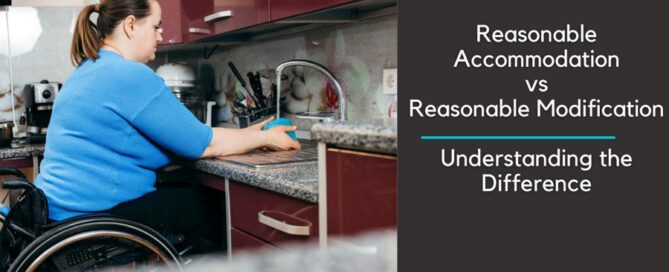
Understanding the Difference: Reasonable Accommodation vs. Reasonable Modification in Property Management

In January 2024, new rental property laws were introduced in California, including a redefined term for ensuring equal access to dwellings for individuals with disabilities. This article’s objective is to clarify these legal changes and help California landlords avoid Fair Housing issues.

Navigating the Nuances of Property Management: A Guide to Reasonable Requests

Within property management, the terms “reasonable accommodation” and “reasonable modification” can be confusing despite their differences in ensuring accessibility, particularly for residents with disabilities. This article seeks to demystify these terms and offer clarity to both property managers and residents.

What is Reasonable Accommodation?

Reasonable accommodation entails adjustments or exceptions to rules, policies, practices, or services to ensure equal housing opportunities for individuals with disabilities. It centers around the concept of adapting the way tasks and procedures are conducted.

Key points about reasonable accommodation include:

  1. Individualized Assessment: Each request for reasonable accommodation should be considered on a case-by-case basis, considering the specific needs of the person with the disability.
  2. Not Unduly Burdensome: The accommodation should not impose an undue hardship on the landlord such as significant expense or difficulty.
  3. Interactive Process: Often, fulfilling a request for reasonable accommodation involves an interactive process between the individual with a disability and landlord to determine a suitable accommodation.
  4. Legal Requirement: In many cities providing reasonable accommodation is a legal requirement under disability rights laws, such as the Americans with Disabilities Act (ADA) in the United States.
  5. Confidentiality: The process of requesting and implementing reasonable accommodations should respect the individual’s privacy and confidentiality.

Understanding and implementing reasonable accommodation is vital for creating inclusive and accessible environments for individuals with disabilities, ensuring they have equal opportunities in housing.

Examples and Scenarios from Fair Housing:

  • Allowing a resident with a service animal in a no-pet home.
  • Allowing a resident to pay on the 10th of the month instead of the 1st because their disability checks don’t come in until the 9th of the month.

What is Reasonable Modification?

Physical Changes for Accessibility: reasonable modification encompasses physical alterations to the current or prospective living spaces of individuals with disabilities, enabling them to fully enjoy and utilize the premises. It entails making structural changes to the property.

This concept is commonly applied in the context of housing and is distinct from reasonable accommodation, which typically involves changes to rules or policies.

Key aspects of reasonable modification include:

  1. Physical Alterations: It involves making physical changes to the living environment. Examples include installing grab bars in bathrooms, widening doorways for wheelchair access, or modifying the height of countertops and sinks.
  2. Purpose: The modifications are made to ensure that a person with a disability has full enjoyment of the housing and its facilities.
  3. Resident’s Responsibility: Unlike reasonable accommodations, which are usually the responsibility of the landlord, reasonable modifications are often made at the expense of the person with the disability. However, there are cases, especially in publicly funded housing, where the housing provider may be required to bear the cost.
  4. Permission from Housing Provider: Residents may need to seek permission from their landlords before making any modifications. However, under laws like the Americans with Disabilities Act (ADA) and the Fair Housing Act, landlords are generally required to allow these modifications.
  5. Restoration Requirement: In some cases, the resident might be required to restore the property to its original condition when they move out, especially if the modifications could be deemed unreasonable for future residents.
  6. Legal Protection: People with disabilities are legally protected to request reasonable modifications in their homes. Housing providers are obligated to allow these modifications when they are necessary for the individual with a disability to fully use and enjoy the dwelling.
  1. Applicability: Reasonable modification applies to both private housing and publicly funded housing, including rental units and units for sale.
  2. Advance Planning: When planning for modifications, residents should communicate with the housing provider about the intended changes, and in some cases, may need to provide documentation related to the disability and necessity of the modification.
  3. Quality and Safety: Modifications should be done in a professional manner, adhering to building codes and standards, to ensure safety and functionality.
  4. Shared Spaces: In addition to modifications within a resident’s dwelling unit, reasonable modifications can also apply to common use areas like lobbies, laundry rooms, and clubhouses to ensure accessibility.

In summary, reasonable modification ensures that individuals with disabilities can live independently and comfortably in their homes by allowing necessary structural changes to their living environment. This right is a crucial aspect of disability accommodation laws, promoting inclusivity and accessibility in housing.

Per U.S Department of Housing and Urban Development Examples and Scenarios:

  • Installing grab bars in the bathroom of a resident with a disability.
  • Modifying the height of countertops for a resident in a wheelchair.
  • Lowering light switches.
  • Installing a wheelchair ramp.

Key Differences Between Accommodation and Modification

  1. Nature of Change: Policy vs. Structure
    • Accommodation: Changes to policies or practices.
    • Modification: Physical alterations to the property.
  2. Who Pays?
    • Accommodation: Typically, no cost to the property owner, as these are changes in policies or practices.
    • Modification: Often at the resident’s expense, though there are cases where the property owner may share or take on costs.
  3. Legal Framework
    • Both fall under the Fair Housing Act, which prohibits discrimination based on disability. However, the specifics of how each is handled can vary based on local laws and housing types.

What Can the Landlord Require Before Approving the Accommodation or Modification?

A landlord may want to request a verification of disability from the person making the request for accommodation or modification, to confirm the person, in fact, has a disability. Legally, you can ask for this if the disability isn’t obvious. For example, if a person is using a mobility device to get a round, asks for a wheelchair ramp, a landlord can’t ask for a letter proving disability, it’s obvious. On the flip side, if someone asks for a rental payment modification and they don’t have an obvious disability, you can ask for proof. An example of this would be someone who gets disability for a back injury, they are disabled but it’s not obvious.

What are acceptable forms of “proof”?

A doctor’s note is probably what comes to mind for most people as proof of a disability.  However, the law allows for a lot of flexibility in the manner. A reliable third party who is in a position to know about the individual’s disability or disability related need. Per HUD, these third parties include but not limited to:

  • A medical practitioner
  • Health care practitioner
  • Person from a peer support group
  • Non -medical service agency
  • Family member who cares for the individual

In some cases, the individual can “self-verify.” In the case of requesting to pay rent on a different date, the individual can provide documentation showing dates they receive their disability.

In most cases, if the above-mentioned requirements are met, a reasonable modification can’t be denied.

Denying A Reasonable Accommodation:

According to Fair Housing, there are three main reasons reasonable accommodation can be denied.

  • Undue financial and administrative burden on the landlord. There are many factors that play into this determination and should be addressed on a case-by-case basis.
  • Fundamental alteration of the services or operations. For example, a landlord doesn’t provide a washer and dryer, so the resident requests laundry service. The laundry service would be a fundamental alteration of service.
  • Direct threat to the health or safety of others. This determination requires an individualized assessment.

NOTE: We are not attorneys. We strongly recommend that you speak with a Fair Housing attorney before denying any request for reasonable accommodation or modifications.

Conclusion: Fostering Inclusive Communities

Understanding the distinction between reasonable accommodation and modification is not just about legal compliance; it’s about fostering an inclusive and accessible environment for all residents. By addressing these needs effectively and empathetically, landlords and management companies, alike, can create a welcoming community while respecting the rights of all parties involved.

Remember, at the heart of these terms lies the goal of creating a living space where everyone, regardless of their abilities, can feel at home.

man sitting in front of a desktop computer monitor looking at a map

By |2024-02-08T06:57:57-08:00February 8, 2024|Landlord Education, Property Ownership|Comments Off on Understanding the Difference: Reasonable Accommodation vs. Reasonable Modification in Property Management

Landlord Insurance: Four Most Important Coverages

Insurance, Insurance, Insurance! If you’ve been around a while, you are probably sick of hearing me talk about insurance and proper coverage.

If you’re new here, welcome to the annual insurance service announcement.

All joking aside this is a very important topic and I wholeheartedly believe in talking about it at least once a year.

“Why”, you might ask. I never want an accident to happen and a client of mine, to say, “no one ever told me about this coverage”.

In 2022, we had two house fires and a condo that flooded. In 2023, we had a condo catch fire. Things happen and you don’t know when they are going to happen.

In addition to Primary Liability Coverage, there are four essential elements that all Landlord Insurance policies should include. These elements are Malicious Intent, Fire, Loss of Rents, and Vandalism.

Malicious Intent

Malicious Intent happens when the resident renting your home, intentionally damages the property above and beyond “normal wear and tear.” We are talking destroys the carpet to the point it must be replaced, holes in the wall, overall filth, piles of debris left behind, and more. While we don’t see these things very often, we do see them. So when it does happen, landlords are left scrambling to secure the funds to bring the property back to a rentable condition. This scenario is precisely why it’s important to ensure you have Malicious Intent in your policy. Equally important is ensuring the resident has Renter’s Insurance so you can recoup the cost from their policy and not affect your premiums. YES, this coverage enables you to sleep at night. The best part is most insurance companies don’t charge extra for this coverage.

Fire

Your fire policy will rebuild part or all of your rental home only, so this is pretty straightforward. Just make sure each year that you increase the replacement cost of the rental home. In the last 2 years, building materials went up 39.2%. Most insurance companies will not adjust for inflation.

Loss of Use

Now, let’s start thinking like an investor; you are all investors if you own a rental property. Your business is to make money with an investment/rental property! But what happens if the property burns down, which happens, or the resident causes so much damage to the house that it will take six months to be fully repaired. You still have a mortgage to pay, right? That payment doesn’t stop just because the home is vacant or in distress. Don’t worry! If you have Loss of Rents or Loss of Use coverage in your landlord’s insurance, you may sleep like a baby because you don’t have anything to worry about. Loss of rent or in some cases, called Loss of Use will cover up to 12 months of the rental income! Some companies include this coverage in your policy for no additional fees while others charge for it, but… IT IS WORTH IT! It might be a few more bucks a month but, how much is your peace of mind worth?

What a great feeling to know that you will receive money while your property is being repaired.

Vandalism

Let’s say you are about to rent out the property and a few days before your resident moves in someone breaks in, and the property gets vandalized!

Again, homeowner’s insurance might not cover you! But, the landlord’s insurance will! However, once your property is vacant for more than 30 days your insurance will not cover you so always get a 60-day vacancy policy. One Air Conditioning unit stolen could cost you $4,000 or more. You can activate your vandalism coverage in this case!

Something important to mention is that some mortgage companies request that you to homeowner’s insurance while you have an active loan with them! Be sure to ask them if this is the case before canceling your homeowner’s coverage and getting landlord’s insurance only.

Liability

Though not listed in the top four items, liability is the primary focus of the insurance policy. After all, why have a policy if it doesn’t provide basic liability coverage? You may consider increasing the liability coverage if your property has a pool or spa since those are added risks, whether you own the home or are renting the house. For example, your resident has a small soiree, and a kid gets injured because he was running around the pool! We all know, unfortunately, the first thing that comes to some people’s minds is… LAWSUIT! Well, again, here is where you may be able to use your landlord’s insurance liability coverage since this helps you pay for your expenses if you are found legally responsible after someone is injured on your property or if you are required to pay for damage done to someone else’s property. I carry $1,000,000 liability coverage on my properties.

Renter’s Insurance

We require our residents to carry a renters insurance policy. All new residents must provide a copy of their insurance prior to moving into the rental property. All current residents must provide a recent copy of their declaration page before they renew their lease. We do this to protect not only the resident but you as well.

Two recent fires were caused by the resident, one resident had current insurance and one had let their policy lapse. The flooding of the condo was caused by a contractor working on the unit above and hitting a water line.

Thankfully all parties are safe and no one was injured but you never know when something might happen. It doesn’t have to be a fire or flood, it could be an eviction. People react differently when the pressure is on them, during a recent eviction the resident allowed their animals to poop in the property to the toon of having to replace the flooring. This act was a malicious act and the insurance company paid for the damages.

If you are unsure about your policy, make time this week to talk with our insurance company and confirm your policy. You will be glad you did if you ever have to use it.

If you need a referral to a company that we highly recommend, contact Connie today at 951-289-4063, we are happy to help.

By |2026-04-07T08:58:53-07:00January 31, 2024|Landlord Education, Property Ownership|Comments Off on Landlord Insurance: Four Most Important Coverages

Who Pays For What When a Tenant Vacates

Why am I being charged for repairs after a resident moves out?”  “Shouldn’t the resident be responsible?”

These are common questions from landlords, and the honest answer is that it often depends on how the court—or even a specific judge on that day—interprets the situation.

As your property management company, we’re positioned between both the landlord and the resident, each believing they’re entitled to the security deposit for things like damages, cleaning, or painting. When no agreement is reached, the matter can end up in court, where decisions frequently favor the resident.

Our role is to keep you informed about evolving rental laws and share our observations from small claims court. Recently, judges have taken a firm stance against “nickel-and-diming” residents, often dismissing claims for minor items like light bulbs, batteries, basic cleaning, and touch-up painting.

featured image text "6 Tenant Responsibilities When Moving out of a Rental"

As the Law Reads

The categories below fall under Tenant-Landlord Law. While each has its nuances, the courts are generally clear on who is responsible for what.
Carpet: Has a 10-year lifespan and may be prorated if damaged before that time.

  • Paint: Considered to have a 2-year lifespan.
  • Blinds: Typically last about 4 years.
  • AC filters, smoke detector batteries, lightbulbs: These are viewed as standard costs of doing business.
  • Normal wear and tear: This is the most subjective category and often the hardest to define.

Let’s take a closer look at each to better understand how they’re handled.

Carpet

Carpet typically has a lifespan of 10 years, although this can vary depending on the quality. If it was newly installed when the resident moved in and they lived in the home for five years, the cost of replacement is generally split—50% covered by you and 50% by the resident.

Paint

Paint has an average lifespan of two years, which courts generally consider when determining responsibility. If the home was freshly painted before move-in,

  • Resident stays less than 1 year: They’re typically responsible for 100% of repainting costs.
  • 1–2 years: Costs are usually split 50/50.
  • After 2 years, Painting becomes the owner’s responsibility.

To extend the life of your paint, we recommend using high-quality brands like Vista or Sherwin-Williams and opting for a water-based semi-gloss, which allows scuff marks to be easily wiped clean.

If a resident paints the walls a custom color and doesn’t restore them before moving out, they may be charged for one or two coats of paint, regardless of how long they lived there.

If a resident patches a hole (e.g., from a mounted TV), you may charge for patching, sanding, and texturing before the two-year mark. However, after two years, painting over the patch typically cannot be charged, as courts often deem it part of expected maintenance.

Lastly, always paint like-for-like. Spot painting with flat paint over semi-gloss may not be accepted as proper touch-up work, as it will stand out.

Blinds

Blinds have an average lifespan of four years, though this can vary based on quality and sun exposure. Prolonged direct sunlight can cause blinds to wear out more quickly. As with carpet and paint, courts typically apply a proration based on the age and condition of the property.
If damage is due to misuse, such as bending or reaching through the slats, the resident may be held responsible. However, if the blinds are over four years old, most judges will consider the damage normal wear and tear and place the cost on the owner.

Misc. Items or Smaller Items

Courts have shifted their stance on minor items, such as light bulbs and smoke detector batteries. While residents were once held responsible for replacing them upon move-out, judges now often question whether a bulb simply burned out when the switch was flipped or if a battery died naturally. Since it’s nearly impossible to prove otherwise, these items are now generally considered part of the cost of doing business for property owners.

Abuse and Damage

In cases where the resident causes damage, such as a dog digging in the yard, chewing on sprinkler lines, or creating holes in window screens, these are considered tenant responsibilities. Missing screens or smoke detectors also fall under resident damage. In such instances, the costs of repairs or replacements will be deducted from the resident’s security deposit.

While it may not always feel fair for landlords to cover certain repair costs, court rulings today often favor residents. To protect our clients, we’ve been documenting properties with video and audio walkthroughs since 1992. This thorough documentation helps us assess damages accurately. To offset these costs, we recommend modest annual rent increases—just $50 a month adds up to over $12,600 in six years. This approach ensures funds are available for necessary repairs and improvements, and we encourage landlords to consider our suggested increases at renewal time.

So, how to make sure you will have the money when you need it for repairs?

As mentioned in previous articles, it’s wise to open a separate checking account—label it “Investment Checking”—to ensure increased rent income isn’t unintentionally spent. By keeping rent deposits separate from your funds, you’ll have the $12,600 (or more) available when repairs or improvements are needed.


By |2026-04-07T08:56:03-07:00January 24, 2024|Landlord Education, Property Ownership|Comments Off on Who Pays For What When a Tenant Vacates

New California Landlord Laws for 2024: What to Know

Every year ushers in a fresh set of regulations for landlords, and 2024 is no different. The upcoming changes encompass various aspects such as Section 8 applicant guidelines, security deposit thresholds, and more. Fortunately, not all these regulations became effective on January 1st, allowing property owners and managers ample time to get ready for these changes. The purpose of this article is to give a brief overview of the new laws. We will take deeper dives into each topic throughout the year. Let’s delve into the most important new laws that demand your attention.

Section 8 Applicants

Several years ago, a mandate was established requiring all landlords to accept Section 8 housing vouchers for their rental properties. This meant that if you had a property available for rent, you were obligated to consider applicants with these vouchers. To be eligible, Section 8 applicants had to meet the same qualifications as any other prospective tenant. They still needed to demonstrate an income equivalent to three times their share of the rent and maintain a more positive than negative credit history, among other requirements.

However, in 2023, Governor Newsome signed SB 267, introducing a significant change. This new law allowed individuals with Section 8 vouchers to choose not to have their credit score used as a determining factor when applying for rental properties. Nevertheless, these applicants still needed to provide evidence of their ability to cover the rent through means such as paystubs, bank statements, and positive rental references.

The primary objective behind this new law is to address the loophole that allowed landlords to deny Section 8 applicants solely based on their credit history. The underlying assumption was that those on Section 8 often had poor credit, which this legislation aims to rectify.

Security Deposits

When discussing security deposits, it’s important to address the regulations concerning security deposits for all types of applicants. Prior to July 1st, 2024, landlords had the liberty to charge up to 2 months’ rent for an unfurnished dwelling and up to three months’ rent for a furnished property. However, significant changes are on the horizon.

Starting on July 1st, 2024, landlords will be limited to charging only one month’s rent as a security deposit, regardless of whether the property is furnished or not. There is an exception tailored for what is termed “small” landlords. The criteria for being classified as a “small” landlord are as follows: 1) an individual person or a limited liability corporation in which all members are individual persons and 2) ownership of no more than two residential properties, encompassing a total of no more than four dwelling units available for rent. For furnished or unfurnished properties, a small landlord is allowed to collect up to two months’ rent as a security deposit. It’s worth noting that members of a trust are regarded as “individual persons” in this context.

Personal Micro-Mobility Devices

Electric bicycles (ebikes) and electric scooters have gained immense popularity. In 2022, ebike sales in the US skyrocketed, reaching a staggering $1.2 billion in revenue. These remarkable vehicles are powered by lithium-ion batteries. However, it’s important to acknowledge that lithium-ion batteries have garnered a negative reputation, and for good reason—they pose a fire hazard when mishandled. Fires resulting from these batteries can be highly intense and release toxic fumes. Consequently, many landlords began prohibiting the storage of such devices within homes or apartments.

In 2023, SB 712 was passed, prohibiting landlords from imposing a blanket ban on these devices. Effective from January 1st, landlords are now required to choose one of the following options:

  • Allow occupants to store and charge these devices within the home if certain conditions are met.
  • Provide suitable storage for these devices on the premises.

But what are the specific “certain standards” for allowing storage within the home? To be eligible for indoor storage, the device must meet the following criteria:

  • It must not be powered by a motor.
  • It must comply with safety standards.
  • It must be covered by the renter’s insurance policy.

Regarding appropriate storage on the premises, it must meet the following requirements:

  • Be protected against moisture.
  • Include a minimum of one standard electrical connection per micromobility device intended for storage and charging at that location.
  • Landlords are not permitted to charge residents extra for this storage option.

Additional regulations encompass provisions for reasonable accommodation for individuals with disabilities, adjustments to application fees, and alterations for property owners intending to reclaim their residence. In upcoming editions of the newsletter, we will provide comprehensive coverage of these topics. For real-time updates and changes pertinent to rental property ownership, be sure to follow us on social media.

grimacing woman holding her head

By |2024-01-02T07:22:04-08:00January 2, 2024|Landlord Education, Property Ownership|Comments Off on New California Landlord Laws for 2024: What to Know

Understanding Squatters: Who Are They and What Rights Do They Have?

On October 31, 2023, authorities in Gainesville, Florida, received reports regarding squatters occupying a county-owned hotel that was currently undergoing renovations to be converted into a homeless shelter. Upon their arrival, they discovered that nearly twenty individuals had taken control of the hotel.

These squatters had removed locks from utility boxes, uncovered windows previously boarded up with wood, and established makeshift homes within the premises. Source: NY Post

This situation is not unique to Gainesville or even the United States; it is a widespread issue seen both nationally and internationally. So, what exactly are squatters, and why is this phenomenon occurring?

When we reflect on the concept of “home,” it typically invokes feelings of ownership, personal space, and sanctuary. However, what if someone you are unfamiliar with decides to inhabit your property without your permission? This introduces us to the world of squatters.

What is a Squatter?

A squatter is a person who occupies a building or land without the permission of the owner and without a legal claim or title. The motivations behind squatting can vary widely – from homelessness and poverty to political activism or opportunism.

How Do Squatters Differ from Trespassers?

While it might seem that squatters and trespassers are synonymous, there is a crucial difference. Trespassers enter a property with an intent to leave, whereas squatters intend to stay. Over time, in certain jurisdictions, if squatters occupy a property continuously and openly without the legal owner’s intervention, they may gain legal rights to the property through a concept known as “adverse possession.”

Adverse Possession: A Pathway to Ownership?

Adverse possession is a complex legal doctrine that has its roots in ancient laws. The principle is that if a squatter occupies a property for a specified period and meets certain criteria, they may gain legal ownership. This is not a quick or straight-forward process, and conditions differ from one jurisdiction to another.

Some general criteria for adverse possession include:

1. Hostile Claim: The squatter must occupy the land without the owner’s permission.
2. Actual Possession: The squatter must be physically present and treat the property as if it’s their own.
3. Open and Notorious: Their possession must be obvious and not hidden.
4. Continuous Possession: The squatter must occupy the property continuously for the period specified in that jurisdiction.
5. Exclusive Possession: The squatter cannot share possession with strangers or the actual owner.

It’s essential to note that not all jurisdictions recognize adverse possession, and where it is recognized, the criteria and timeframes can differ significantly.

Why Would Someone Squat?

Several reasons can drive someone to squat:

1. Economic Hardship: With rising house prices and economic disparities, some find squatting the only viable shelter option.
2. Political Activism: Squatting can be a form of protest against property laws or perceived social injustices.
3. Opportunism: Some see an opportunity to claim unoccupied properties, especially in areas where adverse possession laws exist.

How Property Owners Can Protect Themselves

Understanding squatters’ rights also means understanding how to protect your property:

1. Regularly Monitor Property: Periodically check any property you own, especially if it’s vacant.
2. Quick Action: If you discover a squatter, consult with legal counsel and act swiftly.
3. Explicit Notices: Post “No Trespassing” signs and make it clear that unauthorized occupation is not allowed.
4. Legal Documentation: Ensure that you have all your property documents in order,
making it easier to prove ownership.

Squatters’ rights, though controversial, have a long-standing history in property law. The principle strikes a balance between rewarding those who use and maintain land and penalizing neglectful owners.

Whether you’re a property owner or someone interested in property laws, understanding squatters’ rights is crucial in today’s evolving real estate landscape.

Concluding thoughts on this section.

Squatting presents a multifaceted issue that can be examined from various perspectives, encompassing both compassion for those facing dire circumstances and the frustration experienced by property owners. Regardless of one’s viewpoint, comprehending the rights and procedures associated with squatting is essential. Staying well-informed is the most effective approach to tackle this intricate problem, whether it’s to protect one’s property or to empathize with individuals in challenging situations.

At this juncture in our conversation, it’s important to address the topic of insurance. In many instances, squatters can cause substantial damages, often totaling thousands or even hundreds of thousands of dollars to properties. With the increasing prevalence of squatters, it becomes even more critical to have comprehensive insurance coverage in place, including protection against vandalism.

If you are unsure if you have the proper insurance coverage, contact our office and we are happy to review the policy with you. Additionally, it’s imperative for you to have Management One listed as an additional insured so that we can advocate on your behalf.

Image with text: "Learn more about our property management services. Call us today! 951-735-2000

By |2023-11-07T12:00:45-08:00November 7, 2023|Landlord Education|0 Comments
Go to Top