Orange County (949) 721-6608 – Riverside County (951) 735-2000

Management One

Orange County (949) 721-6608
Riverside County (951) 735-2000

Management One

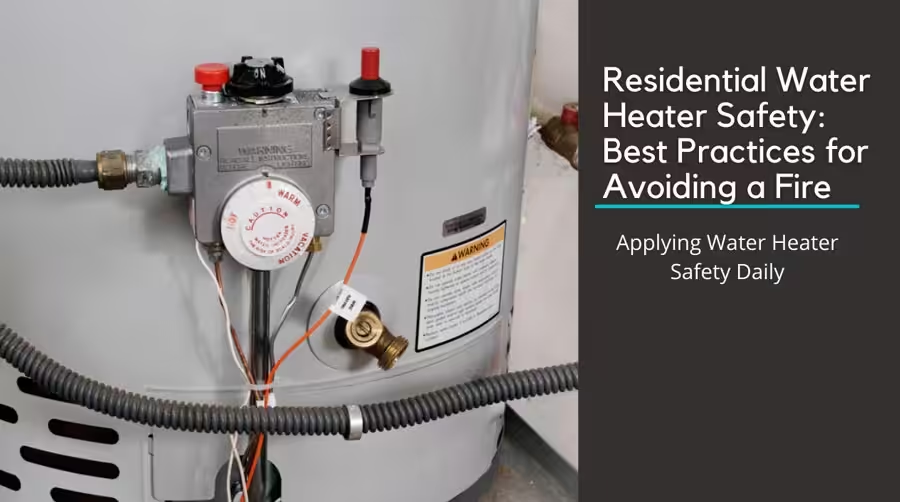
Residential Water Heater Safety: Best Practices for Avoiding a Fire

In this article, we’re talking about water heater safety. You know, that big ol’ cylinder in your garage, or in some cases outside your house in its own little enclosure. It performs its job day in and day out, without complaint, heating your water so that you may enjoy that hot morning shower and those sparkling clean dishes. You likely seldom think about your hot water heater, but you ought to, and below I’ll lay out a few reasons why.

According to the National Fire Protection Association, on average there are 5,400 home fires a year, resulting in about 20 fatalities from water heaters.

Having inspected thousands of homes for banks, Management One, and insurance companies, I can tell you this is for real. Most of my information comes from years of insurance work. Gathering data on houses for nearly every insurance company, I learned that that are a good many things which can cause claims, losses, be it due to injuries, property losses, and deaths. Water heater safety is sort of a no-brainer, except that most people almost completely ignore their water heater.

Applying Water Heater Safety Daily

I have taken to applying, as needed, this learned information to my property inspections for Management One, as we don’t want to have an owner or a resident suffer any of the above either. Simply put, an ounce of prevention can mean the difference between life and death, whether it be a home you own and live in or a rental.

Interestingly, insurance companies are inconsistent. Only one company consistently asked for water heater information, that being USAA. The rest, I suppose, view 5,400 fires and 20 deaths as an acceptable risk. We do not.

Can the items in this water heater safety article be applied to other things?

Yes, you can apply the same principles I will give you below to both gas and electric water heaters, as well as furnaces. Heck, you can apply it to stoves and fireplaces as well. If we’re talking about a heat generating appliance or fixture, never forget that it can kill you.

Water heaters utilize a whole lot of heat

A BTU is a British thermal unit. It takes 8.33 BTUs to raise the temperature of 1 gallon of water 1 degree Fahrenheit. Raising a 40-gallon water heater by 10 degrees, say, after someone has showered, requires 3332 BTUs. A cubic foot of natural gas contains 1028 BTUs, so we’re talking about more than 3 cubic feet of natural gas being burned in a very short period of time. Have you ever boiled water on the stove? Takes forever, right? All that heat, all those BTUs. A water heater uses a lot more.

What’s the danger and what do I do?

First, gas. A gas water heater can leak gas, through the fittings, even though the control module. Gas leaks, water heater burner ignites, boom. If you smell gas, call the gas company immediately. This goes for any natural gas appliance in or out of the house.

Second, combustion. Anything combustible within 36″ of a water heater must be moved out of that range. Paper, bags, clothing, etc. If it can burn, it will burn in the right circumstances. It’s not that these items will spontaneously catch fire, but they can. The gas burps out then ignites wrong, you will have a fire.

We haven’t even addressed flammable items, such as gasoline. Do you know why water heaters sit raised on pedestals? Because gasoline fumes tend to stay low to the ground. Cars are fueled by gasoline. Lawnmowers are usually fueled by gasoline, and there’s often a gas can in the garage if there’s a mower stored there. Get the flammables out, and no matter, keep them as far from the heat source as possible! And…

  • Always keep the fire chamber cover ON the unit. Always. This contains errant flames.
  • ALWAYS have a qualified contractor, such as a licensed plumber, install your water heater!

Oh, and often times I find the furnace mounted right next to the water heater. One line, two appliances. However, be sure to follow the same 36-inch rule! Sometimes people will measure the distance and put tape on the ground to mark the safe distance to keep clear from the heat source.

What about electric water heaters?

Remember the 3332 BTUs I mentioned above to heat a 40-gallon water heater full by 10 degrees? 3332 BTUs is equivalent to nearly a kilowatt-hour of electricity. That is a lot of heat as well. Just always keep anything that can burn 36″ away from any heat source. This includes your stove, oven, fireplace, space heaters, wood-burning stoves, furnace, etc.

There is more to it than just water heater safety

If you live in a house and have a tank water heater, as opposed to tank-less, it is also a good idea to occasionally inspect it, top to bottom. Look for any signs of water leakage, smell of gas. Test your pressure relief valve (the is the little doo-dad with a toggle test valve in it). This is designed to keep your water heater from exploding.

That click and pop sound you may at times hear from your water heater? That is basically the sound of minerals and sediment exploding inside. Sediment enters in tiny parts per million with the incoming water but does not typically drain out when you call for hot water. With that sediment inside two things are happening.

  1. The sediment balls up and creates hot spots inside, on the tank walls. It usually pops when heating, but those hot spots where the balls were attached cause accelerated corrosion.
  2. When you’re heating water, you first must heat that sediment, the sediment then heats the water. This is not efficient and causes you to have higher energy bills.

The fix for this is to drain the water heater either yearly, or twice yearly. You simply attach a garden hose to the faucet at the bottom of the water heater (yes, it will fit) and open the faucet valve. You’ll note the water looks cloudy and smells weird, that is okay. What you are seeing and smelling is sediment-filled water from the bottom of the tank. When the cloudiness and smell disappear, stop draining the tank, detach the hose, and make sure that the faucet is not dribbling. It happens sometimes. If it is dribbling, have a plumber out to replace the faucet. By doing this maintenance, you will extend the life of the water heater by years and perhaps avoid a water heater leak and the delayed cost of replacement significantly.

Last words on water heater safety

Do be sure your water heater has two earthquake straps holding it in place, even if you are not in earthquake country. It’s never too much to be certain.

Keeping you and your family safe is the number one goal. Now, go check your water heater!

image with text reading "Ready to find your next home? contact us at 951-735-2000"

By |2026-05-19T13:16:32-07:00October 14, 2022|Blog, Property Ownership, Resident Education|0 Comments

Property Insurance: Renters and Landlord

Fires. Floods. Destruction. Death.

Now that I have your attention, allow me to steal a line from Ferris Bueller’s Day Off: “Life moves pretty fast.”…

You’re living it day by day, planning for your retirement, the kids going to college, and you get that call: your rental property has suffered a fire, a flood, or significant vandalism. Okay, if you have the proper insurance, no worries!

However, if you don’t carry the proper insurance, you have some challenges.

First, What is Rental Property Insurance?

This question may seem silly, particularly if you’re a seasoned veteran in the rental property world. Yet the newbies need to know.

Also called Landlord Insurance, this policy includes many additional features compared to a standard homeowner policy. What are the differences? Well, there’s…

Vandalism and Malicious Intent

While these coverages appear to be the same, they are pretty different. Malicious intent (also called malicious mischief) requires an intention to cause harm. For example, a miscreant spraying graffiti on the wall of your house is straight-up vandalism, and the same bad actor pouring concrete into your toilets is malicious intent. Malicious intent can also arise from a resident leaving the water on, which destroys all the wood floors. This type of insurance will protect you against this.

Vandalism coverage comes into play when someone breaks into your home and causes damage. Or if your AC condenser is stolen. However, remember that after 30 days of vacancy, if you have not contacted your insurance and gotten an extension, you may not have this coverage!

Loss of Rent or Loss of Use

Using a recent example, say your rental property catches fire. The resident will need to vacate, of course. During that time, you will have no rent coming in. Now, you have the deductible to pay, possible utilities, upkeep, and repairs coordinated through your insurance company, all while receiving no rent whatsoever. Unless, of course, you have a loss of rents/use coverage.

Now, let’s look at this another way: say the resident caused the damage that made the home uninhabitable. In this case, your insurance company still gets involved. More on that later.

True Story: We had this terrifying scenario occur recently. A wire in the attic sparked and caught the insulation on fire. Thankfully, no one was injured in the fire. However, the home was condemned, and the resident had to vacate the property immediately. The landlord is currently without rent, and the home is under construction. When this is all said and done, the landlord will be without rent for 12 months. Not all is lost, though, as the landlord has loss of rent coverage and will be reimbursed for up to 12 months of rent, and his fire policy will rebuild his house. It’s all in the same policy, just different coverages for different claims.

What’s The Cost of Landlord Insurance?

Generally speaking, you could expect to pay about the same as you would on a homeowner’s insurance if you lived in the property before you rented it out. Here’s why. You’re protecting the contents on a homeowner policy, and with a landlord policy, you are not. That is the resident’s responsibility. Occasionally, some carriers will charge a little more, but not much.

Renter Insurance

We require that all of our residents and yours carry renters’ insurance. The difference between your policy and theirs is that your insurance covers possible losses to the structure, and the renter’s insurance covers the resident’s belongings.

However, say the resident caused the loss. Say they left a bathroom fan running while away, and the house burns down. Or they left the stove running and left for the day. Simple negligence, in other words. Your insurance will go after their renter’s policy regarding the loss.

Quick facts:

One of the most dangerous items in a home is the seemingly innocuous bathroom fan. If left on, they can start a fire, and people often leave them running while they’re out.
We advise people to turn off the lights when not using the bathroom.

7% of household fires start at the water heater. 4% of household deaths result from this.
For this reason, we check the water heater when we rehab properties and perform an annual inspection.

Should someone pass away in your home in a fire? That could be up to a $5,000,000 claim against you or your insurance. For this reason, we check CO detectors and smoke detectors with a smoke emitter during annual inspections. We also change all the batteries in these items at property rehabs, and we advise residents to change the batteries every six months.

True Story

Several years ago, a resident fell asleep while smoking in bed. Tragically, the individual didn’t survive, and the whole home was a total loss. I had recently completed an annual inspection at the property, checking the smoke detectors, and they were operating. The resident had signed off that the smoke detectors were functioning correctly. Due to that fact alone, the landlord was not held liable for any damages the resident and family endured, including the person’s death. Had our strict policies not been followed, this could have been life-changing for the owners of this property. Property Management is far more than renting a property. It’s about ensuring the property is safe to live in and having documentation to show you made it safe.

Have questions regarding the proper insurance (even if you’re not a client of Management One) to have on your property? Call our office today at 951-735-2000

If you’ve ever questioned, “Why Does the Rent Increase Every Year?“, click on the title to learn the answer. You’ll find some valuable tips for both landlords and residents like you.

By |2026-05-19T13:16:32-07:00May 3, 2022|Blog, Landlord Education, Resident Education|Comments Off on Property Insurance: Renters and Landlord

How to Break a Lease in California

A vacancy is one of the most expensive aspects of the rental industry. It is in a property manager’s or owner’s best interest to keep their rental property occupied by qualified residents. In a perfect scenario, a landlord will secure a long-term lease with a responsible resident who pays rent on time, takes care of the property, and gives proper notice about vacating the unit when the lease expires.

Many residents who sign a lease plan to stay for the total amount of time required in the lease, such as one year. But despite your best intentions, you might want (or need) to leave before your lease is up—for example, if you’re a student at UC Riverside and only want to stay in your apartment for the period that school is in session.

Leaving before a fixed-term lease expires without paying the remainder of the rent due under the lease is called breaking the lease. Here’s a brief review of resident rights in California to break a lease without further liability for the rent.

Resident Rights and Responsibilities When Signing a Lease

A lease obligates both you and your landlord for a set period, usually a year. Under a typical lease, a landlord can’t raise the rent or change other terms until the lease runs out (unless the lease itself provides a change, such as a rent increase mid-lease). A landlord can’t force you to move out before the lease ends unless you fail to pay the rent or violate another significant term, such as repeatedly throwing large and noisy parties. In these cases, landlords in California must follow specific procedures to end the tenancy.

For example, your landlord must give you three days’ notice to pay the rent or leave before filing an eviction lawsuit. If you have engaged in any illegal activity on the premises, your landlord may give you an unconditional quit notice, giving you three days to move out. Residents are legally bound to pay rent for the entire lease term, typically one year, whether you continue to live in the rental unit—with some exceptions, as follows.

How to legally break a lease in California?

There are some important exceptions to the blanket rule that a resident who breaks a lease owes the rent for the entire lease term. You might be able to legally move out before the lease term ends in the following situations.

1. You or a Family Member Are a Victim of Domestic Violence or Other Specified Crime

California law provides early termination rights for residents who are victims of domestic violence, sexual abuse, and certain other crimes. Residents may terminate early not only when they are victims but also when they are a member of their household or an immediate family member—even if they do not live with them. With this said, there needs to be proof of this.

2. You Are Starting Active Military Duty

If you enter active military service after signing a lease, you have a right to break the lease under federal law. You must be part of the “uniformed services,” which include the armed forces, commissioned corps of the National Oceanic and Atmospheric Administration (NOAA), commissioned corps of the Public Health Service, and the activated National Guard. You must give your landlord written notice of your intent to terminate your tenancy for military reasons. Once the notice is mailed or delivered, your tenancy will terminate 30 days after the date that rent is next due, even if that date is several months before your lease expires. In the past, your orders needed to be more than 60 miles away from your residents. As of January 2020, that is no longer the case.

3. The Rental Unit Is Unsafe or Violates California Health or Safety Codes

If your landlord does not provide habitable housing under local and state housing codes, a court would probably conclude that you have been “constructively evicted.” Meaning the landlord, by supplying unlivable housing, has for all practical purposes “evicted” you, so you have no further responsibility for the rent. California law sets specific requirements for the procedures you must follow before moving out because of a major repair problem. The problem must be severe, such as the lack of heat or other habitable issues.

4. Your Landlord Harasses You or Violates Your Privacy Rights

Your landlord must give you 24 hours’ notice to enter the rental property. If your landlord repeatedly violates your rights to privacy or does things like removing windows or doors, turning off your utilities, or changing the locks, you would be considered “constructively evicted,” as described above; this would usually justify you breaking the lease without further rent obligation.

Landlord’s Duty to Find a New Resident in California

If you don’t have a legal justification for breaking your lease, the good news is that you might still be off the hook for paying all the rent due for the remaining lease term. This is because, under California law, your landlord must make reasonable efforts to re-rent your unit—no matter what your reason for leaving—rather than charge you for the total remaining rent due under the lease. So, you might not have to pay much, if any additional rent, if you break your lease. You need to pay only the amount of rent the landlord loses because you moved out early. This is because California requires landlords to take reasonable steps to keep their losses to a minimum—or to “mitigate damages” in legal terms.

So, if you break your lease and move out without legal justification, your landlord usually can’t just sit back and wait until the end of the lease and then sue you for the total amount of lost rent. Your landlord must try to re-rent the property reasonably quickly and subtract the rent received from new residents from the amount you owe. Also, the landlord can add legitimate expenses to your bill—for example, the costs of advertising the property.

If your landlord re-rents the property quickly, all you’ll be responsible for is the amount of time the property was vacant.

The bad news is that if the landlord tries to re-rent your unit and can’t find an acceptable resident, you will be liable for paying rent for the remainder of your lease term. This could be a substantial amount of money if you leave several months before your lease ends. Your landlord will probably first use your security deposit to cover the amount you owe. But if your deposit is not sufficient, your landlord may sue you. Some Landlords will take a cash settlement like two months’ rent from the day you move out, which then you know the total amount you need to pay, and most properties will re-rent in 60 days making the Landlord whole again as well, so consider this option as well.

How to Minimize Your Financial Responsibility When Breaking a Lease

If you want to leave early and don’t have legal justification for doing so, there are better options than just moving out and hoping your landlord gets a new resident quickly. There’s a lot you can do to limit the amount of money you need to pay your landlord—and help ensure a good reference from the landlord when you’re looking for your next place to live.

You can help the situation a lot by providing as much notice as possible and writing a sincere letter to your landlord explaining why you need to leave early. Ideally, you can offer your landlord a qualified replacement resident, someone with good credit and excellent references, to sign a new lease with your landlord.

a worried looking couple

By |2026-05-19T13:16:33-07:00December 9, 2021|Blog, Landlord Education, Resident Education|0 Comments

Why Does the Rent Increase Every Year?

Getting a notice from your landlord that your rent is increasing would ruin anyone’s day. Unfortunately, this stress-inducing reality has been happening across the country as reports of rental rates hitting an all-time high have been making headlines regularly.

After the initial shocks wear off (and the superlatives subside), it’s time to start thinking about your options for dealing with a rent increase. Keep reading to find out what you can do when your landlord raises the rent.

First Things First: It’s Important to Understand Why Your Rent Is Going Up

Like most industries, the rental market responds to economic trends creating conditions for owners to ask for rent depending on their region. Landlords may decide to increase their rental prices to match market rates, pay for property maintenance or improvements, accommodate tax increases, or simply increase their profits a bit. Keep in mind in past years. Landlords had to lower rents due to an oversupply of rental properties, so it goes both ways.

How Much Can Rent Increase?

It turns out that most landlords do not regularly raise their rent to match the cost of owning and maintaining a property. What ends up happening is after five years at a steady rental rate, the owner will realize that a rent increase is necessary to keep up with increasing property taxes, maintenance, insurance, and market rates. Suddenly, after five years of affordable rent, you might see a sudden 10-25% increase.

For many renters, a 25% increase could price them out of their current rental property. It is recommended that landlords include a regular 3-6% increase every year, so they do not find themselves in a situation where they are suddenly asking their residents/tenants to pay an extra few hundred dollars a month. A $75 increase each year is a lot easier to stomach than a $400 increase after nothing for five years.

In California, rental increases are regulated by the city or area that the rental property is located. For example, in Riverside and Orange County, a landlord can increase the rent by 8.6% annually (as of August 1st, 2021) if an LLC or Corporation holds the property. If a sole owner holds the property, the increase could be as much as 10% of the current rental rate.

If You’re Facing a Rent Increase, Here’s What You Should Do:

1. Ask for time to think about it.

You don’t need to decide today if you are staying or going. But you do need to plan to think about your finances. Housing expenses should account for 30% of your income (including utilities). If the new rent is going to price you out of your household budget, finding a less expensive rental is what needs to happen. Do not put additional strain on your finances by living in a place you cannot afford.

If you can afford the new rent but do not want to pay it, do some research to see what else is on the market. You might discover that rents have gone up universally when you check Zillow in your area, and your landlord is asking for a reasonable price. Would it be worth the moving expenses to find a comparable property with comparable rent?

2. Try to negotiate reaonsably

Have a professional and honest conversation with your landlord before you start paying the higher rate or perusing the rental ads. Tell your landlord you are concerned with the rising rent prices and probably have to move. You might find that he likes you as a resident/tenant and will negotiate the rent increase down to keep you. This tactic will only work if you get along with your landlord and have a history of on-time rent payments.

You have to be prepared for him to say no. But it won’t hurt anything to ask. Be professional, empathic, reasonable, and never get angry or defensive. I have heard the success of renters talking a 10% rent increase down to 5-7%, with the knowledge that the rent will increase by another 5% in a year, but at least it wasn’t such a steep jump. If you are mean or hostile during this conversation, your landlord will probably be happy that you are moving out.

3. Ask to sign a longer, fixed-term lease

Landlords cannot raise the rent on you during a fixed-term lease agreement. If you are tired of your landlord raising the rent every year, ask your landlord if you can sign a lease for 1 or 2 years. This means you will have to commit to living on that property, but if you have no intention of moving, you will benefit from knowing that your housing budget will remain stable.

In most cases, your landlord will agree to an extended lease agreement because that means they will not have to deal with releasing the property, turnover, or vacancy. If you already have a history of on-time rent payments and a good landlord-resident/tenant relationship, your landlord should be open to a long-term lease agreement.

4. Move Out

In some cases, the only thing to do will be to move. The harsh reality of rising rents is that some people will be forced to move out of great homes in prime locations. Moving away from your city center or job can reduce your housing expenses; however, it may also make your commuting expenses go up.

If you live in a tight rental market with limited vacancies, be sure to communicate your moving plans to your landlord. He might be reasonable about giving you an extension to live on the property at your current rate until you find a new property. Don’t overstay your welcome or take advantage of your landlord’s generosity. Remember that your current landlord will need to give you a reference to find a new place.

By |2026-05-19T13:16:33-07:00December 7, 2021|Blog, Resident Education|0 Comments

Section 8 – Do I Have to Accept it?

Do you remember the Clint Eastwood movie, “The Good, The Bad, and The Ugly?” Some landlords equate renting to residents on Section 8, a Federally backed program, the same way. It can be useful, and it can also be not so good and very time-consuming.

But yes, you do have to accept it.

The Section 8 Housing Choice Voucher program is a form of government rent assistance. In 2018, upwards of 5 million people nationwide lived in a household that used a voucher to help pay some or all their rent.

When Congress established Section 8 of the Housing and Community Development Act in 1974, one goal was to make sure people earning low wages could find “decent housing and a suitable living environment” outside of public housing units.

Over the last three decades, we have fielded calls from thousands of residents with housing vouchers. However, we were unable to accept the vouchers. Until recently, most management companies and private landlords were not accepting housing vouchers.

New Regulations For Section 8

Today, people who meet income requirements can apply to the program to receive a voucher when they become available. If they are approved, selected, and then find an apartment or house with the voucher, their local housing authority starts sending payments directly to landlords.

The payments cover some or all the voucher holder’s rent. On average, each household will pay somewhere between 30% and 40% of its income on rent. Effective January 1, 2020, California implemented two bills that essentially require landlords to accept Section 8 or housing vouchers as an income source from applicants. Rental property owners cannot discriminate against an applicant or deny the application because they have a housing voucher.

Qualifying for Section 8

To get Section 8 housing, applicants must know the following:

  • Waiting list – applicants must know that there are extensive waiting lists. There are more people interested in obtaining a voucher than there are vouchers available. Most of the time, applicants are placed on a waiting list.
  • Where they want to live – Each local housing authority has different rules regarding Section 8. They must decide where they want to live and then find the local housing authorities that oversee those neighborhoods. Applicants must remember they can apply to housing authorities even if they don’t already live in that town.
  • Household Income – Section 8 is reserved for people making a certain amount of money within the local area. Applicants must check their local housing authority’s income requirements before applying for the program.
  • Immigration status for everyone living at the property – At least one person in the household must have legal documentation to be living in the U.S. for the household to apply for a voucher.
  • Criminal History – Housing authorities across the country do background checks, but each one has different rules. It is possible to get approved for housing if you have a felony or if you are on parole. A significant fact: you CANNOT get a voucher if you, or someone in your household, is on a lifelong sex offender registry, has been convicted of producing methamphetamine in federal housing or has been evicted within the past three years for drug-related reasons.

The Old Way

Previously, it was common for property owners to advertise that they did not participate in Section 8 and wouldn’t consider any residents who had that housing voucher. This practice was common because participating in the Section 8 program was an administrative burden. There are many hurdles to cross, including a home inspection, verified habitability, and an approved residency. The delay in getting approved and prepared could cost a lot of money.

Some landlords appreciate the Section 8 program because it’s a guaranteed source of income. You know the rent will come in every month because it’s coming from a government agency and not an individual. But for most owners, the Section 8 process isn’t worth their time.

You are now required to allow Section 8 and housing voucher applicants to participate just like everybody else, but this does not mean any of your other screening criteria have to change in any way. You can still have the same credit criteria and require the same income verification. According to Fair Housing, you must require the same criteria for all applicants.

The only change with the income criteria is that you can only look at the portion of the rent that the resident will be paying, not the entire rent itself.

Here’s an example:

If your rental criteria state that a resident must earn three times the amount of rent every month, you’ll have to consider three times the amount of what the Section 8 resident would be paying. So, if they are responsible for only $300 of their rental payment and the voucher takes care of the rest, you need to look for income that meets or exceeds $900 from that resident.

There are two sister bills in place. The second bill does designate vouchers, and it also adds military personnel and veterans as protected classes when it comes to the source of income. So, all three of those protected classes now have a heightened protection level under existing and new discrimination laws.

The passage of  SB 329 and SB 222 means that California residential landlords throughout the state will no longer be able to say they don’t participate in Section 8, VASH, or other rental assistance programs. It is anticipated that tenant’s rights groups will be conducting testing to see whether landlords are aware of and are complying with the law. Landlords who don’t currently participate in rental assistance programs are advised to respond to inquiries about whether they accept Section 8.

The Fair Employment and Housing Act (FEHA) states “that it is unlawful to make, print or publish or cause to make, printed or published any notice, statement, or advertisement concerning the sale or rental of a housing accommodation that indicates any preference, limitation, or discrimination based on any enumerated protected class, including a source of income. Accordingly, it is essential that all advertising (including ads posted on personal and third-party websites such as Craigslist) be revised to remove any references such as “No Section 8” or “We do not participate in Section 8”.

Questions About Section 8

There are many questions surrounding Section 8 and Housing Vouchers. We highly recommend Landlords with questions about the Section 8 program contact their local Housing Authority in the area. The Fair Housing Authority is an excellent resource for Landlords and Residents alike.

Learn about the Management One Tenant Screening Process in this post:

By |2026-05-19T13:16:54-07:00November 25, 2020|Blog, Landlord Education, Resident Education|0 Comments

Understanding Waste Management Bill Pay

As you sit down to drink your coffee and open your mail, you notice a trash bill amongst the junk. It strikes you as strange, but you proceed to open it. Low and behold, it is for your rental property; and the amount owed is HUGE!

What started as a relaxing morning turns into a stressful one, as you read the letter in detail stating this amount is dangerously close to being assessed to your property taxes. HOW COULD THIS HAPPEN? And why haven’t my renters paid this bill?

So many unanswered questions and utter confusion cloud your mind.  Do I call the trash company and pay it? Should I call the management company to demand they pay this? Where do I start?

During my time in property management, I lost count of the number of owners that call to ask about a trash bill. I found that about 95% of the inquiries involve a current trash bill or a paid trash bill.

Just Stop Service

A common misconception about the delinquent trash bill is that Waste Management or any other sanitation company will stop picking up the trash if they fail to pay. Unfortunately, the regular removal of solid waste from residential properties is an essential sanitation practice that protects both the environment and the public.

Properties with unpaid trash bills that are 60 or more days past due are placed on a delinquent list, as the property owner is ultimately responsible for the past due amount on the property. Owners are typically notified within 30 days of the trash bill hitting their property taxes and are given the opportunity to correct the past due accounts prior to the lien process. Waste Management mails and email notices to the owner’s contact information on file. The lien comes after many failed attempts to collect the past due amount. As the property owner, you are responsible for the upkeep of your property.

Understanding Waste Management Billing

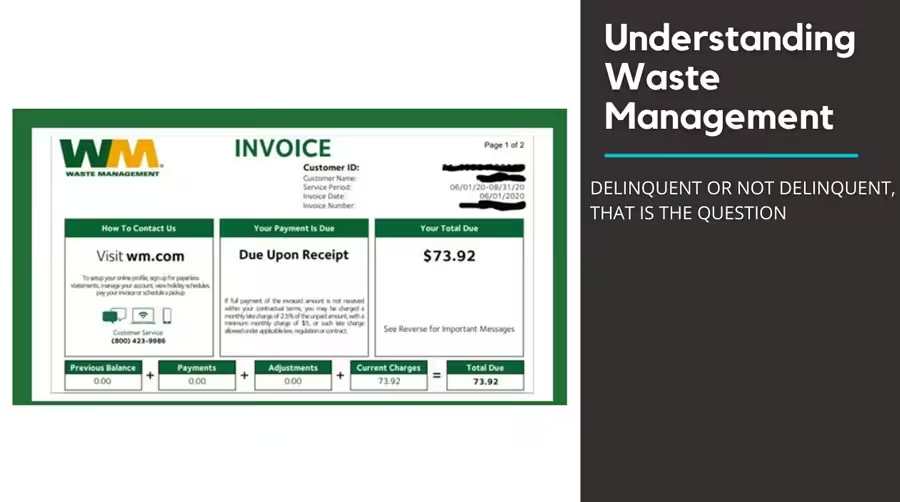
screenshot of a sample water management bill

Waste Management bills quarterly for their services, and depending on the size of your container, you are billed between $70-95/quarter. The image above shows a current bill, even though as a landlord you received this bill along with a notice that the resident didn’t pay the bill. The bill doesn’t become delinquent until September 1st, when the new bill is generated. Billing is done in advance for the quarter and assessed a $5.00 late fee penalty if the payment is not received by the due date. The bill is also assessed a 2.5% monthly late charge of the unpaid amount. That adds up!

Strategies

Some management companies include the trash bill into the lease for the property, shying away from letting the resident maintain the bill on their own. Including the rent in the rent works excellent for properties with multiple units. There is one bill that comes from Waste Management and one payment. When dealing with single-family homes, management companies must pay the bill per property. Imagine managing 400 properties and paying each bill individually.

Another way management companies collect delinquent bills is by deducting the amount owed from a resident’s security deposit when they vacate. Management companies check to make sure the resident has not left a past due balance on the account upon vacating. If they leave a balance, the balance is deducted.  The challenge with this is, the average resident stays in a property for 4.5 years. If a management company waits until the resident vacates to check the bill and pay it, the bill could be nearly $1350 dollars. That’s a decent chunk out of the security deposit.

In extreme cases of delinquent trash bills, some management companies have opted to deduct the amount from the rent, thus making the resident’s rent “short,” serving them a 3-day notice to pay or quit for this shortage in the rent. With this tactic, owners/management companies have a legal leg to stand on in court if the resident fails to pay, and they go into eviction.

While the latter might seem like an extreme measure, it seems to be the most effective in receiving payment from your resident. In some cities, like Erie, PA, they actually post the delinquent trash bills on their website for the whole city to see who is late on their bill. Magically, they had 75% of their delinquent bills become current.

If the delinquent amount was reported to your property taxes, you could pay Waste Management directly. By paying them directly, it will clear the balance, and the resident will be charged.

The best solution for landlords is calling Waste Management directly and ask that they put your property management company’s address on the bill. By adding your property management company to the bill, it ensures they receive a copy of the bill and can stay on top of it quickly. It also eliminates one more thing off your plate. You can reach them at 800-423-9986.

image with text "Ready to talk to Tyler about an investment property? Call him at 951-735-2000"

By |2026-05-19T13:16:54-07:00August 4, 2020|Blog, Landlord Education, Resident Education|0 Comments

Renting a Home From A Private Owner VS Property Management Company

Houses For Rent By Owner or Houses for Rent By A Property Management Company?

The answer really boils down to your preference. There are pros and cons to both sides of the coin. In this article, I will share with you the good, the bad, and the ugly that I have witnessed in the property management business. So, let’s dive in!

Definitions

What is a Landlord?

  1. a person or organization that owns and leases apartments or single-family homes to others.
  2. a person who owns and leases land, buildings, etc.
  3. a person who owns or runs an inn, lodging house, etc.
  4. a landowner.

Definition of Property Management

Property management is the leasing, operation, control, and oversight of properties as used in its most broad terms. Management indicates a need to be cared for, monitored and accountability is given for its useful life and condition. This consists of servicing Owners and Residents (Tenants) of the property.

You don’t need your property management company or landlord/owner to be your friend. But you should expect maintenance issues, repairs, or other issues to be handled promptly. Reasonable rent increases (if necessary), respect for your privacy, and other resident rights you have. But an important factor is to have honest and clear communication.

As a side note, there are scammers out there posing as the homeowner or a property management company. To avoid a scammer, be sure to read the article, Rental Property Scams: 7 tips to avoid being scammed.

What are the differences between renting a home from a management company or a private owner?

A property management company manages the property for the owner and is the middleman between residents and the owners. The property management company manages several different properties for several different owners. The property management company will handle the maintenance requests, rent collecting, and issues with residents. As a tenant of a property management company, you most likely will never meet or deal with the owner.

When a resident chooses to rent from a private owner/landlord, they are in turn renting from the owner of the home. Landlords/Owners can often create their own leases, and they are the ones that determine rent and security deposit amounts. They are the ones that handle maintenance requests, handle any inspections at the property and more.

Policies and Rules

When it comes to policies and/or rules, property management companies will have a rental lease, policies, and procedures for every property they manage. For example, regarding pets, many property management companies have breed restrictions, size, and weight limits. If your pet happens to be a restricted breed or over the size and/or weight limit, you may not be able to lease any properties managed by that property management company.

An individual landlord tends to fly by the seat of their pants. Since they own and operate their buildings and homes, they are more willing to negotiate conditions of the lease regarding such matters as the breed and size of your pet. On the flip side, they may charge you more for a pet than a property management company would.

Security Deposits

Often times a landlord will charge first and last month rent plus some sort of security deposit. In California, a landlord can charge up to 200% of the rent for an unfurnished home this includes a pet deposit. The security deposit is then held by the landlord personally and is refunded, hopefully, at the end of your lease agreement. It is hard for landlords to be open-minded when charging for repairs that you may or may not be responsible for. You’ve heard the old expression “the fox guarding the henhouse,” well that applies here.

On the other hand, when using a property management company usually charge one month’s rent or up to 150% of the rent for a security deposit. They will hold the security deposit in a non-interest-bearing trust account. This keeps the owner from accidentally spending the money or refusing to refund the money. The management company is responsible for conducting the walk-through and making decisions based on what the law deems is ethical to charge. Sometimes the management company is caught between a rock and a hard spot when it comes to dispersing security deposits. Trying to please the owner and the tenant is not an easy task.

True Story

Recently, I encountered a tenant that was renting from a private landlord. Things were going along swimmingly when suddenly, there was a 30-day notice to vacate on the door. Being the responsible tenant, this person paid the last month’s rent and began the process of looking for a new home. Days before the tenant moved out she came home to find a notice on the front door from the bank…the landlord had not been paying the mortgage and was losing the house. Come to find out the landlord had also filed Bankruptcy making it next to impossible for the tenant to get any of her security deposit back. The deposit was long gone, right along with the house she had been living in.

Inspections and Maintenance

A professional property management company will adhere to their policies and procedures pertaining to items such as conducting move-in inspections and rekeying locks with every new tenant. They are less emotionally involved than an individual landlord/owner. An individual landlord may be more responsive to your needs. But keep in mind, this individual attention may sometimes be more bothersome.

Maintenance and/or requests for repairs can also be attended to differently. Many property management companies have a maintenance department that has specialized repairmen for each situation. With this, repairs and/or maintenance issues may be handled quickly and smoothly. Most property management companies will make sure the vendors they use are licensed, bonded, and insured.

Individual landlords/owners do not usually have repairmen on standby. Instead, they make small repairs themselves and contract the larger problems out to other vendors. Since landlords/owners often have their own jobs, you may have to wait longer for repairs. Additionally, landlords may go the “cheapest” route instead of the “best” route for repair to save money.

Beauty is in the Eye of The Beholder

When it comes to making a property rent-ready for you and your family, landlords and property management companies alike land all over the map on this issue. Some management companies leave it up to the landlord to say what repairs will be done or not to the property and will rent the property in any condition. And then you walk into the property and think to yourself “Are they serious? Would they move their families into a property like this? How much rent did they want for this property?”

Landlords often think that it’s just a “rental” property, the tenant is going to mistreat the property, why would I put money into something they will destroy. They often miss the point; their property will be a “home” to a family. Landlords don’t take just 5 minutes and look at the home from the “eye of a tenant.” See this family would like clean carpet in good condition, not dirty carpet with holes in it. Clean toilets, counters, doors that close and lock, a safe home for their children to play in.

Fair Housing Guidelines

Individual landlords and property managers, alike, must follow and abide by the landlord and tenant laws in your state as well as Fair Housing rules & regulations. Landlords tend to think that they don’t have to follow the same Fair Housing Laws as property managers because they only have one property. However, Fair Housing Rules and Regulations apply to property managers and Landlords.

How to Choose?

It’s not always black and white when deciding between renting with a property management company or renting from an owner. Often times it boils down to qualify for the home. Property management companies can be stricter than individual owners. They tend to look at credit scores, payment history, employment history, etc. And while it’s true, that landlords sometimes run the same checks and balances they might be more willing to overlook things that a property management company wouldn’t.

However, property management companies, like Management One follow policies and procedures as laid out in the rental agreement. They won’t show up unannounced at all hours of the day just because they want to. They will get repairs done timely, usually, using licensed, bonded, and insured vendors.

When deciding between two homes, one managed by a property management company and one by a landlord, ask them both these questions:

  1. What is your pet policy?
  2. What happens to my security deposit?
  3. How do you handle maintenance issues?
  4. What is your policy for inspecting the home?
  5. What is your Fair Housing training?
  6. What is your qualification process?

Based on the answers to these questions, you and your family can make the best decision for your needs.

Management One believes in making every house a home. We believe that properties should be in good condition, in a condition that we would live in with our family. We have a dedicated team of vendors that complete repairs quickly. We attend Fair Housing seminars annually. If you are looking for a home to rent, visit managementone.com to find your next home.

image with text reading "Ready to find your next home? contact us at 951-735-2000"


By |2026-05-19T13:17:15-07:00December 4, 2019|Blog, Resident Education|0 Comments

Rental Property Scams: 7 tips to avoid being scammed

With the internet and all our devices mobile now, it makes everything easy and convenient for us. However, with that comes those who want to take advantage of this convenience – the online Scammers, especially rental property scams.

In Property Management, online Scammer creates quite a challenge. These individuals find listings of properties for rent online, then post their own advertisement for the property, usually on Craigslist.

Over the last 30-years, here at Management One, we have had our fair share of run-ins with scammers and have seen a dramatic increase in the number of scams in the last decade.

I want to take the opportunity to share with you what to look for when renting a property and how to avoid being scammed out of thousands of dollars.

Rental Property Scams – Why do scammers scam?

The Scammer intends to collect application fees, security deposits, even rent for a month or two, if they think they can. In the end, they just take off with the money they were able to collect, unbeknownst to the applicants or renters. Disheartening and a significant setback for you as a prospective applicant as well as an issue for the property management company.

Scammers have been doing this for a long time though. Even when the Scammer cannot get into a property, they tell the potential renters that they are out of town, but they should drive by the home, even get out and walk around the property to see if they are interested. The Scammer will almost always offer them a great deal on rent.

Another great article to check out is “Renting from a Private Owner Versus Management Company”

Self-Showing Lockboxes

Now with the newer self-showing capabilities, such as Show-mojo and Rently, Scammers can work their magic on potential victims more than ever before. Typically, a Scammer that is focused on the self-showing properties starts with an online scam listing. They bring up the self-showing ability, so the Scammer seems credible. The Scammer will go online to get a code to access the property, then gives it out to potential renters. It is common for the scammer to claim they own the property. The renters let the scammer know they like the property leading to a transaction. Usually, the scammer will share a story of some kind, like they are firing the property management company (whose sign is still in front of the property) but go on their website to schedule a viewing of the property. Just contact the “landlord” afterward to do the paperwork since “they will no longer be working with the property management company.” So, the Scammer is actually using the showing system the property management company is using too.

Playing the game

Scammers are able to switch their methods quickly. Take the necessary steps to protect yourself and guard against this happening to you.

  1. Try to avoid a rental scam by looking for signs on the property that has the property management company name, contact number, and website information. Usually, you should be able to see the sign from the street. Call the company, look them up online as well as the ads they have for the property.
  2. Never send or wire money to anyone you have not had a chance to talk or meet with. If the landlord does meet you at the property, but there is an excuse you can’t get in to see it (he forgot keys, brought wrong keys, etc.) be cautious.
  3. If the landlord seems too eager to rent to you, be cautious. If you are told a lease is not required, don’t do it. When there is a lease, make sure it identifies the owner or property management company.
  4. Don’t leave an application with your personal information under the doormat or stuck to the garage door.

True Story #1: Never Pay for a Rental List

I recently had a prospective resident come into our office looking for a property from a reputable company. The resident shared this story with me…

The resident saw a property online that they really liked. They contacted and spoke with the “leasing agent”. They scheduled an appointment to look at the property even inside. They decide they like it and want to apply. The Leasing agent left an application folded up and stuck a little under the garage door for them to pick up. Then tells them when done, leave it back under the edge of garage door (as to not blow away) along with $180 application fees (cash of course) and believe or not….they did it. They left all of that and call the guy and he never answers after that. The resident recently drove by the property only to find out it is not for rent after all.

  1. Don’t ever pay for a list of homes for rent. There are companies out there that will charge $250 for a list of homes. These lists are usually accumulated by going online to sites such as Zillow and Trulia, finding homes that are for rent and then putting them on one list. The companies that do this normally don’t have the permission from the management companies to “sell” this data.

True Story #2: Craig’s List is a Mecca for Scammers

A family finds a rental company with a lot of listings. They actually even meet at an office. They have to pay $250 for a rental listing, with a guarantee that they will get one of the homes. The family starts going through the list and going by the properties, only to find out the list has homes that have residents and the “company” does not manage. They go back to the office they met at, and the office is empty. They met several other families are at the location looking for the company too.

  1. Be cautious of ads on Craig’s list. We stopped placing properties for rent on Craig’s List because the number of scammers dramatically increased when we did this. It is very common for scammers to prey on individuals looking for homes for rent on Craig’s List.

True Story #3: Always See the Inside of the Home

Over the years we have experienced scammers copying our property ads. The new ad will have an unbelievable rental rate. We had one last year in Riverside. Rent was $1700. The new ad was for $800. I must have received over 100 calls each day for that property, it would seem when they first placed the ad they left our company phone number on the ad. They changed it to a different phone number in a few days. One lead said they did end up speaking to someone at the property who took their application, copy of their IDs and socials, along with a check for the application fee. They could stop payment the check, but now the scammer had their IDs and socials.

  1. Don’t apply for a property without seeing the inside. It is common for scammers to make excuses to not show the inside of the home. Such as “I am out of town”, “the current tenant isn’t available today” and more. What they are really saying is “I don’t have keys to this property”.

Don’t be a Victim

Always have your guard up, be overly cautious when applying for a rental property. If something seems too good to be true, then it probably is. We recommend going with a reputable management company. At the very least, if you are renting through a private owner, do your research first.

If you would like more information on properties available for rent, click below to see properties for rent:

Find your new home here - click images to go to rental properties listing page


By |2026-05-19T13:17:15-07:00December 2, 2019|Blog, Resident Education|0 Comments

Top 5 Renter’s Insurance

Whether you are currently renting your home or apartment, or if you are getting ready to move, more than likely you will need a renter’s insurance policy. But where to start, there are several options to chose from out there?

Based on our interactions with several insurance companies over the years, we have compiled a list of the top 5 companies based on customer service, coverage, and rates. These companies are in no order.

Myth Buster

True or False: I don’t own the home or apartment, so all I need is a policy to cover my belongings; the landlord’s policy will cover the dwelling.

The answer: False.

The reality is if you cause damage to the home or apartment you, will be held liable for the damage. If a fire in the kitchen were to occur or a water hose bursts and floods the home, you would be held responsible for the remediation of the damage. The costs associated with something like this range from $30,000 to $50,000, let alone if something more severe happened such as the whole house burning down. You would be on the hook for the full replacement value. YIKES!

Or take it a step farther, what if a guest is injured while visiting you? Adding medical payments to your policy would take care of that. What if a neighbor sues you because your lawn chair hit them in the head on a gusty day? Your insurance will kick in for that too.

So How Much Coverage Should You Have?

That is a great question. Check out this article: Renters Insurance: How Much Coverage is Adequate? This article breaks it all down. Here is a snippet from the article.

“Many of us don’t have $30,000, $50,000, or even $500,000 lying around to pay back an insurance company to restore a home in the event of an accident that we were found liable for, let alone, rebuild our lives from a loss. That kind of judgment is life-altering, and we don’t want it to happen to any of our valued residents.  We want to protect you and your family.  We also recommend $25,000 in displacement cost and another $25,000 in personal belongings coverage.  This coverage is up above and beyond the $300,000 liability coverage.  A basic policy runs about $9.00 a month on average, and a premium package is $15.00 a month on average, so you are looking at $6.00 a month difference between the two packages. To put that in perspective, that is less than .50 cents a day for solid coverage for you and your family. To put it another way, it’s less than a latte a week.  The peace of mind is worth it, wouldn’t you agree?”

Things to Look For In A Renter’s Policy

Not all policies are created equal when it comes to coverage. We recommend you ask some precise questions about the following:

1. What is the daily limit for a hotel stay?

2. Do you offer $300K policies?

3. Do you offer Personal belonging coverage?

4. What is your claims process?

5 Best Renter’s Insurance Policy Providers

AAA Renter’s Insurance

The Automobile Club of America, aka AAA, was founded in 1900 by 10 Los Angeles-area businessmen and professionals. Over the decades, AAA has expanded its services to include membership, insurance, travel, discounts, and more to more than 7 million members. You can receive a quote online, call their customer service, or visit a local office. A policy with AAA varies in cost depending on your bundle discount, but the average cost is about $13 a month for a $300,000 policy.

Lemonade Renter’s Insurance

Lemonade offers affordable coverage for all residents. Everything is done online making it easy to obtain a policy. You can download an app to your phone to manage your policy, make claims, etc. They offer policies as low as $5.00 a month for basic coverage. A $300,000 policy can be obtained for $11.00 a month. Lemonade promises to pay claims quickly and any money not paid out in claims is given back to the community. How great is that?

Farmers Insurance

Farmers started in 1928 by two men dreaming of providing quality insurance at a reasonable price. Today Farmer’s services 10 million households and employees nearly 21,000 employees. Offers a full list of coverages included but not limited to car insurance, renter’s insurance, and pet insurance. They even offer accident coverage and identity protection. That’s a lot of coverage under one umbrella. A $300,000 policy runs about $10.00 a month.

State Farm Insurance

State Farm “like a good neighbor, State Farm is there.” State Farm believes in being there for its members not only when things are going bad but when things go perfectly right. State Farm has been serving customers and giving back to the community for nearly 100 years. Currently, State Farm employs nearly 65,000 people. They offer a range of policies include auto, renters, and pet insurance. You can save money on your policy when you combine policies with State Farm. A $300,000 policy averages about $10 a month as well.

Liberty Mutual

Liberty Mutual is located in 17 countries across the globe offering auto insurance, property-casualty, and life insurance under the Liberty Mutual and Safeco brands. They believe in treating individuals with dignity and respect, as well as, operating their business with integrity. They offer bundle coverage for renters and auto insurance, and the average policy runs about $13 a month.

Regardless of which company you go with, one thing is for sure, having a renter’s insurance policy in place is important to protect you and your family if disaster does strike. At Management One, we care about you and your family and protect them from accidents and financial harm.

Call us today if you have questions about your renter’s insurance coverage.

Meanwhile, you can also check this great article on the 7 Tips of how to avoid being scammed on Rental Property.

Rental Property Scams: 7 tips to avoid being scammed

Looking for your next home in Riverside or Orange County? Check out our Home’s for Rent?

By |2026-05-19T13:17:16-07:00April 5, 2019|Blog, Resident Education|Comments Off on Top 5 Renter’s Insurance

Repairs during Tenancy: Who Pays for what Repairs?

Most of us, at some point in time, have rented a home. And while renting a home, more than likely a repair or two was needed, right? Some of those repairs were minor, while others were major. Now, raise your hand, if you called your landlord/property management company for the small and significant repairs? Why not, after all, it’s not your “house”, you’re just “renting”?

Or maybe, you are handy, and you just took care of the smaller things because you don’t want to be bothered with someone coming to your home to repair something.

It can be frustrating trying to schedule repairs. Most repair people only work Monday through Friday, 9 am to 5 pm, just like you and me. This timeframe translates into you having to take time off from work, to have a sprinkler head changed, for example. I am sure the thought “heck, no, not happening,” just ran through your mind. And we agree!

We have a plan

We realize that taking some time off from work is not realistic for most of us, especially for repairs. Sometimes this is a necessary evil of living in a home or apartment, whether you own or are renting. Things break over time and will require fixing.

If you own the home and are handy, you run out to the hardware store, purchase your supplies, come home and fix the issue. If it’s a bigger issue, you might call in the professionals. If you rent, more than likely you will call your landlord or property management company. But wouldn’t it be great if you could take care of the less complicated things and get reimbursed for the supplies?

At Management One, You Can

We created a system that allows you to repair items under $50 and receive reimbursement for the supplies needed to complete the repair. Not for special tools or for your time, but the actual supplies themselves. “Resident Responsibility” repairs will not be reimbursed. Meaning, if you drove over the sprinkler head and broke it, that’s on you to fix, not the owner. However, we will reimburse a repair if the sprinkler head breaks from normal wear and tear.

So how does this work exactly?

It’s simple. You purchase the materials, complete the repair, submit the receipts online, then upload your receipt(s).

A few things to note:

1. Before and after pictures are needed to prove repairs were complete

2. We will not reimburse any receipts are older than 90-days ago from the date on the receipt

3. You broke it; you fix it

4. Turn around time is approximately 30-45 days for the reimbursement.

Here is a quick reference for items that are reimbursable. https://www.managementone.com/files/50-no-Hassle.pdf

Disclosure! You are not to deduct repairs from your rent! That is a huge NO!

Nickel-ing and Dime-ing

Keep in mind; this program is not an opportunity to nickel and dime the landlord. It’s an opportunity to maintain the house which you call home. Annual repairs such as seed, cover, and fertilizer are reimbursable. Which begs the question, “Have you ever heard of any other management company or landlord that offers this?” Probably not. Some companies require you to cover all repairs, up to the first $90 to $100 dollars and will not reimburse you for any of it.

Not here, we appreciate Residents who take pride in their rental, so much so, that we created a program known as “ the BOB award” or Best on the Block. We honor one resident a month with a $25 Starbucks gift card for maintaining the exterior of their home.

While we might not issue a card for taking care of the interior of the property, we do offer the reimbursement, which is a big deal. Therefore, any repairs you can take care of yourself, we are more than happy to give you your money back, up to $50. You’re saving us time and the owner on money. However, if you have a repair that is going to be more than $50 we would appreciate that you call it in, so we can have a vendor address it, and it would fall under a warranty they would give.

Remember the entire point of this program is hassle-free, no wait time, on the small items. Instead of calling your landlord or management company, submitting your maintenance request, the company calling a vendor, waiting 72 hours for the vendor to contact you to schedule an appointment, finally get the work completed, you would have already had the minor repair done and finished with at the snap of your fingers!

Final Words

Taking care of the minor repairs such as AC filters, lawn seed, fertilizer, broken sprinkler heads, etc. is relatively simple. Items such as these don’t require a handyperson to do the job thus saving you time and money. You don’t have to take time off from work to meet the repairman when you can take care of them yourself and get paid back!

By |2026-05-19T13:17:35-07:00October 26, 2018|Blog, Landlord Education, Resident Education|Comments Off on Repairs during Tenancy: Who Pays for what Repairs?
Go to Top